The Ledger of Ruin
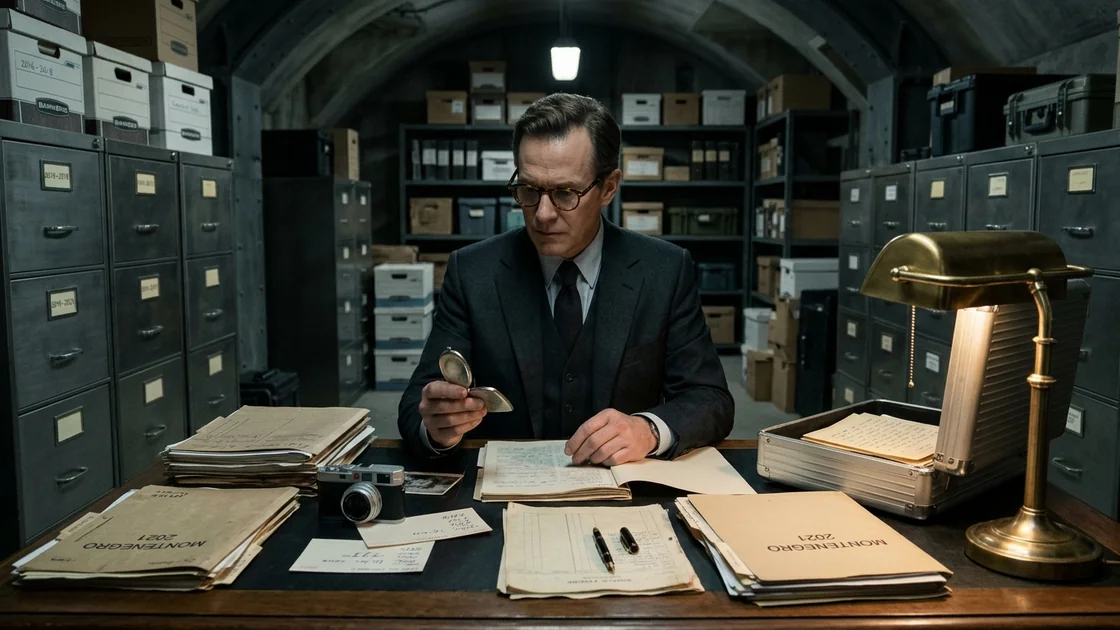
For ten years, Julian Vance served as the personal luxury concierge to the billionaire Sterling family, fulfilling their most depraved and extravagant whims while quietly cataloging every secret, illegal transaction, and moral failing. When the dying patriarch announces that only one of his three ruthless children will inherit control of the family conglomerate, Julian uses his decade of accumulated leverage to subtly manipulate the siblings into blaming one another for a series of catastrophic leaks and betrayals. Through a masterclass of psychological warfare and weaponized privilege, the invisible servant orchestrates a fratricidal corporate war that systematically dismantles the Sterling empire from the inside out.
The watch had stopped at precisely 4:19 in the morning, which was the exact minute its previous owner had stepped off the balcony of the Baur au Lac in Zurich. That was why Lukas Sterling wanted it. He did not care about the Patek Philippe caliber, nor the platinum case, nor the fact that the timepiece was one of only four made in 1936. Lukas, who at twenty-nine controlled the algorithmic trading and financial technology wing of Sterling Global, was passing through a phase of morbid existentialism brought on by too much ketamine and an uninterrupted streak of quarterly profits. He had called Julian at midnight from a private jet somewhere over the North Atlantic and said he needed a watch that knew when to quit.
By two in the afternoon the following day, Julian Vance was standing in a mahogany-paneled parlor in Geneva, handing a certified bank draft for four hundred and eighty thousand Swiss francs to a weeping widow whose husband’s body had not yet been released by the canton coroner.
"My employer wishes to express his deepest condolences for your loss, Madame Delacroix," Julian said, his voice pitched to the exact frequency of a cathedral organ at rest. He wore a charcoal coat of brushed cashmere that shed the Alpine sleet without leaving a stain, and gloves of grey peccary leather. "He is a passionate preservationist of horological history. Knowing the piece will remain in a private vault, untouched by the vulgarity of a public auction house, will hopefully offer some small measure of peace."
The widow took the draft with trembling fingers. She did not ask how Julian had known the watch was in her husband’s bedside drawer rather than on his wrist when he fell. She did not ask how Julian had bypassed the police seal on the suite at the Baur au Lac six hours earlier to verify the serial number. People in grief rarely interrogated miracles of liquidity, especially when their late husbands had jumped because of margin calls.
Julian bowed from the neck—never the waist; a bow from the waist belonged to footmen, and Julian was the Chief Principal of Aegis Bespoke—before stepping back out into the cold.
In the back of his Maybach, he removed his gloves, opened a slim Rimowa attaché case, and placed the platinum watch into a velvet-lined recess. Then, from a hidden compartment beneath the suede lining, he withdrew a small, fountain-pen-written index card and a miniature Leica digital camera. Before the police had arrived at the hotel that morning, Julian had photographed the watch beside the dead financier’s bedside ledger, which showed a catastrophic short position against a shell biotech company in the Cayman Islands—a company that Lukas Sterling had artificially pumped and dumped forty-eight hours prior. Lukas hadn't just bought a suicide's watch; he had caused the suicide, and wanted the trophy.
Julian wrote the date, the transaction routing number, and the name of the Zurich precinct captain he had bribed with a lakeside condominium lease onto the cream-colored card.
Entry 1,408. Client: L.S. Category: Trophy Acquisition / Insider Manipulation.
He slipped the card into his breast pocket, closed the case, and looked out the tinted window at the grey waters of Lake Geneva. Ten years. Three thousand, six hundred and fifty days of wiping blood off marble, buying silence from the broken, and sourcing the impossible for four people who believed the world was an open-air market stocked exclusively for their amusement.
His phone vibrated once against his ribs. A text message from New York. It was from Arthur Sterling’s personal physician.
The biopsy results from Sloan Kettering are final. He is summoning them to Blackwood Island this weekend. Prepare the helicopters.
Julian’s pulse did not quicken. After a decade of absolute discipline, his heart had learned to beat like a pendulum in a vacuum. He simply looked at his reflection in the dark glass of the partition and permitted himself a microscopic adjustment of his cuffs. The audit was finally going to begin.
To understand the Sterling dynasty, one did not look at their annual reports, which were pristine monuments of corporate graphic design detailing their dominance in rare-earth mining, maritime logistics, defense contracting, and global media. Instead, one had to look at what they asked for at three o’clock in the morning when they were bored, frightened, or drunk.
Julian returned to New York on the Sterling Gulfstream G700, landing at Teterboro while the city was still draped in the violet smog of a Thursday dawn. Before going to his own townhouse in Gramercy Park, he descended into the sub-basement of Sterling Tower on Midtown’s Billionaires’ Row.
Behind two biometric steel doors that not even the building’s chief of security could access lay the Aegis archive. Officially, Aegis Bespoke was an independent boutique firm retaining a single corporate client—the Sterling family office. In practice, Julian was their priest, their quartermaster, and their janitor.
The room smelled of cedar, dehumidified air, and old paper. Along the walls stood twelve fireproof filing cabinets of brushed steel, each drawer secured with a physical Abloy lock. The Sterlings, particularly Lukas, trusted encrypted cloud servers, which was why Julian kept everything that mattered on acid-free cotton paper, thirty-five-millimeter film negatives, and air-gapped hard drives wrapped in Faraday mesh.
Julian unlocked the fourth cabinet, labeled 2016–2018, and ran his fingers over the dividers.
Every sibling had a distinct signature of decay.
Cassian, the eldest at thirty-eight, was the Chief Operating Officer of Sterling Logistics and Defense. He was a broad-shouldered man with a jaw like an anvil and the dead, flat eyes of a shark. Cassian’s requests were exercises in archaic dominance. In the 2017 file lay the shipping manifests for three limestone reliefs chiselled directly from a sixth-century tomb in Palmyra by Russian mercenaries, routed through a diplomatic pouch in Beirut so Cassian could mount them behind the wet bar in his Aspen chalet. Beside it sat a 2019 wire transfer of two pointtwo million dollars to a retired provincial judge in Macau, covering the sudden cremation of a twenty-two-year-old Muay Thai fighter whose skull Cassian had fractured with a brass candlestick after losing a hundred-thousand-dollar side bet. Cassian never felt guilt; he only felt inconvenienced by the fragility of lesser men.
Seraphina, thirty-four, ran Sterling Media Group and the family’s philanthropic foundation. The press called her the golden conscience of the conglomerate, photographing her at Davos and the Met Gala in sustainable silk. Her folders were the thickest. Seraphina did not break bones; she erased lives. In her 2020 dossier sat the receipt for an unlicensed private clinic in Lausanne where she obtained umbilical-cord blood transfusions sourced from undocumented clinic patients in Moldova. Deeper in the file were the invoices for a private intelligence firm in Tel Aviv that Julian had hired on her orders to plant child exploitation material on the laptop of a Financial Times journalist who had been investigating labor conditions at Sterling cobalt mines in the Democratic Republic of the Congo. The journalist had died in a British prison six months later. Seraphina had sent Julian a bottle of 1982 Petrus the day the obituary ran, with a note reading simply: Seamless.
And then there was Lukas. The prodigy. His folders were a fever dream of chemical excess, financial fraud, and panicked cover-ups. The centerpiece of Lukas’s archive was dated August 2021: The Kotor Incident. Lukas had leased an entire twelfth-century island monastery off the coast of Montenegro for his twenty-fifth birthday, evicting the local parish by bribing the bishopric with a roof restoration fund. During the seventy-two-hour bacchanal that followed, the nineteen-year-old daughter of a sitting United States Senator from Delaware had suffered a fatal cardiac arrest induced by an experimental synthetic stimulant Lukas had commissioned from a research chemist in Prague.
Lukas had called Julian on a satellite phone, sobbing and vomiting in the background while forty guests danced on the limestone terrace fifty yards away.
Julian had arrived by seaplane from Dubrovnik within ninety minutes. Working alone in the monastery’s stone boathouse, Julian had dressed the girl in scuba gear, weighted her belt with lead ingots that had a defective clasp, and used a chartered Yugoslav-era patrol boat to deposit her body three miles down the coast near a notorious underwater cave system where tourists drowned every second summer. The local coroner, whose daughter mysteriously received a full-ride scholarship and housing stipend at Columbia University the following week, ruled it a tragic solo diving accident.
Julian closed the drawer with a soft metallic click.
None of them had ever asked him why he did it. When you pay a man four million dollars a year in base salary, plus an untaxed discretionary bonus pool routed through Liechtenstein, you assume you have bought his soul outright. They saw Julian’s immaculate posture, his horn-rimmed glasses, and his soft, deferential manner, and concluded he was a creature built entirely of greed and servility—a human Swiss bank account that knew how to press a dinner jacket.
They did not know that Julian had never spent a single dollar of his bonuses on himself. The forty-seven million dollars he had accumulated over ten years sat in a labyrinth of blind trusts, financing the legal retainers, private investigators, and offshore shell companies that had taken him a decade to assemble.
He walked to his desk at the center of the vault and opened the single drawer that was not organized by sibling. Inside lay a faded newspaper clipping from the Bogotá El Tiempo, dated November 14, 2013, and a silver locket containing a photograph of a young woman with Julian’s grey eyes and a wide, sunburned smile, standing in front of a concrete hydroelectric dam in the Colombian Andes.
Clara Vance. Or rather, Clara Vance before her brother had legally changed his surname from Miller to Vance in a London deed-poll office eleven years ago, erasing his past with the help of a corrupt clerk he had met during his years in British diplomatic logistics.
Clara had been thirty-one, a senior hydrological engineer contracted to audit the structural integrity of the Santa Rosa tailings dam, a copper-mining waste reservoir acquired by Arthur Sterling during a hostile takeover in 2012. Clara had discovered that the earthen wall was liquefying from within due to illegal cost-cutting during its expansion. If the seasonal rains came before the reservoir was drained, four million cubic meters of arsenic-laced sludge would bury three indigenous villages in the valley below.
She had refused to sign the re-certification papers. She had sent an encrypted package of core-sample data to Arthur Sterling’s personal office in New York, believing that the patriarch simply didn't know what his regional managers were doing.
Arthur had known. Draining the reservoir would have halted copper production for nine months, tanking Sterling Global’s share price right before a twelve-billion-dollar debt refinancing.
Cassian, then twenty-eight and eager to prove his mettle to his father, had flown down to Medellín on the corporate jet. Four days later, Clara’s rented Toyota Land Cruiser went off a cliff on a dry, sunlit afternoon along the carretera to Manizales. The brake lines had been cleanly severed near the master cylinder, though the local police report—written by a captain who retired to a ranch in Antioquia a month later—blamed driver fatigue. Six weeks after her funeral, the rains came. The Santa Rosa dam held by a miracle of dry winds, leaking only enough toxic runoff to poison the local river system for a generation, which Seraphina’s fledgling PR team successfully blamed on illegal artisanal miners.
Julian had stood over his sister’s closed casket in a freezing cemetery in Vermont. He had no money to fight a hundred-billion-dollar empire in court. He had no political allies who couldn't be bought by Arthur Sterling before lunch. What Julian had was twelve years of experience arranging logistics for the British Foreign Office’s most delicate diplomats, an encyclopedic knowledge of how powerful men hid their filth, and the patience of a glacier.
He had spent two years working for a Russian oligarch in London just to build a reputation as a man who could make dead bodies and tax audits disappear without a ripple. When Arthur Sterling’s previous concierge suffered a convenient, non-fatal heart attack induced by digitalis slipped into his espresso at Claridge’s, Julian’s curriculum vitae was the only one on Arthur’s desk the next morning.
Julian touched the edge of the silver locket, closed the drawer, and locked it.
It was 8:00 AM. It was time to deliver Lukas his watch.
Lukas’s penthouse occupied the top three floors of a glass needle in Tribeca. When Julian stepped out of the private elevator, the air smelled of burnt sage, stale champagne, and the metallic tang of ionizers working overtime.
Lukas was sitting cross-legged on a white leather sofa that cost more than a suburban house, wearing silk pajamas and staring at six curved monitors displaying real-time currency fluctuations in Tokyo and Frankfurt. He was thin, with lank dark hair and a patchy beard, his eyes ringed with the bruised violet of chronic insomnia.
"Julian," Lukas rasped, not looking up from a chart of the Japanese yen. "Tell me you have it. Tell me that greedy old cow in Geneva didn't hold out for Sotheby's."
"Madame Delacroix was entirely reasonable once the parameters of her husband's estate were clarified, sir," Julian said, walking across the concrete floor and placing the velvet box on the low marble table between them. He opened the lid at a forty-five-degree angle facing Lukas.
Lukas abandoned the yen immediately. He lunged forward, snatching the platinum Patek from its cushion. He held it up to his ear, listening to the dead silence of the escapement. A wet, thrilled laugh escaped his throat.
"Four-nineteen," Lukas whispered, rubbing his thumb over the cracked sapphire crystal—damage sustained when Delacroix’s wrist had struck the iron railing on the way down. "God, look at that. He actually wore it over the edge. You didn't let them clean it, did you?"
"Untouched, as instructed, Mr. Sterling. I took the liberty of having the Swiss customs declaration filed under diplomat-adjacent cultural artifacts so it would not register on your personal import ledger."
Lukas slipped the dead watch onto his left wrist, right beside a plastic hospital-style bio-monitor that tracked his blood oxygen and cortisol levels. "You're a wizard, Julian. The only person in this entire parasitic organization who actually executes." His manic grin faded, replaced by a sudden, twitchy paranoia. He glanced toward the empty kitchen. "Have you talked to my sister this morning?"
"Ms. Sterling requested a flight plan for Blackwood Island for tomorrow afternoon, sir. Nothing further."
"She knows something," Lukas muttered, chewing on his thumbnail. "The old man summoning all three of us to Maine in November? Nobody goes to Blackwood after October. The pipes freeze. The ferry doesn't even run. And Cassian—Cassian cancelled his hunting trip in Patagonia yesterday. Why would Cassian cancel Patagonia unless the old man is finally opening the succession trust?"
"Mr. Arthur Sterling has only indicated that there will be a comprehensive board restructuring briefing over the weekend, sir," Julian said smoothly. "I have arranged for the island’s heating plant to be brought online forty-eight hours early, and the chef from Le Bernardin is flying up this evening with the white truffles you prefer."
Lukas grabbed Julian by the forearm. His fingers were clammy and surprisingly strong with chemical tension. "Listen to me, Julian. If Arthur is stepping back, Cassian and Seraphina are going to try to box me out. They think because I don't wear a three-piece suit and kiss senators' asses at the Harvard Club that I’m the junior partner. My algorithms paid for Cassian’s last two shipyard acquisitions! My liquidity kept Seraphina’s streaming service from defaulting in Q3! If you hear anything—anything at all—from the doctors or Arthur’s lawyers at Cravath, you come to me first. Understand? I’ll double your retainer. Ten million in Monero, untraceable, dropped into a cold wallet tonight."
Julian looked down at the pale hand gripping his cashmere sleeve. Ten years ago, the touch of a Sterling would have made his skin crawl. Now, he felt only the clinical detachment of a butcher weighing a calf.
"My loyalty to your welfare is absolute, Mr. Lukas," Julian said softly. "Should I perceive any movement detrimental to your position before the helicopters depart tomorrow, you will be the first to know."
Lukas exhaled, releasing his arm and slumping back into the cushions, already turning his gaze back to the glowing screens, twisting the dead man’s watch around his bony wrist.
Blackwood Island sat twelve miles off the coast of Bar Harbor, three hundred acres of black granite cliffs, wind-twisted spruce, and cold Atlantic spray. At its highest point stood Cairn House, a forty-room fortress of dark local stone built by a Gilded Age railroad baron and purchased by Arthur Sterling in 1988 after his first billion.
By Friday evening, a nor’easter was brewing on the horizon, turning the sky the color of a lead weight. Three Sikorsky helicopters had landed in sequence on the cliffside pads, their rotors chopping the salt air before settling into silence.
Julian stood by the sideboard in the Great Hall, where a fire of six-foot oak logs roared in a hearth large enough to roast an ox. He was pouring beverages according to a mental map of pathology: two fingers of neat Lagavulin for Cassian; warm water with colloidal silver and lemon for Seraphina; an espresso spiked with modafinil for Lukas.
The three siblings stood in separate corners of the vast room, refusing to sit until their father entered.
Cassian stood by the mullioned windows, dressed in bespoke huntsman tweed despite having flown straight from Manhattan, his thick hands clasped behind his back as he glared out at the whitecaps. Seraphina paced near a fifteenth-century Flemish tapestry, resplendent in winter-white Loro Piana, her phone pressed to her ear until the exact moment the heavy double doors at the far end of the hall swung open.
Arthur Sterling did not walk in; he was wheeled in by a silent male nurse, though the seventy-four-year-old patriarch immediately shoved the nurse’s hands away and forced himself upright using an ebony cane.
The silence in the room became absolute. Even Cassian straightened slightly, like a dog hearing a whistle.
Arthur had once been built like Cassian, a bull of a man who had broken unions in Kentucky and bribed junta generals in Bolivia with the same terrifying, gravelly charm. Now, he looked as though he had been carved out of drift-wood and tallow. The portable oxygen concentrator slung over the back of his wheelchair hissed every four seconds, delivering air through a clear nasal cannula that he wore like an insult.
"Get out," Arthur barked at the nurse. His voice sounded like gravel being turned with a shovel.
The nurse vanished. Arthur’s sunken, yellow-rimmed eyes swept the room, lingering on Julian by the sideboard.
"Stay, Julian," Arthur rasped. "Lock the doors. And pour me a brandy. If that quack from Manhattan says one more word about my liver, I’ll have his medical license revoked before he hits the mainland."
Julian locked the oak doors with a heavy brass key, poured a measure of 1940 Armagnac into a snifter, and placed it into Arthur’s blue-veined hand before stepping back into the shadow of the fireplace mantel. To the Sterlings, having Julian in the room was no different from having the grandfather clock in the corner.
"Sit down," Arthur said, lowering himself into the high-backed leather armchair at the head of the refectory table.
The three heirs moved to the table like wolves approaching a carcass they suspected was poisoned.
"Dad," Seraphina began, her voice dripping with theatrical maternal concern as she reached across the mahogany toward his sleeve. "Why didn't you tell us it had progressed this far? I spoke to the board at Johns Hopkins last week; there is a trial in Zurich using targeted mRNA—"
"Shut up, Sera," Arthur said calmly. He took a sip of the Armagnac, winced as his lungs spasmed, and conquered the cough through sheer, furious willpower. "Idiopathic pulmonary fibrosis. My lungs are turning into scar tissue. Six months, maybe eight if I agree to live on a ventilator like a vegetable, which I won't. By the time the ice melts in the harbor, I’ll be in the ground."
Lukas stopped bouncing his knee under the table. Cassian’s jaw tightened, a muscle jumping beneath his cheekbone. None of them looked sad; they looked as if the starter pistol had gone off before they had settled into the blocks.
"The market doesn't know," Cassian said immediately, leaning forward on his forearms. "If word gets out before the Q4 earnings call and the Pentagon satellite bid is finalized, the institutional vultures at Vanguard and BlackRock will hammer the stock by twenty percent. We need to announce a smooth transition to the Co-Chair structure we drafted in 2021. Me on operations, Sera on governance, Lukas on capital."
Arthur laughed. It was a horrible, wet sound that ended in a rattle deep in his chest.
"Co-Chairs," the old man spat. "I spent fifty years building an empire out of scrap metal and dirt, and you think I’m going to leave it to a committee of three spoiled brats who wouldn't share a lifeboat if the yacht went down?"
He reached into his dressing gown and threw a thick, leather-bound legal document onto the table. It slid across the polished wood and stopped in the exact center between them.
"Last Tuesday, I had Cravath redraft the Sterling Family Voting Trust," Arthur said, his eyes bright with a cruel, ancient vitality. "The three of you currently hold ten percent of the Class A voting shares each. I hold the remaining seventy. Under the old arrangement, my seventy was to be split equally among you upon my death."
"That was the bedrock of the estate plan," Lukas said, his voice rising an octave. "We signed the cross-indemnities—"
"They’re void," Arthur snapped. "Revocable by the Grantor while of sound mind, and twelve psychiatrists signed off on my sanity on Wednesday morning. Here is the new reality. A three-headed monster gets slaughtered by the street within five years. You’ll spend half your time suing each other and the other half leveraging the company to buy each other out. I won't have my name turned into a cautionary tale at Wharton."
Arthur leaned forward, gripping the head of his cane until his knuckles turned white.
"In sixty days, on January fifteenth, Sterling Global holds its annual institutional summit in Geneva. On that stage, I am going to hand the entirety of my seventy percent voting block to one of you. The winner takes absolute control as Chairman and CEO. The other two will have their existing Class A shares automatically converted into non-voting preferred stock, paying a fixed four percent dividend, with a twenty-year lockup period and zero seats on the board."
The silence that followed was heavier than the storm outside. The wind howled against the granite walls, rattling the leaded glass.
"You're cutting two of us out," Seraphina whispered, the color draining from her impeccably contoured cheeks. "Four percent non-voting? We’d be pensioners. We’d be employees of whichever one of us you pick!"
"Then I suggest you make sure I pick you," Arthur said coldly. "Right now, looking at the three of you, you all make me sick. Cassian, you run Defense like a nineteenth-century warlord; our margins in maritime are down three points because you’re too busy bullying subcontractors to modernize the fleet. Seraphina, your media division is a vanity project bleeding two hundred million a year so you can get invited to dinner with prime ministers. And Lukas—half your hedge fund profits are paper leverage that would evaporate if the Fed raises rates by fifty basis points."
Arthur pushed himself up from the chair, leaning heavily on his cane.
"You have sixty days to prove to me who has the spine, the balance sheet, and the killer instinct to hold the reins. Close a major acquisition. Clean up your divisions. Show me who the real Sterling is. Because on January fifteenth, one of you becomes a king, and the other two become spectators."
He turned toward the doors. "Julian. Help me to the elevator. The air in here smells like perfume and fear."
"At once, sir," Julian said, stepping smoothly out of the shadows to take the handle of the wheelchair as Arthur collapsed back into it once he was past the threshold of his children’s sight.
As Julian pulled the heavy oak doors shut behind them, he caught one final glimpse of the Great Hall. Cassian, Seraphina, and Lukas were not even speaking. They were staring at the leather binder on the table, and then at one another, with the unblinking hatred of three scorpions sealed inside a Mason jar.
Julian did not sleep that night. He didn't have the opportunity.
At 11:40 PM, his internal house phone rang. It was Seraphina, calling from the East Wing suite.
When Julian entered her sitting room, she was standing over a spread of financial printouts, wearing a silk kimono and smoking an ultra-thin menthol cigarette—a habit she indulged in only when she was preparing to ruin someone.
"Sit down, Julian," she said, though she knew he never sat in a client’s presence. "Actually, stand by the door. Did Arthur say anything to you on the way up? Who is he leaning toward? It’s Cassian, isn't it? The old misogynist always wanted the eldest boy, even if Cassian has the strategic foresight of a Rottweiler."
"Mr. Sterling did not confide his preference to me, Ms. Sterling," Julian said mildly. "Though he did instruct his legal team to leave the succession line on page forty-two of the trust document entirely blank until Geneva."
Seraphina blew a plume of smoke toward the ceiling. "Sixty days isn't enough time to turn around the streaming numbers organically. Which means I don't need to look better; Cassian needs to look catastrophic. Next week, I’m hosting the European Regulatory Symposium at the Aman in Venice. Half the Brussels antitrust commission will be there, plus three directors from our independent audit committee. Arthur is watching that conference closely."
She turned to Julian, her eyes hard as cut diamonds. "Cassian has a private security subcontractor he uses for the dirty maritime stuff in the Red Sea and West Africa. Blackthorne Maritime. You set up the offshore payroll for them in Cyprus four years ago, didn't you?"
"I facilitated the corporate registry in Limassol, yes, ma'am."
"Find me something ugly in their current manifests," Seraphina ordered. "Not ugly enough to trigger a DOJ indictment against the parent company—I still want the stock price intact when I take over—just something embarrassing enough to make the Brussels regulators threaten to veto our port merger in Rotterdam as long as Cassian is COO. A sanctions violation. An environmental dump. Leak it to me before Venice so I can 'discover' it through my compliance team and present it to Arthur as saving the firm from Cassian's incompetence."
"A delicate calibration, ma'am," Julian murmured. "Enough smoke to blind your brother, without burning down the house."
"Exactly. Five million into your Geneva account the day Arthur strikes his name off the list."
Forty minutes later, at 12:30 AM, Julian knocked on the door of the gun room on the ground floor, where Cassian had summoned him.
Cassian was cleaning a Holland & Holland double-barrel shotgun he had no intention of firing in the storm, the smell of Hoppe’s No. 9 solvent sharp in the air. He was three glasses deep into the Lagavulin.
"She’s going to use the papers," Cassian growled without looking up from the breech of the rifle. "Sera owns half the financial editors in London and New York. She’s going to spend the next two months planting stories about how I’m a dinosaur and she’s the future of ESG corporate governance. And Lukas is going to try to cook his Q4 numbers to make it look like his quant desk is carrying the conglomerate."
Cassian snapped the shotgun shut and pointed the barrels toward the floor, fixing Julian with a heavy, bloodshot stare. "You handle the travel and the NDAs for Sera’s Venice circus next week. And you know where Lukas keeps his private liquidity."
"I am familiar with the administrative architecture of both offices, sir."
"I want Sera humiliated in Venice," Cassian said flatly. "She’s pitching the European board members on acquiring that French telecom conglomerate, Vivendi-Nord. Find out what her top ceiling bid is, and make sure the French board knows she’s authorized to pay twenty percent more. When she blows the acquisition budget or walks away empty-handed in front of the audit committee, Arthur will see her for the lightweight she is. As for Lukas—wait until he’s overleveraged on the quarterly options expiry next month, then we’ll deal with him."
"Understood, Mr. Cassian," Julian said with a slight bow. "I shall review the Venice briefing materials tonight."
At 2:15 AM, as Julian was walking down the drafty stone corridor toward the servants' stairs, a door cracked open. Lukas’s pale face appeared in the gap. He beckoned Julian inside with a frantic jerk of his head.
Lukas’s room was freezing; he had opened the window to let the Atlantic gale blow directly onto his face to keep himself awake.
"They’re already plotting, aren't they?" Lukas whispered, pacing barefoot across the Persian rug. "I heard your footsteps go to Sera’s suite, then down to the gun room. What did they ask you for? Don't lie to me, Julian! I told you in New York, I’m paying you double!"
Julian stood with his hands folded serenely over his stomach. He looked at Lukas with an expression of profound, sorrowful discretion—the look of a loyal butler forced to witness a tragedy he could no longer ethically conceal.
"Mr. Lukas," Julian said in a hushed voice, stepping closer so the wind wouldn't carry his words. "As you know, the foundational principle of Aegis Bespoke is absolute compartmentalization between family members."
"Screw the principles!" Lukas hissed, grabbing his own hair. "They're going to cut my throat! Tell me!"
Julian hesitated for three full seconds, looking down at his polished Oxford shoes before raising his eyes. "Because of our long association, sir, and because I believe your technical vision is the only thing keeping Sterling Global solvent... I feel compelled to warn you. Both Mr. Cassian and Ms. Seraphina inquired tonight about the regulatory exposure of your offshore liquidity pools in Reykjavik and the British Virgin Islands. Specifically, they believe your collateral margins are thinner than reported to your father."
Lukas froze. The blood drained from his face so fast he looked like a corpse pulled from the surf below.
The truth was that neither Cassian nor Seraphina had mentioned Reykjavik. They didn't understand Lukas’s financial instruments well enough to know where to look. Only Julian knew that eighteen months ago, Lukas had quietly borrowed four hundred million dollars against Sterling Global’s corporate treasury bonds—without board authorization—to cover a catastrophic bad bet on Venezuelan sovereign debt, hiding the hole inside a daisy-chain of Icelandic shell companies that Julian himself had registered.
"How could they know about Reykjavik?" Lukas breathed, terrified. "Nobody knows about Reykjavik except you and my chief quant!"
"Mr. Cassian retains several former NSA analysts within Sterling Defense’s cyber-intelligence division, sir," Julian lied effortlessly. "I do not believe they have penetrated the final ledger yet. They are merely fishing. However, if that margin gap is still open when the year-end audit begins next month..."
"I have to plug it," Lukas stammered, his eyes darting wildly around the room. "I need four hundred million in clean, unencumbered liquid assets before December first to close the Icelandic loop before the auditors look at the treasury vault. Julian—the Liechtenstein foundation. Arthur’s emergency bearer fund at the LGT Bank in Vaduz. There’s six hundred million in zero-coupon bonds sitting there for catastrophic corporate liability."
"That vault requires two of the three siblings' digital cryptographic keys to authorize a temporary draw, sir," Julian reminded him softly. "And Mr. Arthur’s office receives a paper statement of the balance at the close of every calendar quarter."
"Quarter-end isn't until December thirty-first!" Lukas said, grabbing Julian’s lapels. "I only need the bonds for ten days! I use them as collateral for a bridge loan in Singapore, close the Reykjavik hole, liquidate my personal crypto holdings quietly over two weeks so I don't crash the coin, and put the bonds right back in Vaduz before Arthur ever sees a statement! And you—you have the backup tokens for Cassian and Sera’s digital signatures in the Aegis disaster-recovery safe, don't you?"
"Only for use in the event of a kidnap-and-ransom scenario or physical incapacitation, Mr. Lukas," Julian said, his tone laced with gentle reluctance. "Using them for an intra-family bridge transfer would be a felony in four jurisdictions."
"Ten million," Lukas pleaded, his voice cracking. "Ten million tomorrow morning, plus five percent of my Class A dividends once Arthur names me Chairman. Please, Julian. If Cassian finds that hole, he won't just tell Arthur—he’ll send me to federal prison."
Julian looked at the trembling twenty-nine-year-old billionaire, whose watch—the watch of a man who had jumped from a balcony over a margin call—ticked silently against Julian's wrist where Lukas’s hand gripped his coat.
"You have always treated me with great generosity, Mr. Lukas," Julian whispered. "I will have the Vaduz transfer protocols prepared by Monday morning. Leave your brother and sister to me."
Julian stepped back into the corridor, closed the door softly, and walked down the dark stone stairs alone. Outside, the Atlantic hammered the black cliffs of Maine, tearing the spruce trees from their roots.
Venice in late November was a city drowning in silver fog and cold high water. Wooden passerelle walkways had been erected across the Piazza San Marco, and the palazzos along the Grand Canal looked like decaying opera sets rising out of green glass.
At the Aman Venice, which Seraphina had bought out entirely for seventy-two hours at a cost of two million euros, the chandeliers blazed against the gloom. Inside the piano nobile ballroom, forty of Europe’s most powerful media regulators, central bankers, and Sterling Global board members sipped Franciacorta while waiting for Seraphina’s keynote address on the ethical integration of global supply chains and digital media.
Julian stood near the frescoed doors in a midnight-blue dinner jacket, an earpiece concealed behind his left ear, ostensibly coordinating the arrival of the French minister of culture’s private motor-launch.
In reality, he was watching a clock that had three minutes left on its countdown.
Five days earlier, Julian had executed Seraphina’s request—and Cassian’s—by fusing them together into a single, lethal munition.
He had not leaked Cassian’s Vivendi-Nord bid sabotage to the French board. Nor had he given Seraphina a minor regulatory infraction from Cassian’s Blackthorne Maritime files. Instead, Julian had opened his own sub-basement vault in New York, pulled the file marked 2019 – DRC Cobalt / Blackthorne Logistics, and combined it with the 2021 digital stationery of Seraphina’s own Sterling Global Children’s Initiative.
Three hours ago, an encrypted thumb drive had been delivered by bonded courier to the head of the European Parliament’s Directorate-General for Trade, who was currently sitting in the second row of the ballroom, four seats away from Sterling Global’s Lead Independent Director, Sir Alistair Finch. Simultaneously, the same drive had been uploaded to the investigative desks of Le Monde, Der Spiegel, and the Wall Street Journal.
The documents were genuine, bearing authentic SWIFT codes, satellite transponder logs, and biometric signatures that only Aegis Bespoke possessed.
They showed that for three years, ships chartered under the humanitarian tax-exemption status of Seraphina’s charity had been used by Cassian’s Blackthorne Maritime division to smuggle four hundred tons of conflict-mined cobalt out of eastern Congo, bypassing European Union customs duties in Rotterdam while using armed mercenaries who had been implicated in the massacre of twelve striking dockworkers in Matadi.
Better still, Julian had altered the internal routing metadata on the leaked files in two distinct ways.
The copy sent to the journalists and the EU regulators carried a digital watermark tracing the leak back to an internal compliance audit server inside Cassian’s Defense division in Virginia—making it appear to Seraphina that Cassian had sacrificed one of his own defunct shell companies just to frame her charity and destroy her in front of the European board.
Conversely, the copy that Julian was currently handing to Cassian’s chief of staff in New York via an "intercepted threat alert" contained embedded tracker pixels belonging to the Tel Aviv private intelligence firm Seraphina had used in 2020 to frame the dead Financial Times reporter—convincing Cassian that his sister had just blown up his Pentagon security clearance to knock him out of the succession race.
On the stage, Seraphina stepped up to the acrylic lectern. She looked luminous in emerald velvet, smiling warmly at Sir Alistair Finch.
"Ladies and gentlemen, esteemed colleagues from Brussels," she began, her voice amplified smoothly across the gilded hall. "When my father founded Sterling Global, logistics meant moving steel across oceans. Today, logistics and media share a single moral imperative: transparency."
In the second row, the EU Trade Director’s phone buzzed. Then Sir Alistair Finch’s phone buzzed. Within forty-five seconds, a low murmur rippled across the ballroom as thirty senior aides at the back of the hall stared at breaking news alerts from Der Spiegel and the Wall Street Journal.
Julian watched from the doorway, his hands clasped behind his back.
Sir Alistair Finch stood up right in the middle of Seraphina’s third paragraph. His face was the color of skimmed milk. He leaned over, whispered three words to the French Minister of Culture, and both men turned and walked briskly up the center aisle toward the exit, followed within ten seconds by the entire Brussels delegation.
Seraphina faltered at the lectern, the spotlight catching the sudden sheen of sweat on her forehead. "Alistair?" she said, breaking script as the room dissolved into a cacophony of ringing phones and scraping gilt chairs. "What is happening?"
Julian moved swiftly through the parting crowd of panicked executives, ascending the side steps of the stage just as Seraphina’s communications director thrust an iPad into her hands.
WALL STREET JOURNAL: EU Opens Criminal Probe into Sterling Global Over Smuggled Conflict Minerals Routed Through Family Charity; Pentagon Suspends $4B Blackthorne Contract Pending Review.
Seraphina stared at the screen. Her mouth opened slightly, a low, animal sound vibrating in her throat as she scrolled down to the embedded graphic of the shipping manifests.
"Blackthorne," she hissed, her manicured nails digging into the aluminum casing of the iPad so hard one of them snapped. She whipped her head around toward Julian, her eyes wide with unhinged fury. "Cassian! That psychotic bastard! I asked you to find a customs violation on Blackthorne, and he beat me to it! He dumped his own expired DRC manifests onto my foundation's tax ID to torpedo me in front of Finch!"
"Ms. Sterling, we must get you to the private launch immediately," Julian said urgently, taking her elbow and guiding her behind the velvet curtain as hotel security blocked a surge of financial reporters trying to breach the foyer. "My cyber-security team in Zurich just intercepted the origin packet of the press dump. Look here."
As they hurried down the narrow stone service stairs toward the canal water-gate, Julian held up his phone, displaying a fabricated server trace log he had compiled the night before. It showed the upload originating from a dark-fiber node in Reston, Virginia, signed with the administrative override key of Cassian’s personal head of security.
"He knew you were looking into Limassol," Julian said breathlessly, playing the part of a rattled lieutenant to perfection. "When I made the initial discreet inquiries in Cyprus on Sunday, an automated tripwire must have alerted his Virginia office. Instead of playing defense, he scorched the earth and pinned the Matadi dockworker killings on your foundation’s board."
They stepped out into the freezing Venetian mist on the wooden jetty. The mahogany Riva speedboat was idling in the dark water.
Seraphina didn't get into the boat. She stood on the wet planks, shivering in her emerald velvet, her teeth bared. "He thinks he can sink my division and blame it on a clerical error in my charity? He thinks Arthur will forgive a four-billion-dollar Pentagon suspension if it takes me out of the running?"
She spun on Julian, grabbing his coat with both hands. "The Macau file. From 2019."
Julian stilled. "Ma'am?"
"Don't play stupid with me, Julian! Everybody in the family knows Cassian beat somebody to death in Macau five years ago and you cleaned it up! What did you keep? A coroner's report? A video? A wire transfer?"
"Ms. Sterling," Julian said, lowering his voice in apparent alarm. "Releasing raw material of that nature would implicate Aegis, and potentially trigger a morals-clause review of the entire Sterling family trust—"
"I don't want it released to the press, you idiot!" she screamed over the slap of the wake against the pilings. "Send the unredacted Macau police file and the bribe receipts directly to the General Counsel of the Department of Defense Inspector General’s office, and cc Sir Alistair Finch! Not public—internal regulatory! Under the Foreign Corrupt Practices Act and DOD ethics rules, any defense contractor executive under active investigation for an overseas homicide bribery scheme has to be immediately stripped of their Top Secret clearance and barred from holding an officer title! He’ll be legally disqualified from being CEO before the week is out! Do it! Now! Or I swear to God, Julian, I’ll tell the Brussels prosecutors that Aegis Bespoke signed those Congolese shipping manifests on your own initiative!"
Julian looked at her face, twisted with venom under the amber glow of the palazzo lanterns. She thought she was holding a gun to his head, demanding that he pull the trigger he had spent ten years oiling.
"If that is your explicit instruction, ma'am," Julian said, bowing his head in defeated submission. "It will be on the Inspector General's desk before the markets open in New York."
By Thursday morning, Sterling Global (NYSE: STG) had lost eighteen billion dollars in market capitalization.
Julian sat in the back of his Maybach parked across the street from 750 Lexington Avenue, watching the rain sheet down the glass facade of Sterling Tower. Upstairs, on the sixty-fourth floor, the war had gone nuclear.
At 9:00 AM Eastern, the Department of Defense had not only suspended Cassian’s Blackthorne contract; they had served Sterling Global’s board with a formal notice that any subsidiary retaining Cassian Sterling in an operational or fiduciary role would be permanently debarred from all United States military procurement, following the receipt of corroborated evidence linking him to the bribery of Chinese administrative officials in Macau to conceal a homicide.
At 9:45 AM, Cassian arrived at Julian’s private townhouse office in Gramercy Park. He didn't ring the bell; his two two-hundred-and-fifty-pound bodyguards stayed on the sidewalk while Cassian kicked the inner vestibule door so hard the brass latch bent.
Julian was sitting behind his partner’s desk, calmly shredding routine travel itineraries, when Cassian stormed in, soaked from the rain, his overcoat flying open. Without a word, Cassian crossed the room, grabbed Julian by the throat with one massive hand, and slammed him backward against the floor-to-ceiling bookshelves. First-edition volumes of Gibbon’s Decline and Fall of the Roman Empire tumbled onto the carpet.
Julian did not struggle. He did not raise his hands to defend himself, even though thirty years ago in a muddy training barracks in Hereford he had learned four different ways to snap a man’s wrist from this exact grip. Instead, he let his glasses slip down his nose, wheezing pathetically as his heels left the baseboard.
"You gave her Macau," Cassian roared, spit flying into Julian’s face, his forearm trembling with murderous rage. "You were the only one in Macau, Julian! You and that dead judge! How the hell did Sera get the wire numbers and the autopsy photos to send to the Pentagon?!"
"Mr. Cassian... please..." Julian choked out, pointing a trembling finger toward the open laptop on his desk. "Look... look at the breach log..."
Cassian held him pinned for three more seconds, his chest heaving, before dropping Julian onto his knees on the Tabriz rug. Julian coughed raggedly, rubbing his throat while adjusting his bent spectacles with shaking fingers—a performance of fragile servility that immediately satisfied Cassian’s bullying instinct.
Cassian leaned over the desk and stared at the laptop screen.
Julian had prepared the tableau two hours ago. On the screen was a forensic cybersecurity report from an independent Swiss firm Julian secretly owned. It showed that the Aegis archive server in Zurich had suffered a brute-force cryptographic intrusion forty-eight hours earlier, utilizing a proprietary quantum-resistant decryption algorithm.
"What am I looking at?" Cassian snarled.
"She didn't have the Macau file, sir," Julian rasped, staying on one knee by the desk as if afraid to stand. "After Venice blew up on Tuesday, Ms. Seraphina came to me demanding it. I refused her. I told her I had destroyed the physical records in 2019. So she went to your brother."
Cassian’s head snapped toward Julian. "Lukas?"
"Look at the decryption signature on the Zurich breach, sir," Julian said, pointing at a string of highlighted code on the screen. "That is the Hydra-9 algorithm. Only one entity on earth possesses the computing architecture to run that protocol: Sterling FinTech’s server farm in Reykjavik. Lukas’s team hacked my offshore disaster-recovery vault in Switzerland yesterday morning, pulled the Macau file, and sold it to Seraphina."
"Why would Lukas help Sera take me out?" Cassian demanded, his knuckles whitening on the edge of the mahogany desk. "If I’m out, it’s just the two of them!"
"Because you aren't the only one he is taking out, sir," Julian said softly, finally rising to his feet and straightening his waistcoat with a wince. He walked to the safe in the wall, dialed the combination, and pulled out a blue folder. "Once I discovered the Reykjavik breach three hours ago, I used my administrative backdoor into Mr. Lukas’s private accounts to see what Ms. Seraphina paid him for the Macau file. She didn't pay him. They formed an alliance on Monday morning."
Julian laid a bank statement on the desk in front of Cassian.
It was the statement from the LGT Bank in Vaduz, Liechtenstein, dated three days prior. It showed a withdrawal of four hundred million dollars in bearer bonds from Arthur Sterling’s untouchable emergency reserve fund—authorized by the simultaneous digital cryptographic keys of Lukas Sterling and Seraphina Sterling.
Cassian stared at the paper. In reality, Julian had used the backup tokens in his vault to forge Seraphina’s key alongside Lukas’s when he executed Lukas’s desperate bridge transfer on Monday. To Cassian, looking at the cold black-and-white SWIFT confirmation, the story was undeniable: Lukas and Seraphina had teamed up to loot the family’s sacred emergency reserve, using the four hundred million to prop up their own divisions for Arthur’s sixty-day review while systematically assassinating Cassian’s career with the Pentagon.
The vein in the center of Cassian’s forehead swelled until it looked like a purple worm beneath the skin.
"They looted the Vaduz vault," Cassian whispered, almost in awe of the audacity. "And hacked your servers to bury me with the DOD so I couldn't stop them."
"Mr. Lukas moved the four hundred million into a clearing house in Singapore to cover a massive margin deficit in his Reykjavik trading desk," Julian explained rapidly. "He intends to liquidate a private position in unregistered semiconductor futures over the next seventy-two hours to return the bonds to Vaduz before your father’s lawyers run the December audit. If he succeeds in putting the money back by Friday, there will be no crime to show your father—only your debarment by the Pentagon."
Cassian looked up slowly. A terrifying, feral grin spread across his face. "How is he liquidating the semiconductor futures? Through which prime broker?"
"Credit Commercial in Geneva, sir. The settlement window closes tomorrow at 4:00 PM Central European Time. If that settlement fails or is frozen by a compliance hold, the Singapore clearing house will automatically seize the four hundred million in Vaduz bonds by Friday noon, triggering an immediate default notification to your father’s trustees and the Securities and Exchange Commission."
"Freeze it," Cassian breathed. "How do we freeze his settlement at Credit Commercial?"
Julian adjusted his cuffs, his voice dropping to a silk whisper. "Credit Commercial is fiercely protective of its clients against financial disputes, Mr. Cassian. However, under Swiss anti-money-laundering statutes, they are legally required to place an immediate, unappealable thirty-day freeze on all liquidations if the beneficial owner of the account is named as a material suspect in an active Interpol Red Notice or a violent felony investigation by an European prosecutor."
Cassian frowned. "Lukas is a nerd who sits in his pajamas in Tribeca. What violent felony in Europe has he ever committed?"
Julian paused. He looked toward the rain-streaked window, as though weighing the ultimate betrayal of his professional oath against the righteous anger of his favored master.
"In August of 2021, sir," Julian said quietly, "during Mr. Lukas’s twenty-fifth birthday celebration on the island of Sveti Marko in Montenegro... Senator Miller’s daughter did not die in a solo scuba diving accident."
Cassian’s eyes widened. "The girl from Delaware? That was Lukas?"
"A lethal overdose of an unapproved Czech designer amphetamine which Mr. Lukas personally purchased and administered," Julian said. "More importantly, to pay off the Montenegrin maritime police and the Prague chemist without alerting your father’s compliance officers, Mr. Lukas routed the hush money directly through the exact Credit Commercial Geneva account he is currently using to settle his Singapore semiconductor trade."
Julian reached into his desk drawer and placed a black hard drive beside the Vaduz bank statement.
"Contained on this drive are the original toxicity reports from the Kotor clinic, the charter logs of the boat used to move the body, the GPS coordinates of the weighted diving belt which still bears the serial number of Mr. Lukas’s yacht tender, and the Credit Commercial wire transfers. If this reaches the state prosecutor in Podgorica and the United States Attorney for the District of Delaware within the next hour, Credit Commercial’s compliance desk will freeze every franc Lukas has in Geneva by lunchtime. He will default on the Vaduz bonds tomorrow. He and Seraphina will be finished."
Cassian picked up the hard drive as if it were a solid bar of gold. He didn't ask why Julian had kept the weight belt's serial number or the original blood work. A drowning man does not interrogate the carpenter who built the plank he is clinging to.
"Wait," Cassian paused, a sudden spark of cunning crossing his heavy features. "If Lukas gets hit with a murder investigation and a four-hundred-million-dollar embezzlement default tomorrow, he’s going to panic and sing to the feds. And if he knows you had this drive, he’ll point them at you—and me."
"He won't think it came from you or me, sir," Julian said smoothly. "In October of 2021, two months after the incident in Montenegro, Ms. Seraphina had a drunken argument with Mr. Lukas at the Connaught in London. She sent him an encrypted text message referencing his 'Adriatic swimming lessons.' I have embedded that text chain and the IP address of Sterling Media’s London press office into the anonymous tip package going to the Delaware prosecutor. Lukas will believe that Seraphina—having used him to steal the Vaduz bonds and take you out—just cut him loose to take the entire inheritance for herself."
Cassian stared at Julian. For the first time in ten years, the eldest Sterling looked at the concierge not as a piece of furniture, but with a flicker of something resembling awe.
"Remind me never to fire you, Julian," Cassian grunted, pocketing the drive. "Send the package to Delaware and Geneva right now. When I take the chair in January, Aegis gets one percent of Sterling Defense’s gross."
"You are entirely too kind, Mr. Cassian," Julian said, rubbing his bruised neck as he bowed the big man out the door.
Once the front door slammed shut and Cassian’s SUV pulled away into the rain, Julian walked back to his desk, picked up his encrypted satellite phone, and dialed a number in Washington, D.C.
It did not belong to the U.S. Attorney in Delaware. It belonged to the personal chief of staff of Senator Thomas Miller, a man who had spent the last three years keeping a framed photograph of his nineteen-year-old daughter on his desk while blaming himself for letting her go to Europe for the summer.
Julian did not use his own voice; he used an automated text-to-speech relay routed through seven nodes in Eastern Europe, delivering the encryption key to the cloud bucket he had uploaded twenty minutes before Cassian had even arrived at the townhouse.
Then, Julian sat down, poured himself a cup of Darjeeling tea from a silver pot, and opened his laptop to watch the stock ticker.
The collapse of a hundred-billion-dollar dynasty does not look like a controlled demolition from a distance; at first, it looks like a series of unrelated mechanical failures on a giant ocean liner, until the water hits the boilers and the hull breaks in two.
On Friday morning at 10:15 AM, Credit Commercial in Geneva froze eight hundred million dollars in trading assets belonging to Lukas Sterling’s fintech subsidiary following an emergency mutual legal assistance treaty request from the United States Department of Justice and Interpol, regarding the suspicious death of an American citizen in Montenegro and associated money laundering.
At 11:30 AM, deprived of the Geneva collateral, the Singapore clearing house declared an immediate default on Lukas’s bridge facility and moved to seize the four hundred million dollars in bearer bonds held at LGT Bank in Vaduz.
At 11:45 AM, LGT Bank’s compliance software discovered that the digital signatures of Lukas and Seraphina Sterling used to hypothecate the family trust’s reserve bonds had not been accompanied by the mandatory board resolution from Sterling Global’s audit committee. Suspecting a massive corporate embezzlement scheme, the Vaduz bank froze the entire Sterling Family Trust liquidity reserve and notified the Securities and Exchange Commission, the New York Attorney General, and Sir Alistair Finch.
By 1:00 PM, the NYSE halted trading on Sterling Global after the shares plunged forty-two percent in ninety minutes. Moody’s and S&P downgraded the conglomerate’s corporate debt to junk status, triggering immediate technical defaults on twelve billion dollars of revolving credit lines held by Cassian’s maritime division and Seraphina’s media empire.
And at 1:30 PM, Lukas Sterling—locked in his Tribeca penthouse, watching FBI vans pull up to the curb on Hudson Street while reading the leaked London text messages that convinced him Seraphina and Cassian had framed him for murder and stolen the Vaduz bonds together—did the only thing a terrified, cornered narcissist could do.
He unlocked his private server and dumped every terabyte of internal Sterling Global accounting data he had ever scraped onto the public internet, accompanied by a forty-page sworn affidavit sent to the SEC and the Southern District of New York.
In his panic to prove that he was merely a whistle-blowing victim of his older siblings' criminal conspiracy, Lukas revealed the off-balance-sheet debt in Reykjavik, the falsified environmental inspection reports for seventeen Sterling mining operations across South America—including the 2013 Santa Rosa copper tailings dam in Colombia—the systematic bribery of European telecom regulators by Seraphina’s media group, and the illicit arms transfers conducted by Cassian’s logistics ships in the Horn of Africa.
Julian watched the documents flood across Bloomberg and Reuters from the quiet cabin of the Sterling Gulfstream G700 as it climbed to forty thousand feet above the Atlantic.
They were all going to Geneva.
Not in sixty days for the January summit, as Arthur had planned, but today—summoned to an emergency Saturday morning crisis session at the Hotel Beau-Rivage by Sir Alistair Finch and the consortium of European banks that now held the triggers to Sterling Global’s bankruptcy.
Lukas was not on the plane; he had been arrested at Teterboro Airport forty minutes earlier by federal marshals while trying to board a chartered Bombardier to Dubai with twelve million dollars in diamonds taped to his chest and a dead man’s Patek Philippe on his wrist.
Inside the cabin of the G700, the atmosphere was that of a flying morgue.
Arthur Sterling lay strapped into the forward divan, his oxygen machine turned up to its maximum six liters per minute, his face grey against the cream leather pillows. His personal physician sat beside him, monitoring a blood pressure cuff that read two-ten over one-twenty.
In the mid-cabin club seats sat Cassian and Seraphina, separated by an aisle that might as well have been a minefield, surrounded by six white-shoe defense attorneys from Cravath and Skadden who were frantically typing on laptops that kept losing connection as federal court orders shut down Sterling Global’s corporate enterprise servers one by one.
"You stupid, greedy bitch," Cassian said, his voice a low, exhausted rumble over the hum of the Rolls-Royce engines. He hadn't shaved; his shirt collar was open, stained with sweat. "You had to send Macau to the Pentagon. You couldn't just fight me on the balance sheet. And then you and that little junkie stole the Vaduz bonds and turned him over to the feds for the Miller girl."
Seraphina didn't even look at him. Her hair was pulled back in a disheveled knot, her eyes raw and red-rimmed as she stared out the oval window at the dark cloud deck below. "I never touched the Vaduz bonds, Cassian. You and Lukas faked my signature key to cover his Reykjavik hole, and then you dumped those Congolese manifests on my charity to give the Brussels vultures an excuse to call our debt. My lawyers just told me the Southern District of New York is convening a grand jury on Monday for wire fraud and FCPA violations. They’re going to indict me because your mercenaries shot twelve dockworkers in Matadi and billed the ammunition to my children's foundation."
"I didn't bill anything to your foundation!" Cassian roared, lunging half out of his seat before two of his lawyers pushed him back down. "You hacked Julian’s server in Zurich using Lukas’s supercomputers to get the Macau file!"
Both of them stopped.
Slowly, as if a single gear had finally clicked into place inside a smashed watch, Cassian and Seraphina turned their heads in unison toward the galley at the rear of the aircraft.
Julian was standing there, immaculate in his charcoal suit, carefully arranging lemon wedges on a silver tray beside a pot of chamomile tea. The aircraft hit a patch of light turbulence, and not a single drop of water spilled from the crystal carafe in his hand.
"Julian," Seraphina said. Her voice was very quiet.
"Yes, Ms. Sterling?" Julian stepped out of the galley, carrying the tray into the main cabin.
"On Tuesday in Venice," she said, her eyes narrowing as she tracked his movements, "you showed me a server trace log proving Cassian’s Virginia office leaked the DRC manifests to Der Spiegel."
"Wait a minute," Cassian said, pushing his lawyer’s arm aside and standing up in the narrow aisle, blocking Julian’s path. "On Thursday morning in Gramercy Park, you showed me a Swiss forensic report proving Sera used Lukas’s Reykjavik servers to hack your Zurich vault for the Macau file. And you gave me the Montenegro hard drive with Sera’s London text messages already attached to it."
The six lawyers stopped typing. In the forward cabin, Arthur Sterling turned his head on the pillow, his yellow eyes fixing on the tall, slender figure of his concierge.
"And the Vaduz bonds," Seraphina whispered, standing up slowly from her seat. "Lukas didn't have my backup cryptographic token. The only person on earth who holds the disaster-recovery tokens for all three of our signatures is Aegis Bespoke."
She looked at Cassian, horrific comprehension dawning across her face. "Cassian... did you leak the Congolese manifests in Venice?"
"No!" Cassian barked, his eyes darting back to Julian. "Why the hell would I blow up my own four-billion-dollar Pentagon contract?!"
"And I didn't know anything about Macau until you told me in the boat!" Seraphina shrieked, her voice echoing off the curved fuselage walls. "Julian brought it up! Julian told me to send it to the Inspector General! And Julian had the Montenegro drive sitting in his desk drawer waiting for you!"
Cassian took a step toward Julian, his fists clenching until the leather of his seat creaked beneath his elbow. "Ten years," Cassian breathed, the blood draining from his lips. "Every dirty job we ever gave you. You didn't bury them. You kept them."
Julian did not drop the silver tray. He did not wheeze, or stoop, or adjust his spectacles with trembling fingers.
Instead, as the eight passengers on the forty-million-dollar jet stared at him in stunned silence, Julian slowly straightened his spine. He seemed to grow two inches taller, shedding ten years of deferential posture like an old overcoat. He set the silver tray down smoothly on the conference credenza beside Cassian’s lawyers.
"Of course I kept them, Mr. Cassian," Julian said. His voice was no longer the soft, invisible purr of a servant; it was crisp, cold, and resonant as a blade striking stone. "A good concierge never throws away a receipt."
"You son of a bitch," Cassian lunged forward inside the cramped aisle, swinging a right hook that had broken a man’s jaw in Macau.
Julian didn't even step back. He pivoted six inches to his left, caught Cassian’s thick wrist in mid-air, twisted the thumb joint outward against its natural axis, and drove the side of his shoe into the outside of Cassian’s knee. With a sickening pop of cartilage, the two-hundred-and-twenty-pound heir went down hard onto his face on the carpeted aisle, howling in agony as Julian stood calmly over him.
The lawyers scrambled backward into their seats in terror. None of them reached for a phone; at forty thousand feet over the mid-Atlantic, there was no police precinct to call, and the cockpit door was locked from the inside by pilots whose pensions were paid through an Aegis staffing agency in Guernsey.
"Why?" Arthur Sterling’s voice rasped from the forward divan. The old man was struggling to sit up against his straps, his chest heaving against the hiss of the oxygen machine. "I paid you... fifty million dollars over ten years, Julian. Who bought you? BlackRock? The Chinese? Who the hell paid you more than me?"
Julian stepped neatly over Cassian’s groaning bulk and walked forward to stand beside the patriarch’s leather couch. He looked down at the dying titan who had spent half a century devouring companies, rivers, and human lives.
"You still don't understand, do you, Arthur?" Julian said, using the old man’s given name for the first time in three thousand six hundred and fifty days. "You think everything has a clearing price because you have never loved anything that didn't have a ticker symbol."
Julian reached into his breast pocket, pulled out the small silver locket, and snapped it open, holding it six inches from Arthur’s sunken eyes.
"Her name was Clara Miller," Julian said softly. "November 2013. She was the chief hydrological auditor at the Santa Rosa copper tailings dam in Antioquia. She sent you a certified engineering report showing that the reservoir wall was failing and would drown three villages in arsenic sludge if you didn't halt copper extraction for two quarters to drain it."
Arthur stared at the tiny photograph in the locket. At first, there was nothing in his eyes—so many people had died under the wheels of Sterling Global over fifty years that they blurred into a single grey smudge of actuarial expense. Then, slowly, he glanced back at Cassian, who was clutching his shattered knee on the carpet.
"You didn't drain the dam," Julian continued, his voice deadly calm. "You sent Cassian down to Medellín on this very aircraft. Four days later, my sister’s brake lines were cut on the mountain road outside Manizales. Six weeks after I buried her in Vermont, the dam leaked twelve thousand tons of heavy metals into the Río Cauca, and Seraphina paid three Bogotá newspapers fifty thousand dollars each to blame it on local farmers."
Seraphina pressed her hands to her mouth, her back flattened against the mahogany bulkhead.
"I didn't have the money to fight Cravath in federal court," Julian said, snapping the locket shut and returning it to his pocket. "And killing you with a rifle would have only left your three parasites with a hundred billion dollars and a martyr for a father. I didn't want you dead, Arthur. I wanted you awake. I wanted you to watch what you built tear itself to pieces using the exact cruelty and arrogance you bred into your children."
Julian leaned down, placing one gloved hand on the edge of Arthur’s divan so only the old man and the paralyzed physician could hear his final words.
"Furthermore, I didn't keep your fifty million dollars. Over the last forty-eight hours, every cent of my Aegis compensation—along with three hundred million in profits from the put options my blind trusts purchased against Sterling Global stock on Monday morning—was wired into a permanent restitution and legal defense trust for the families of the Santa Rosa valley and the dockworkers in Matadi. You paid for your own execution, Arthur. Right down to the jet fuel."
Arthur opened his mouth to scream—to order his lawyers to attack, to curse the man standing over him—but no sound came out. His right hand clawed violently at the silk lapel of his dressing gown. The blood pressure monitor beside the divan began to shriek a continuous, high-pitched alarm as the old man’s eyes rolled back, a massive cerebral hemorrhage seizing the left hemisphere of his brain before he could utter a single syllable.
"Doctor," Julian said politely, stepping back into the aisle to give the panicked physician room to work. "I believe your patient requires immediate intubation. I shall instruct the captain to declare a medical emergency for our arrival in Geneva."
When the Gulfstream touched down at Geneva Airport four hours later in the cold grey light of Saturday dawn, it did not taxi to the private VIP terminal where Julian had spent a decade greeting the Sterlings with warm towels and waiting limousines.
Instead, guided by airport follow-me cars with flashing amber lights, the jet was directed to a remote quarantine apron at the far northern edge of the tarmac, surrounded by six Swiss federal police cruisers, an ambulance, and four black sedans from the Office of the Attorney General of Switzerland.
Inside the cabin, Arthur Sterling lay unconscious on a stretcher, breathing through a plastic tube taped to his mouth, wholly paralyzed down his right side, trapped alive inside a skull that could still hear and see everything around him but would never speak or sign a document again.
By 9:00 AM, the board of directors of Sterling Global, led by Sir Alistair Finch in London, had convened an emergency teleconference and invoked the catastrophic morals and insolvency clauses of the corporate charter. With the stock down seventy-eight percent in pre-market European trading and the company’s credit lines frozen across three continents, the board voted unanimously to place Sterling Global into immediate Chapter 11 and European cross-border receivership, stripping the Sterling family of all executive titles and cancelling the Class A voting premium to satisfy the senior secured bondholders.
The seventy percent voting block that Cassian, Seraphina, and Lukas had destroyed one another to inherit was now worth precisely zero.
Julian walked down the airstairs of the Gulfstream first, carrying only his slim Rimowa attaché case and wearing his grey peccary leather gloves against the Alpine drizzle.
At the bottom of the stairs stood Chief Inspector Moreau of the Geneva Financial Crimes Brigade, accompanied by two legal attachés from the United States Embassy in Bern.
"Monsieur Vance?" Moreau asked, holding up a thick leather dossier that Julian had personally had delivered to the prosecutor’s residence at midnight—containing his signed, notarized immunity agreement as a non-executive third-party logistics vendor who had discovered pervasive fraud by his corporate principals and voluntarily surrendered the complete archival records under the Swiss Federal Whistleblower Protection Act and the SEC’s Office of the Whistleblower program.
"Good morning, Inspector," Julian said with a respectful nod. "The paramedics may board first; Mr. Arthur Sterling suffered a catastrophic stroke mid-flight. Mr. Cassian Sterling is in the main cabin with a dislocated patella sustained during severe clear-air turbulence, and Ms. Seraphina Sterling is sedated in the rear stateroom. Their legal counsel on board have already been served with the preliminary asset forfeiture orders."
Behind Julian, the paramedics wheeled Arthur’s stretcher down the hydraulic lift. As the gurney passed Julian on the wet tarmac, the old man’s left eye—the only part of his body he could still move—stared up from the white sheet, wide, bloodshot, and brimming with a terror that would last for whatever mute, impoverished years remained to him in a state facility.
Behind the stretcher came Cassian, his wrists secured in steel handcuffs by two Swiss federal officers, hobbling on one leg while screaming incoherently at his lawyers about immunity deals that no longer existed—because Julian had already claimed the only immunity seat on the lifeboat before the plane had even left New York. Seraphina followed, her emerald velvet coat draped over her shoulders to hide the zip-ties on her wrists, staring blankly at the concrete as the cameras of thirty international press photographers flashed through the perimeter chain-link fence a hundred yards away.
Neither of them looked at Julian. To look at him was to look in a mirror and see how effortlessly they had been led by the nose into the slaughterhouse.
"Everything in the sub-basement archive in New York matched the cryptographic hashes you provided to the Embassy yesterday, Monsieur Vance," the American legal attaché said, stamping Julian’s immunity clearance and handing back his British passport—the passport issued in the name of Julian Miller, which had been quietly reactivated by the Foreign Office the week before. "Once you sign the final evidentiary chain-of-custody deposition at the consulate on Monday, your obligations to the Department of Justice are concluded. Though I expect the bankruptcy trustees will be sorting through the wreckage for the next twenty years."
"I am always happy to be of service to the authorities, sir," Julian replied smoothly.
He walked past the flashing blue lights of the police cruisers, through the security gate of the aviation terminal, and out onto the quiet, rain-slicked curb of the Route de l'Aéroport.
No Maybach waited for him. There were no phones vibrating against his ribs with demands for rare truffles, stolen watches, or bribed coroners. For the first time in ten years, the silence around him was absolute, washed clean by the cold rain coming down from the Jura mountains.
Julian walked over to a stainless-steel municipal trash bin beside the taxi stand. He opened his attaché case, took out the final index card from his breast pocket—Entry 1,409. Client: Sterling Dynasty. Category: Account Closed—and dropped it into the bin along with the encrypted satellite phones that had connected him to the richest family in the world.
Then he turned up the collar of his cashmere coat, raised a gloved hand to hail a common yellow taxi, and rode away into the morning mist toward the train station, leaving the empire to the vultures.