The Hollow Beneath Cragmere Hall
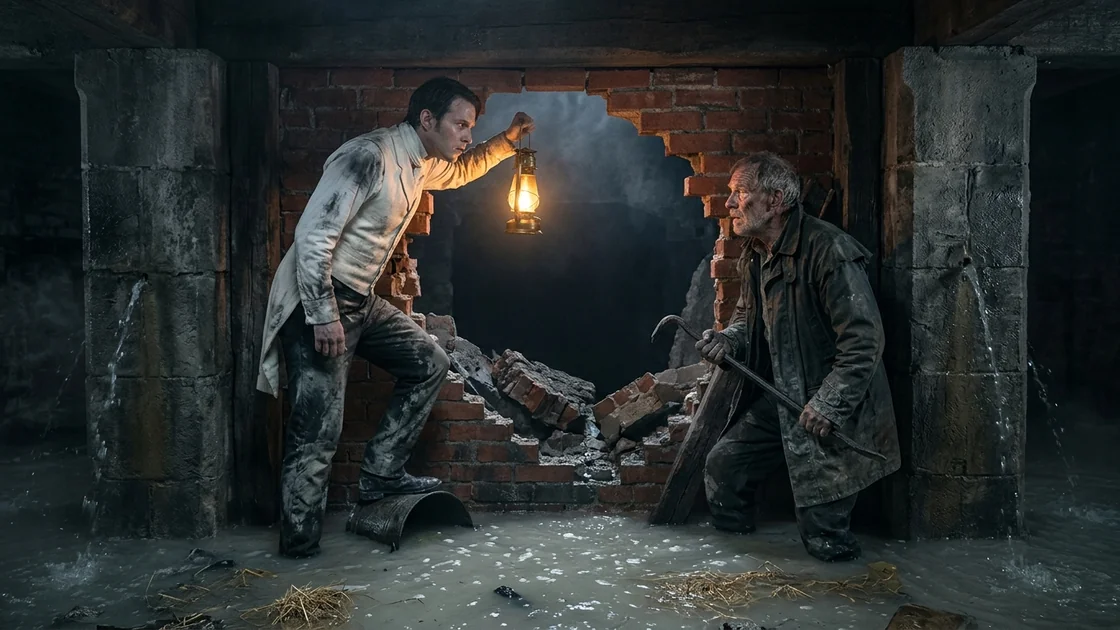
Cragmere Hall stands as a monument to colonial ambition and industrial pride, a sprawling mansion perched atop a limestone bluff where the Blackwater River was dammed a century ago to power the Vane family mills. As the wealthiest figures in the region gather in the grand dining hall to celebrate the centennial of the great dam, a relentless autumn storm swells the reservoir outside, forcing millions of gallons of acidic water deep into the bedrock beneath the estate. Only Julian Vane, an engineer returning home after years away, and an aging estate mason notice the subtle signs of structural failure as the subterranean current finishes dissolving the massive limestone shelf supporting the house. Trapped between a patriarch obsessed with appearances and the inexorable laws of geology, the guests feast above a hollowing abyss that threatens to swallow the dynasty whole before the final course is served.
The rain had not stopped since Tuesday, and by Friday afternoon the Blackwater Reservoir looked less like an ornamental lake and more like an expanse of hammered lead straining against a collar of mortared granite.
Julian Vane stood at the window of his third-floor bedchamber, watching the runoff sluice down the slate roofs of the older colonial wing. Below him, the gravel sweep of Cragmere Hall was churned into ruts by the iron-rimmed wheels of delivery wagons and the heavier, wider tires of the motorcars that had begun arriving from the city three hours earlier. Every chimney on the estate was smoking. Coal smoke from the cellar furnaces, woodsmoke from the seventeen upstairs hearths, and the greasy, herb-scented vapor from the subterranean kitchens mingled in the sodden air, refusing to rise against the low ceiling of October cloud.
He placed his palm flat against the windowpane. The glass was cold, thick, and slightly wavy—original to the 1762 construction of the main house, before his great-grandfather, Ephraim Vane, had dammed the gorge in 1894 and transformed a modest Georgian manor into an architectural hybrid of colonial limestone and Gilded Age arrogance.
Beneath his fingertips, there was a vibration.
It was not the rattle of the wind against the sashes. Julian had spent the last eight years building railway bridges and aqueducts across the Allegheny valleys; he knew the difference between the transient shudder of a gale and the deep, harmonic thrum of mass under tension. This was a low, continuous oscillation, so faint that it registered less in the skin of his palm than in the small bones of his wrist. It felt like standing on a stone pier while a heavy freight locomotive idled a quarter-mile down the grade.
He drew his hand back and looked down at his dressing table. A silver collar stud lay near the beveled edge of the mahogany surface. Every few seconds, it crept a fraction of a millimeter toward the rim, paused, and shivered.
When he had left Cragmere six years ago, after a bitter argument with his older brother Alistair over the maintenance of the lower mill-races, the house had been as dead and immovable as an outcrop of granite. Stone houses built on bedrock did not hum.
Julian fastened his white waistcoat, pulled on his tailcoat, and stepped out into the upper gallery.
Here, the older bones of the house were still visible. The floorboards were wide heart-pine planks felled when George III was on the throne, pegged into oak joists twelve inches square. Yet as Julian walked toward the grand staircase, he felt a distinct dip in the floor where the colonial hallway met the massive 1894 extension that housed the Grand Dining Hall. He stopped and looked down at the wainscoting.
A hairline fracture, fresh and chalk-white against the dark cream paint, ran diagonally from the top of the baseboard to the chair rail. Someone had recently tried to fill it with glazier’s putty and dabbed it over with oil paint that had not yet dried, leaving a glossy scar across the matte wall.
"Mr. Julian?"
He turned. Mrs. Gable, the housekeeper who had ruled the domestic side of Cragmere since Julian was in short trousers, was coming up the service stairs carrying an armful of warmed linen napkins. Her face, usually a mask of severe competence, looked pinched and grey beneath her lace cap.
"Good evening, Mrs. Gable," Julian said, gesturing toward the baseboard. "When did the east wall start settling?"
The housekeeper glanced at the wet paint, her lips tightening. "Last month, sir. Though Mr. Alistair says it’s only the damp swelling the lath behind the plaster. With the lake so high, the air in the lower passages has been thick enough to chew. Pym has been round with the putty knife twice this week, just to make it decent for the Governor’s visit."
"Swelling lath pushes plaster outward," Julian said quietly, crouching to run his thumbnail along the ridge. The upper edge of the crack stepped down relative to the lower edge by nearly an eighth of an inch. "This isn't swelling. The south end of this wall is dropping."
"I wouldn't know about that, sir," Mrs. Gable said, lowering her voice as two liveried footmen hurried past on the landing below with cases of champagne. "What I do know is that none of the doors on the pantry corridor will latch without a shoulder put to them, and the great clock on the landing stopped at four o'clock because the weights are rubbing the back of the case. If you’re going down, Mr. Julian, mind the third step from the bottom on the main stair. The marble riser cracked clean through while the men were bringing in the ice sculptures this morning."
"Cracked?" Julian stood up, frowning. "A three-inch slab of Vermont marble doesn't crack under the weight of two men and a block of ice."
"Mr. Alistair said they dropped the tongs on it," she replied, though her tone made it clear she believed no such thing. "He had the Persian runner pulled down four inches to cover it. If you’re looking for Pym, he’s down in the wet-cellar again. He’s been down there since noon with a bucket of hydraulic cement and a lantern, muttering to himself like an old badger."
"Thank you, Mrs. Gable. Tell my brother I’ll be up before the reception line forms."
Julian did not take the main staircase toward the drawing rooms where the first guests were already gathering around the blazing hearths. Instead, he turned down the narrow, uncarpeted servants' passage that led into the bowels of the house.
To understand Cragmere Hall, one had to understand the mania of the man who had remade it. In the eighteenth century, the original Vane settlers had built their stone farmhouse on a natural promontory known locally as the Devil’s Anvil—a flat shelf of pale grey limestone that jutted out over a turbulent, narrow gorge where the Blackwater River plunged forty feet through a series of mossy chutes. For over a century, the river had run free thirty yards below the cellar windows, its roar a distant lullaby.
Then came October of 1894. Ephraim Vane, rich on textile contracts and coal leases, decided that the untamed gorge was a waste of kinetic energy and an insult to modern engineering. Two hundred yards downstream from the house, where the canyon narrowed between two granite bluffs, he built the Cragmere Dam.
It was a cyclopean barrier of rough-hewn stone blocks, sixty feet high and forty feet thick at the base. As the gates closed and the river backed up, the gorge vanished. The water rose forty-five feet, drowning the rapids, submerging the ancient cedar groves, and rising until it lapped directly against the limestone cliff-face upon which the colonial mansion sat.
Not content with merely raising a lake to his doorstep, Ephraim had celebrated his triumph by building the Centennial Wing—or what was now celebrating its centennial—extending the house outward over the very lip of the flooded gorge. The Grand Dining Hall, seventy feet long and thirty feet wide, rested directly upon the limestone overhang, its outer wall flush with the submerged cliff, so that diners looking out the tall lancet windows appeared to be floating directly upon the black waters of the reservoir.
As Julian descended the worn stone steps toward the cellars, the air changed rapidly. The warm scent of roasting venison, truffle sauce, and beeswax gave way to a cold, mineral dampness that smelled of wet wool and crushed oyster shells.
The kitchen corridor was a scene of frantic, sweating industry. Through the open double doors of the scullery, Julian caught sight of Monsieur Laurent, the chef hired from Philadelphia for the occasion, shouting in rapid French at four assistants who were basting rows of pheasants before the roasting jacks. Copper pots clattered; steam billowed toward the vaulted brick ceiling. Yet even here, in the heat of the ovens, Julian noticed a young scullery maid standing by the cast-iron pump sink, staring in bewilderment at a bucket on the floor.
He paused at the threshold. "What's wrong with the pump, girl?"
She curtsied hastily, wiping reddened hands on her apron. "It’s the spring water, sir. For the scullery wash. It’s been coming up warmish since yesterday, and look at the color of it."
Julian stepped over and looked into the galvanized pail. The water drawn from the deep house well was not muddy with brown surface silt, as one might expect during an autumn deluge. It was milky, opaque, and pale grey, swirling with fine, chalky sediment that settled like flour at the bottom of the bucket. He dipped two fingers into the water and rubbed them together. It felt slick, almost soapy, yet left a microscopic grit on his skin.
Calcium carbonate in suspension. Dissolved limestone, pulverized and carried upward by high-pressure groundwater.
Without another word to the maid, Julian pushed through the heavy oak door at the end of the passage that led down into the sub-cellars—the unheated storage vaults cut directly into the living rock beneath the dining hall.
Here, the electric bulbs that Alistair had strung through the upper house gave way to ancient iron sconces holding guttering tallow candles. The steps were slick with condensation. And here, the vibration Julian had felt in his bedroom window was no longer a subtle tremor. It was an audible sound.
Hummm-thrum. Hummm-thrum.
It came from everywhere and nowhere—through the soles of his patent-leather evening shoes, through the rough-dressed fieldstone walls, through the damp air that pressed against his eardrums. It sounded as though a colossal cauldron were boiling fifty feet beneath the flagstones.
"Watch your boots, Mr. Julian. The mortar’s turned to soup along the east footing."
Julian peered into the gloom at the end of the wine vault. Old Thomas Pym was kneeling beside one of the massive square piers of masonry that carried the oak sleeper beams of the dining hall floor above. Pym was seventy-two years old; his father had laid the stonework for Ephraim Vane’s dam, and Pym himself had spent fifty years pointing every chimney and retaining wall on the five-thousand-acre estate.
Julian walked over, his evening shoes splashing in a quarter-inch of milky water that pooled across the uneven granite flags.
"How long has it been weeping like this, Thomas?" Julian asked, taking the brass lantern from the hook on the timber prop and holding it high.
"Weeping?" Pym spat into the grey puddle. His hands were caked to the wrists in wet cement that was washing away as fast as he could trowel it into the base of the pier. "She passed weeping round Michaelmas, Mr. Julian. She’s bleeding now. Look here."
The old mason held his trowel against a joint between two three-hundred-pound blocks of blue limestone at the base of the central load-bearing pillar. A thin, pressurized jet of cloudy water, no thicker than a knitting needle, was squirting horizontally out of the mortar joint, hissing softly like a punctured steam pipe.
"I’ve driven oakum into that seam," Pym said, his voice tight with the bewildered anger of a craftsman whose materials have betrayed the laws of nature. "I’ve wedged sheet-lead into it with a cold chisel. I’ve packed it with quick-setting Roman cement. Ten minutes later, the water eats right round the stone beside it and starts pissing out a fresh hole. Look at the rock itself, sir. Touch it."
Julian knelt in the damp, ignoring the ruin of his dress trousers, and pressed his thumb against the face of the lower limestone block.
Limestone was supposed to be hard enough to strike sparks from an iron shoe. Beneath Julian’s thumb, the outer quarter-inch of the stone yielded like wet cheese. He scraped his fingernail across it and came away with a curl of grey paste.
"Good God," Julian whispered.
"It’s rotten," Pym said grimly. "Rotten to the core, like a turnip left in the frost. Mr. Alistair came down Tuesday when the wine steward complained the claret racks were leaning. Told me the stone was just sweating from the rain. Told me to whitewash the piers and keep my mouth shut till Monday." Pym looked up, the lantern light catching the deep creases around his rheumy eyes. "You’re the bridge-builder, Mr. Julian. Tell me I haven't gone soft in the head. Stone doesn't melt."
"It does if you soak it in acid for a hundred years under sixty feet of hydraulic head," Julian said, his mind racing through the geology of the Blackwater Valley.
When Ephraim Vane had dammed the river in 1894, he had flooded three thousand acres of ancient hemlock forest and peat bog upstream. For a century, that rotting organic matter had sat at the bottom of the deep reservoir, turning the impounded water distinctly acidic—rich in carbonic and humic acids.
Before the dam existed, the limestone shelf under Cragmere Hall had been high and dry, forty feet above the river. Rainwater drained off it quickly. Expecting rock to remain rock, Ephraim had built the dam right up against the porous karst limestone of the Devil’s Anvil. For a hundred years, the tremendous weight of the reservoir had forced that acidic water into the microscopic fissures and bedding planes of the limestone cliff beneath the house.
Day by day, grain by grain, the acid had reacted with the calcium carbonate, dissolving the solid rock and carrying it away into the subterranean water table. What had started as hairline cracks in 1894 had become pipes by 1920, tunnels by 1950, and now, under the unprecedented pressure of a week-long deluge that had raised the lake four feet above the spillway crest, the hidden caverns beneath the cellar floor were collapsing into one another.
"Thomas," Julian said, rising quickly and wiping his grey-smeared fingers on his handkerchief. "Where is the old colonial well-room? The one they bricked up when they laid the cast-iron water mains from the hills?"
Pym pointed with his trowel toward the far corner of the vault, behind a towering rack of dusty Madeira bottles. "Through the low arch yonder. Behind the coal bunkers. Why?"
"Because that well went down forty feet through the limestone shelf to the original river level," Julian said, grabbing the lantern. "Bring your crowbar."
They squeezed behind the wine racks, their shoulders brushing cobwebs heavy with coal dust and damp. Above their heads, the heavy oak joists groaned rhythmically as servants moved across the dining hall floor, setting out silver candelabra and heavy epergnes of cut crystal. Every footstep sounded strangely hollow, booming like a mallet strike on the head of a bass drum.
At the back of the unused coal vault stood a partition of nineteenth-century red brick blocking an older archway of rough fieldstone. Only it didn't quite block it anymore. The entire brick partition had dropped three inches away from the stone arch above it, leaving a jagged, crescent-shaped gap at the top from which poured a draft of freezing, wet wind and a deep, echoing roar.
Julian didn't need the crowbar to see through. He stood on an upturned coal scuttle and thrust the brass lantern through the gap at the top of the brickwork.
For a long moment, he did not speak. He couldn't.
"Mr. Julian?" Pym asked from below, holding the iron bar ready. "What’s in there? Has the well overflowed?"
"There isn't any well, Thomas," Julian said. His voice sounded small, swallowed instantly by the cavernous space beyond the wall. "And there isn't any floor."
Where the twelve-foot-square colonial well-room should have been, the lantern light illuminated nothing but black emptiness. The flagstone floor of the room, along with the massive stone well-curb and twenty feet of underlying bedrock, had vanished entirely.
Looking down at a steep angle through the shattered remains of the brick wall's footing, Julian saw that the sub-cellar in which they were standing was no longer resting on solid earth. It was a thin crust of masonry—a bridge no more than four feet thick—spanning a subterranean gulf where a roaring, white-maned torrent of water surged through a jagged cathedral of dissolved limestone.
The reservoir had broken through the cliff face thirty feet below the surface. A subterranean river, driven by the monstrous pressure of the lake outside, was funneled directly beneath the center of the Grand Dining Hall, scouring out a sinkhole the size of a parish church and discharging somewhere deep down past the dam's foundations.
Worse still, in the dim yellow reach of the lantern, Julian could see the underside of the rock shelf that supported the central cellar piers. It looked like worm-eaten driftwood. Great stalactites of rotten grey stone hung down toward the churning foam, and even as he watched, a slab of limestone the size of a dining table detached itself from the ceiling of the cavern and dropped silently into the white water below, its splash completely drowned out by the roar of the underground cataract.
Julian climbed down from the coal scuttle. His face was as pale as his linen shirtfront.
"How many people are sitting down to dinner tonight, Thomas?"
"Seventy-four, sir," the old mason whispered, having heard enough in Julian’s tone to make his gnarled hands tremble on the iron bar. "Counting the Governor and the Bishop. Right above our heads."
"Get out of the cellar," Julian said, turning toward the stairs. "Go down to the gatehouse and tell the grooms to start moving the carriages and cars off the east terrace—the ground there may be undercut too. Then come back to the kitchen entrance and wait for me. Don't tell the kitchen staff yet; if seventy servants panic in those narrow stairs, they’ll trample each other to death before I can get the guests out of the hall."
When Julian emerged from the service door under the main staircase and stepped into the Great Hall, the contrast was so violent it made him dizzy.
Light, warmth, and the perfume of hothouse orchids rolled over him like a physical wave. The Great Hall was ablaze with three hundred wax tapers burning in the tiered brass chandeliers, their glow reflecting off gilded portrait frames, polished armor from some invented ancestral crusade, and the bare, powdered shoulders of women in silk and satin evening gowns. A string quartet in the minstrels' gallery was playing Boccherini, the brisk, cheerful notes floating over the rich murmur of seventy voices fortified by dry sherry and French champagne.
Near the massive stone fireplace, where a four-foot oak log crackled harmlessly, stood Alistair Vane.
At forty-two, twelve years Julian’s senior, Alistair looked remarkably like the portrait of Ephraim Vane that hung above the mantel: tall, broad-chested, with silvering temples and the heavy, resolute jaw of a man who believed that nature, labor, and the Almighty Himself were all minority shareholders in the Vane Manufacturing Company. Around him stood Governor Holt, Senator Vance, and three directors of the Merchant’s National Bank of Philadelphia—the very men whose signatures Alistair needed on Monday morning to refinance the massive modernization bonds for the lower textile mills.
Julian walked straight across the parquet floor, ignoring the startled glances directed at the grey limestone mud drying on the knees of his black trousers.
"—and as I was saying to the Governor," Alistair was booming, swirling a glass of geriatric Madeira, "when my grandfather laid the last capstone on the Cragmere Dam a hundred years ago tonight, the county engineers predicted the spring floods would wash it into the bay within five years. Yet here we stand! Built on the rock of ages, gentlemen. A hundred years of water hasn't moved an inch of Vane stone, and a hundred years of market panics won't move—"
"Alistair," Julian said, stepping into the circle. "I need a word with you. Immediately."
Alistair paused, his genial host’s smile freezing for a fraction of a second as his eyes dropped to Julian’s soiled trousers and damp sleeves. Then the smile returned, broader and harder than before.
"Ah! Here he is at last—our prodigal engineer, fresh from bridging the wilderness! Gentlemen, my brother Julian. You must forgive his eccentricities; give him a house full of the finest company in the state and he immediately goes poking into the drains to see how the pipes are jointed. Yes, Julian, what is it? Surely it can wait until after dinner; Monroe is just about to announce the soup."
"It cannot wait thirty seconds," Julian said in a low voice, stepping close enough that only Alistair could hear him over the cello and the rain lashing the tall windows. "Come into the library. Now."
Something in Julian’s eyes—perhaps the complete absence of their usual fraternal sparring—made Alistair’s smile vanish. With a smooth bow to the Governor and a murmured excuse about a vintage port requiring his personal inspection, Alistair clapped a heavy hand on Julian’s shoulder and steered him forcibly through the velvet portières into the small octagon library adjacent to the hall.
The moment the heavy oak door clicked shut, silencing the quartet, Alistair dropped his hand and turned on his brother in a fury.
"Have you lost your mind?" Alistair hissed, his face flushing dark red above his starched collar. "Walking into the hall looking like a ditch-digger in front of Arthur Holt and the board of Merchant’s National! Do you have any conception of what tonight has cost me, Julian? Do you have any idea how thin the ice is under the company’s credit right now?"
"Forget the company's credit," Julian said starkly. "If you don't empty this house in the next fifteen minutes, there won't be anyone left alive to sign your notes on Monday."
Alistair stared at him, his chest heaving beneath his white silk vest. "What the devil are you talking about?"
"I’ve just come from the sub-cellar under the dining wing. Pym and I broke lookouts into the old colonial well-shaft." Julian spoke with the rapid, clipped precision of a field report. "The limestone shelf under the east wing has dissolved into a karst cavern. The reservoir water has eaten right through the cliff face below the waterline. There is an underground river forty feet wide running directly beneath the dining room floor right now. Half the bedrock is already gone, and the masonry piers are sitting on a rotten shell of wet chalk no more than four feet thick."
For five seconds, there was absolute silence in the octagon room, save for the ticking of the French mantel clock and the relentless drum of rain against the shutters.
Then Alistair let out a short, harsh bark of laughter. He walked over to the desk, poured himself a finger of brandy from a decanter, and drank it down.
"So Pym got to you," Alistair said, setting the glass down with a sharp rap. "That senile old fool has been whining about damp stone for six months. I should have pensioned him off in the spring."
"Pym didn't tell me anything I didn't see with my own eyes!" Julian stepped forward, grabbing his brother by the lapel of his dress coat. "Listen to me, Alistair! Put your hand on the wall! Feel that!"
Alistair knocked Julian’s hand away, smoothing his lapel with an angry jerk. "I feel the spillway roaring, as it always roars when we get four inches of rain in October! The dam is overflowing! Ten thousand tons of water a minute are going over the main chute two hundred yards down the gorge—of course the rock vibrates! It vibrates every spring thaw!"
"That isn't the spillway," Julian said fiercely. "The spillway is two hundred yards away on granite bedrock. This vibration is directly beneath our feet. The water in the scullery pump is white with dissolved limestone. The east wall of the upper gallery has dropped an eighth of an inch since Tuesday. The marble riser on the main stair sheared in half this morning because the north pier settled!"
"The servants dropped an ice block on that stair!"
"They did not drop an ice block! Marble doesn't shear vertically from a surface blow; it cracked under torsional stress because the two halves of this house are moving in different directions!" Julian took a breath, forcing his voice down, trying to reach the rational businessman inside his brother’s skull. "Alistair, come down the cellar stairs with me right now. It will take three minutes. Look through the breach in the coal vault. One look is all you’ll need."
Alistair looked toward the door, then back at Julian’s mud-stained knees. For a second—just a second—uncertainty flickered across the older man’s patrician features. He knew Julian was no alarmist; railway syndicates paid Julian Vane small fortunes precisely because his calculations on rock stability and structural loads were unimpeachable.
Then, through the heavy oak door of the library, came the resonant, ceremonial chime of the bronze gong, followed by the muffled voice of Monroe, the butler, announcing that dinner was served.
Alistair’s jaw set like iron.
"Do you know what will happen," Alistair said slowly, his voice dropping to a deadly whisper, "if I walk out there right now and tell the Governor, and Harold Vance, and the directors of Merchant’s National that Cragmere Hall is falling down? Do you know why Vance is here tonight, Julian? Because rumor reached Philadelphia on Wednesday that the foundations of our Number Three Mill down by the dam were shifting. If I panic seventy of the most powerful people in this state and send them scrambling out into a thunderstorm over a flooded cellar, the story will be on the telegraph wires by midnight. By ten o'clock Monday morning, our bonds will be worthless paper, the bank will call the two-million-dollar note, and hundred years of Vane history ends in bankruptcy court by Tuesday afternoon!"
"If you march seventy-four people into that dining room," Julian said, appalled, "adding six tons of live load and rhythmic vibration to a floor that is already hanging over a cavern, you won't have to worry about Monday morning! Serve the dinner in the Great Hall! Tell them the chimney in the dining wing is smoking in the gale—tell them anything, just keep them over the colonial foundation where the rock is thicker!"
"With seventy-four places set in gold plate, and the centennial floral pieces six feet high on the table?" Alistair sneered, turning toward the door. "You're insane. The house has stood on that rock since 1762, and the dining hall has stood since 1894. It will stand until midnight. When the guests have gone upstairs to the drawing rooms for coffee, I will come down to the cellar with you and Pym and look at your precious well-room. Not one minute before."
"Alistair, if you don't stop them, I will walk out there and clear the room myself."
Alistair stopped with his hand on the brass doorknob. He looked back over his shoulder, his eyes cold and completely ruthless.
"Try it," Alistair said softly. "You’ve had a disagreement with me over your share of the estate for six years, and everyone in that room knows it. Walk out there in muddy trousers, screaming that the sky is falling, and I will have Monroe and four footmen lock you in the gun room while I apologize to the Governor for my younger brother’s unfortunate nervous collapse. Now go upstairs, change your trousers, and take your seat at the foot of the table."
The door opened and closed.
Julian stood alone in the small octagon room. Above him, he heard the heavy, shuffling murmur of thirty-seven couples forming into a grand procession, moving down the wide corridor that led out onto the Devil’s Anvil.
The Grand Dining Hall of Cragmere was Ephraim Vane’s masterpiece of Baronial excess.
Constructed with no interior columns to break the view, the hall was spanned by massive hammer-beam trusses of darkened oak forty feet overhead. The north and south walls were paneled in carved English walnut up to a frieze of plaster shields bearing the arms of the original thirteen colonies, while the long east wall was pierced by five towering lancet windows that looked directly out over the black expanse of the reservoir. Tonight, the velvet draperies had been drawn back so that the flashes of lightning outside illuminated the whitecaps beating against the masonry below.
Down the center of the room stretched the Centennial Table—forty-eight feet of polished Honduras mahogany, weighted down with half a ton of heirloom silver, tiered epergnes brimming with pomegranates and black grapes, and fourteen seven-branched candelabra whose flames shivered in a draft that no one could locate.
When Julian entered the hall ten minutes later, having hastily brushed the dry grey powder from his knees without changing, the first course—clear green turtle soup laced with old Madeira—was already being ladled from silver tureens by twelve footmen moving in synchronized silence.
He did not go to his assigned seat near the middle of the table. Instead, he slipped quietly into an empty chair at the extreme western end, nearest the double oak doors that led back into the main house, beside his young cousin Beatrice and an elderly canon from the cathedral whose deafness rendered him mercifully uninterested in conversation.
From this vantage point, Julian did not watch the guests. He watched the room.
To an untrained eye, the hall was a picture of immutable grandeur. To an engineer who knew what lay forty feet below the Brussels carpet, the room was a slow-motion catastrophe already in progress, screaming its distress in a dozen silent languages.
First, there was the chandelier. The great central gasolier—converted to electricity a decade ago, weighing nearly twelve hundred pounds of cut Waterford crystal and bronze—hung from a chain anchored to the central roof truss. It was not swinging, as it might if buffeted by wind in the rafters. It was vibrating vertically. Every crystal pendant was blurred at the edges, trembling in a tight, high-frequency dance that made the light refract in nervous, glittering rainbows across the white tablecloth.
Second, there was the soup.
Julian looked down at the wide, shallow porcelain bowl just placed before him by a stone-faced footman. He did not pick up his spoon. Looking closely at the dark amber surface of the turtle consommé, he saw concentric rings of tiny ripples—perfect standing waves—marching steadily from the rim of the plate toward the center, meeting in a tiny dimple that pulsed four times a second.
"Julian, you aren't eating," Beatrice said brightly beside him, leaning over in her pale blue chiffon gown. "Is the turtle too heavily spiced? Aunt Eleanor was terrified Monsieur Laurent would overdo the cayenne."
"It's quite good, Bea," Julian lied, keeping his eyes on the wainscot paneling along the south wall. "Tell me, did you feel drafty coming through the anteroom?"
"Freezing!" she laughed, pulling her cashmere wrap closer around her shoulders. "And the strangest thing happened just as the Bishop was bringing me through the doors. My heel caught in the threshold brass—you know that wide brass strip between the gallery floor and the dining room? It was sticking up nearly half an inch! I almost pitched headfirst into Senator Vance’s back."
Julian nodded slowly, a cold knot tightening in his stomach.
A brass threshold strip screwed into the floor between the 1762 house and the 1894 wing would only buckle upward if the dining hall wing was tilting away from the main foundation, pivoting on its outer edge and pulling the joint apart at the top while crushing it below.
He looked down the length of the table toward Alistair, who was seated at the far eastern end, directly in front of the huge marble fireplace and the lancet windows overlooking the reservoir. Alistair was laughing uproariously at some anecdote of the Governor’s, raising his crystal goblet to toast the Governor’s wife.
Behind Alistair’s head, carved into the massive white Carrara marble mantelpiece, was the family motto: Durabit—It Shall Endure.
Even as Julian watched from forty-five feet away, a tiny puff of white dust—no larger than the smoke from a snuffed candle—shot out from the mortar joint at the left corner of the marble mantel shelf.
A second later, a sound ran through the room.
Tick.
It was sharp, metallic, and dry, coming from somewhere behind the walnut paneling on the north wall.
None of the guests noticed it over the clink of silver spoons and the chatter of seventy voices, though Julian saw one of the older footmen standing by the sideboard glance up nervously at the cornice. The footman had heard it. It was the sound of an iron cramp—one of the heavy wrought-iron anchors used to tie the interior wooden paneling to the exterior limestone wall—shearing off its head as the stone masonry shifted downward relative to the timber framing.
The soup plates were cleared. The fish course—salmon trout poached in Chablis with hollandaise—was brought in through the pantry doors at the southwest corner.
Julian caught the eye of Monroe, the elderly butler, as the man passed behind his chair to direct the wine stewards. Julian leaned back slightly.
"Monroe," he murmured.
The butler inclined his white head deferentially. "Sir?"
"The pantry door that leads down to the kitchen stairs. Is it latching properly?"
Monroe blinked, a flicker of surprise crossing his professional mask. "As a matter of fact, no, Mr. Julian. Since seven o'clock we’ve had to hook it back against the wall stop. When young Henry let it swing shut during the hors d'oeuvres, the top corner of the door wedged so tightly into the frame that it took two of the pantrymen to pull it open again."
"Keep it hooked open," Julian said quietly. "And tell the men to prop open these big double doors behind me into the Great Hall as well. Use the heavy brass fire-dogs from the gallery if you have to. Don't let them swing shut on their latches."
"The double doors, sir? Mr. Alistair insisted they remain closed to keep the draft off the ladies' necks—"
"Do it, Monroe. Tell him the room is becoming overheated from the candles. If those doors swing shut and the frame racks another quarter-inch, nothing short of a battering ram will open them from the inside."
Monroe looked at Julian’s taut face, then down at the trembling crystal drops on the candelabrum nearest them. The old butler had served at Cragmere for forty years; he knew the sounds of the house as well as Mrs. Gable did. Without another word, he stepped to the tall double doors behind Julian’s chair, drew them quietly open six inches, and wedged two heavy bronze doorstops deep beneath their bottom rails.
Julian excused himself to Beatrice with a murmured word about checking on a cold draft, rose casually from his chair, and slipped through the narrow gap of the double doors into the Great Hall.
The hall was deserted now, save for a single footman tending the fire and the string quartet, who were taking their supper of cold meat and beer in the morning room. As soon as Julian was out of sight of the dining room, he broke into a run, plunging back down the servants' staircase toward the kitchens.
The heat in the kitchen corridor had turned stifling, mixed now with a pungent, sulfurous smell of wet coal gas and marsh gas driven upward through the house drains by the rising water table. In the scullery, the young maid was gone from the pump, and Julian saw why: the cast-iron sink had overflowed entirely. A steady stream of grey, frothy water was gushing up out of the brass pump-spout entirely on its own, driven by artesian pressure from below, spreading across the red quarry tiles of the kitchen floor toward the roaring ranges.
Monsieur Laurent was standing on a wooden duckboard by the carving table, cursing magnificently in French as two scullery boys frantically swept the chalky water toward the floor drains with stiff brooms—except the floor drains were backing up too, bubbling like witch's cauldrons with black silt and dead pine needles from the bottom of the reservoir.
"Monsieur Vane!" the chef cried, waving a carving fork as Julian splashed past. "Your drains are stopped! The lake is coming up through the traps! How am I to send up the saddle of venison when my assistants are wading like ducks in a marsh?"
"Leave the venison, Monsieur Laurent!" Julian shouted over the hiss of water hitting the bottom ash-pits of the iron stoves. "Take your staff—every man, woman, and boy down here—and go up the back stairs to the courtyard! Now!"
"Go up? With the roast on the spit and the soufflés rising? Monsieur Alistair will have my head!"
Julian didn't stop to argue. He tore open the heavy oak door to the sub-cellar stairs.
A blast of freezing, mist-laden air hit him in the face with the force of a gale.
The tallow candles on the stone stairs had all been blown out by the wind rushing upward from the lower vaults. Only one dim lantern remained burning on a hook three steps above the bottom landing, where Thomas Pym stood leaning on his iron crowbar, staring down at the rising water.
The cellar floor was no longer covered by a quarter-inch puddle. Nine inches of churning, milky water swirled around the bottom steps, carrying floating straw, empty wine cases, and dead fish—blind, pale lake-chub that had been sucked through the fissures from the bottom of the reservoir sixty feet below the surface.
The sound down here was no longer a hum. It was a deafening, subterranean thunder interspersed with deep, dull booms that shook mortar dust down from the vaulted ceiling like grey snow.
BOOM.
The steps beneath Julian’s feet lurched downward half an inch, then stopped with a sickening crunch of grinding stone. Across the dark expanse of the flooded wine vault, an entire rack of four hundred vintage port bottles tipped slowly forward off its rotten footing and crashed into the water, the sound of four hundred breaking bottles barely audible over the roar coming from the breached well-room at the back.
"Thomas!" Julian yelled, grabbing the old mason’s soaked coat sleeve and dragging him up four steps. "I told you to wait by the kitchen door!"
"I had to see the center pier!" Pym shouted back, his mouth close to Julian’s ear. He pointed a trembling finger into the gloom where the lantern light reflected off the swirling grey water. "Look at Number Three pier, Mr. Julian! The main bearer under the middle of the table!"
Julian strained his eyes through the blowing spray.
Thirty feet away, the central masonry pillar—four feet square, built of dressed limestone blocks intended to carry forty tons of floor load—was crooked.
The stone foundation beneath its eastern side had completely dissolved or collapsed into the cavern below. The massive pillar had tilted five degrees off the vertical, its base sinking into the abyss while its top remained wedged against the sixteen-inch oak summer-beam of the dining hall floor. The only thing holding the pillar upright at all was the downward crush of the floor above pinning it at an angle—and as Julian watched, a vertical split opened right down the middle of the four-foot stone shaft as the limestone sheared under the eccentric load.
White chunks of crushed stone splashed into the black water around its base. Above the pier, the massive oak summer-beam was bowing downward like an archer’s yew bow, oak fibers screaming with a high, splintering shriek as sixty years of seasoned timber took the entire unsupported weight of the room above.
And then, from the darkness at the back of the cellar where the brick wall had been, came a sound that made both men freeze.
It was a monstrous, sucking roar, followed by the crash of ten thousand tons of rock falling into deep water.
The roof of the subterranean karst cavern had just breached the bottom of the reservoir outside the house.
Instantly, the air pressure in the cellar spiked so violently that Julian’s eardrums popped with stabbing pain. A wall of compressed air and pulverized water shot out of the coal vault, blowing out the lantern in Pym’s hand and plunging them into total, roaring blackness. In the dark, Julian heard a solid wall of water smash through the wine racks, snapping four-by-four oak posts like dry twigs as the full hydrostatic fury of the sixty-foot reservoir poured straight into the hollow beneath the house.
"Up!" Julian roared, shoving the old mason ahead of him up the steep stone stairs. "Run, Thomas!"
Behind them in the pitch dark, the stone steps were falling away into the boiling flood one by one as the retaining wall beneath the staircase dissolved into the vortex. Julian felt the bottom step drop out from under his trailing foot; he lunged upward, barked his shins on the iron threshold of the kitchen door, and threw himself through into the corridor alongside Pym.
They slammed the four-inch oak cellar door shut and threw the heavy iron bolt just as a torrent of icy water exploded against the underside of the planks, spraying in white jets through the keyhole and around the warped jambs with the pressure of a fire hose.
In the kitchen, all argument about the venison had ceased.
The floor tiles were cracking across the middle of the scullery with sounds like pistol shots, heaving upward in a jagged ridge as the foundations beneath the outer walls sank and levered the interior floor joists upward. A cast-iron soup cauldron slid off the tilting range and smashed onto the stones, sending boiling stock swirling into the rising grey floodwater.
The maids were screaming now, huddling by the bake-ovens as plaster rained down from the ceiling vaults.
"Out!" Julian bellowed, seizing two terrified scullery girls by the arms and shoving them toward the courtyard steps where Pym was already throwing open the heavy storm doors to the rain-swept yard. "Monsieur Laurent, get them out to the stable yard! Don't go near the terrace! Head for the high carriage drive!"
Chef Laurent, his white apron soaked with grey mud and turtle soup, needed no second bidding. He grabbed the arm of the oldest spit-turner and herded his frantic staff up the stone steps into the pouring rain.
Julian turned and sprinted up the narrow service stairs toward the main floor.
As he ran, the stairs tilted beneath him like the deck of a ship rolling in a cross-sea. The lath-and-plaster walls of the narrow passage were buckling inward, the wallpaper splitting in long, ripping gashes across the pastoral hunting scenes, showering him with dry lime mortar and horsehair. When he reached the service door under the main staircase and grabbed the brass handle, it wouldn't turn.
The door frame had racked out of square by two full inches, jamming the solid oak panel tighter than any lock.
Julian stepped back two paces down the narrow landing, raised his right boot, and drove his heel with all his weight against the wood just below the mortise lock. The dry colonial pine of the jamb split with a loud report; he kicked it a second time, tore the splintered door inward, and stumbled out into the Great Hall.
The string quartet had stopped playing. They were standing in the middle of the parquet floor, clutching their instruments, staring upward at the ceiling where a crack the width of a man's hand was racing across the gilded plaster cornice from east to west, shedding heavy rosettes of molded acanthus leaves that smashed onto the polished wood below.
"Out the front doors!" Julian shouted at the musicians and the three footmen huddled by the entrance. "Open the front doors wide and get onto the lawn!"
He ran across the Great Hall toward the double doors of the Grand Dining Hall.
Here, the bronze doorstops Monroe had wedged beneath the doors had been crushed flat into the oak flooring as the heavy doors settled downward, and the two massive leaves of walnut had swung together, grinding their top edges deep into the sagging lintel above. Only a three-inch gap remained between them, held open by the mangled brass shaft of one of the gallery fire-dogs that Monroe had jammed horizontally between the handles before retreating.
Through that three-inch gap, Julian saw the Centennial Banquet in its forty-fifth minute.
The roast saddle of venison had never arrived, and no one had noticed—because everyone at the forty-eight-foot table was now standing up.
The low, continuous vibration had given way to heavy, sickening lurches that came every four or five seconds, like the shudder of a grounded steamship being pounded by surf. Half the candles in the great silver candelabra had been shaken out of their sockets, lying smoking on the white damask cloth. The crystal epergnes had tipped over, spilling black grapes, pomegranates, and shattered glass across the gold service plates.
Yet nobody was running for the doors, because Alistair Vane was still standing at the head of the table before the cracked marble fireplace, his hands raised, shouting at them in a voice cracking with desperate authority.
"Ladies and gentlemen, please keep your seats! It is nothing! A minor earth tremor—we had one in the valley in eighty-six! This house is built on forty feet of solid limestone! You are in the safest place in the county!"
"Alistair!"
Julian threw his shoulders against the jammed double doors, wedging his fingers into the three-inch gap and heaving backward while bracing his boot against the doorframe. The oak groaned, splintering around the top hinges, opening just wide enough—fourteen inches—for Julian to squeeze his body through into the room.
"Get out of the room!" Julian roared, his voice cutting across his brother’s assurances like a whip. "The rock under the floor is gone! Everyone to the west doors—now!"
"Ignore him!" Alistair screamed, his face purple, grabbing his wine goblet as if to propose his centennial toast by sheer willpower while plaster snowed down onto his silvering hair. "Monroe! Remove my brother! Sit down, Governor, I assure you—"
He never finished the sentence.
From directly beneath the center of the forty-eight-foot mahogany table came a sound that no one who survived that night would ever forget.
It was the sound of the sixteen-inch oak summer-beam—the main spine of the floor—finally snapping in half as the tilted central pier in the cellar below kicked out from under it and plunged into the subterranean gulf.
CRACK-BOOM.
The center of the dining room floor instantly dropped fourteen inches into a deep, bowl-shaped sag.
The massive mahogany table, braced on six carved pedestal legs as thick as tree trunks, folded inward at its middle hinge like a jackknife. Seventy-four settings of gold plate, silver tureens, crystal decanters, and burning candelabra slid down the twin slopes of polished wood toward the center in a deafening avalanche of gold and glass, burying the center epergne and splashing boiling gravy and red wine over the guests who were thrown off their feet as their chairs tipped inward toward the depression.
Screams tore through the room as the lights went out.
The conduit pipes carrying the electrical wires through the east wall sheared cleanly off, plunging the seventy-foot hall into pitch darkness broken only by the blazing logs in the fireplace at the far end, the lightning outside the lancet windows, and two dozen scattered wax tapers burning where they had rolled onto the carpet, setting the spilled pools of high-proof brandy alight in flickering blue ribbons of flame.
Now the panic was absolute.
Seventy people, tangled in overturned chairs, heavy silk skirts, and yards of wet tablecloth, scrambled up the tilted slope of the floor toward the west doors where Julian stood wedged in the fourteen-inch gap, shouting directions in the gloom.
"One at a time! Don't bunch against the doors—they open inward! Pull them back!"
Julian grabbed Monroe and two young footmen who had kept their heads. Together, four men seized the brass handles of the jammed northern leaf of the double door and threw their combined weight sideways against the hinges. With a shriek of tearing iron screws pulled out of solid oak, the top hinge gave way; the ten-foot walnut door sagged inward and crashed flat onto the parquet floor, opening a four-foot breach into the dimly lit Great Hall.
Julian waded down the tilting floor into the chaos, grabbing wrist after wrist, hauling guests up the fifteen-degree incline that was steepening with every passing second.
He caught Beatrice first, her blue chiffon dress ripped from the hem, and passed her backward to Monroe. He grabbed the elderly deaf canon by the collar of his cassock as the old man slid backward on spilled hollandaise sauce toward the center trough, dragging him bodily over the splintered threshold. Senator Vance scrambled past on hands and knees, his dress coat white with plaster dust, followed by a surging crush of women whose diamond necklaces caught the eerie blue light of the burning brandy on the carpet.
Look up, Julian told himself, coughing in the thick white cloud of pulverized lime mortar that filled the air. Don't look at the floor; watch the walls.
The room was tearing itself apart along the line of the 1894 construction joint.
Twenty feet overhead, the massive oak hammer-beams of the roof were pulling straight out of their stone corbels in the colonial west wall as the entire dining wing rotated slowly outward toward the reservoir. Through the widening gap between the ceiling and the wall, Julian could see the attic timbers snapping and the slate roof tiles cascading down into the courtyard outside.
And then the fireplace went.
At the far eastern end of the hall, directly over the deepest part of the subterranean cavern, the monstrous stone chimney breast—four hundred tons of dressed granite and Carrara marble rising seventy feet through the roof—lost its footing entirely.
With a slow, majestic horror, the great marble mantelpiece bearing the word Durabit tilted backward away from the room, tearing a twenty-foot gap in the east wall. For one second, Julian saw the storm-swept night sky and the black water of the reservoir framed through the shattered wall; the next, the entire four-hundred-ton chimney stack dropped straight down like a guillotine blade through the floor and into the limestone cavern below.
Burning oak logs showered across the eastern end of the room, only to be extinguished instantly as a geyser of muddy grey water shot thirty feet into the air out of the hole where the hearth had been, showering the ruined hall with foam and chunks of dissolved rock.
The impact of four hundred tons of granite hitting the remaining limestone crust beneath the cellar was the final blow.
All across the seventy-foot expanse of the dining hall, the floor joists pulled free of the sinking exterior walls. The Brussels carpet stretched tight as a drumhead over the collapsing subfloor, then ripped down the middle with a sound like tearing canvas.
From the dark pit opening in the center of the room rose a deafening, hollow roar—the sound of the Blackwater River reclaiming the gorge it had lost a hundred years ago, rushing white and furious through the bottom of the house at forty miles an hour.
"Julian! Help me!"
Julian spun around on the tilting threshold.
Sixty people had made it through the breached doors into the Great Hall, scrambling over the fallen oak door leaf toward the front lawn. Only three figures remained inside the disintegrating room.
Near the edge of the widening central chasm, Mrs. Governor Holt had caught her foot between two buckled floorboards; her husband was on his knees beside her in the pelting spray from the broken hearth, frantically trying to tear her satin shoe loose as the floor beneath them canted toward the roaring black hole where the center of the mahogany table was already sliding end-first into the dark.
And ten feet beyond them, clinging to the splintered sill of one of the tall lancet windows on the outer wall, stood Alistair.
Julian didn't hesitate. He grabbed the heavy velvet portière curtain that still hung from its iron rod inside the colonial archway, twisted the thick fabric twice around his left forearm to anchor himself to the solid 1762 masonry, and slid fifteen feet down the wet, tilting parquet toward the Governor.
The floorboards beneath Julian’s boots felt alive, undulating like the back of a dying whale as the joists underneath snapped one after another—crack, crack, crack—progressing from east to west toward the colonial wall.
He reached the Governor just as the massive bronze chandelier overhead tore loose from the roof truss.
Twelve hundred pounds of crystal and brass plummeted forty feet straight down into the center of the broken mahogany table, smashing through the rotten floorboards like a cannonball and vanishing instantly into the subterranean river below, dragging fifty yards of electrical cable and half the plaster ceiling down behind it in a blinding cloud of dust.
Through the dust, Julian reached down, seized the ankle of Mrs. Holt’s trapped foot, and twisted the heel sideways while pressing the release buckle of her evening slipper. Her foot pulled free of the shoe.
"Grab my coat!" Julian yelled at the Governor, whose face was streaming with blood from a cut caused by flying crystal.
Holt grabbed Julian’s tailcoat with one hand and his wife’s waist with the other. Hand over hand, muscles tearing in his shoulders, Julian hauled himself up the steepening wooden slope along the twisted velvet curtain until Monroe and two footmen reached down from the archway, seized the Governor and his wife by their arms, and dragged them up onto the solid stone flags of the Great Hall.
Julian hung from the curtain end, three feet below the threshold, and looked back for his brother.
"Alistair!" Julian screamed over the thunder of water and grinding stone. "Jump for the slope! The outer wall is going!"
At the far end of the tilted wreckage, illuminated by a tremendous flash of lightning through the paneless lancet windows, Alistair Vane was no longer looking at the door.
He was staring down into the forty-foot crater that now occupied the center of his grandfather’s hall. Down there, bathed in the periodic blue glare of lightning and the surviving wall sconces, the subterranean river was boiling over the shattered remnants of the Centennial Table, swirling gold plates and ancestral silver into the jagged limestone throat of the sinkhole before spitting them out into the gorge below the dam.
"The floor," Alistair said—not shouting, though somehow Julian saw his lips form the words across the forty feet of tipping timber. He looked utterly bewildered, like a child whose clockwork toy has broken in his hands. "It’s hollow."
"Alistair, let go of the window!" Julian let go of the curtain with one hand, reaching out into the void as the slope beneath his boots tipped past thirty degrees. "Slide down toward the west wall! The rock holds here!"
Alistair turned his head toward Julian. He took one step away from the window sill, reaching out his hand.
Then, two hundred yards downstream in the pitch-black gorge, the inevitable consequence of the subterranean breach occurred.
For two hours, the underground river chewing through the limestone beneath Cragmere Hall had been discharging millions of gallons of high-pressure water directly behind the southern abutment of Ephraim Vane’s 1894 dam, scouring away the limestone cliff into which the cyclopean granite blocks were keyed.
With a roar that shook the entire valley for five miles around—a sound so vast and primal that it wasn't heard by the ears at all, but felt as a sickening drop in atmospheric pressure in the lungs—the southern third of the Cragmere Dam gave way.
Outside the lancet windows, the black surface of the reservoir suddenly dropped ten feet in three seconds as fifty million gallons of water surged toward the breached dam.
The sudden, violent drop in the water level outside the house removed the only thing that had been holding the undercut eastern cliff face up: the buoyant hydrostatic pressure of the lake pressing against the outside of the wall.
With the water pressure gone, the hollow limestone cavern beneath the dining hall collapsed in its entirety.
Julian felt the wooden slope beneath his feet vanish.
The entire seventy-foot length of the Grand Dining Hall—its three-foot-thick limestone walls, its hammer-beam oak roof, its remaining floor timbers, and the forty-foot overhang of the Devil’s Anvil beneath it—sheared cleanly away from the 1762 colonial foundation along the vertical line of the doorway where Julian hung.
In the last fraction of a second before the velvet curtain rod ripped out of the plaster above him, Julian saw the whole eastern wing of the house drop straight down into the roaring gorge in a single, massive piece, tilting outward toward the draining reservoir like a sinking ship going down by the bow, with Alistair still standing by the tall lancet window as the dark swallowed it whole.
Then the curtain rod tore free, and Julian was falling backward toward the pit—until two pairs of rough, cement-caked hands lunged out of the Great Hall, caught him by the collar of his tailcoat and the belt of his trousers, and dragged him bodily backward over the jagged stone lip of the broken archway.
Julian hit the parquet floor of the Great Hall hard on his back, gasping for air as a hurricane of freezing night wind, driving rain, and pulverized limestone dust blew in through the gaping hole where the double doors had been two seconds before.
Old Thomas Pym knelt beside him on the trembling floor, his chest heaving, while Monroe lay flat on his stomach on the other side, still clutching a torn strip of Julian’s black wool lapel.
Ten feet away from the soles of Julian’s boots, the floor of the Great Hall simply ended in a ragged cliff of splintered pine floorboards and broken eighteenth-century fieldstone, looking straight out into the stormy night sky above the gorge.
There was nothing beyond the threshold. No doors, no anteroom, no seventy-foot hall, no forty-eight-foot table, no lancet windows. Only the black October rain falling uninterrupted into a boiling canyon eighty feet below, where the white water of the liberated Blackwater River was grinding a century of dressed limestone and mahogany into the silt of its ancient bed.
Slowly, painfully, Julian rolled over onto his hands and knees and crawled to the jagged edge of the torn masonry, looking down into the mist-choked abyss.
Below him, where the limestone shelf of the Devil’s Anvil had jutted out for ten thousand years before Ephraim Vane decided to drown it, the cliff was sheared back to the hard, dark grey granite of the older colonial footing. Halfway down the wet rock face, a single twisted branch of a silver candelabrum was wedged into a crevice, its seven empty sockets dripping rainwater into the churning foam below as the reservoir emptied itself through the shattered dam downstream, dropping foot by foot until the river found its old, narrow channel at the bottom of the dark ravine.
Behind him in the Great Hall, the remaining guests were stumbling out through the wide front doors onto the gravel drive, their voices thin and terrified against the vast, steady roar of the river returning to the sea.
Julian stayed on his knees at the edge of the raw stone, the cold rain blowing into his face, washing the grey limestone paste from his hands until nothing remained under his fingernails but the dark grit of the older rock that had held.