The Concrete Lien
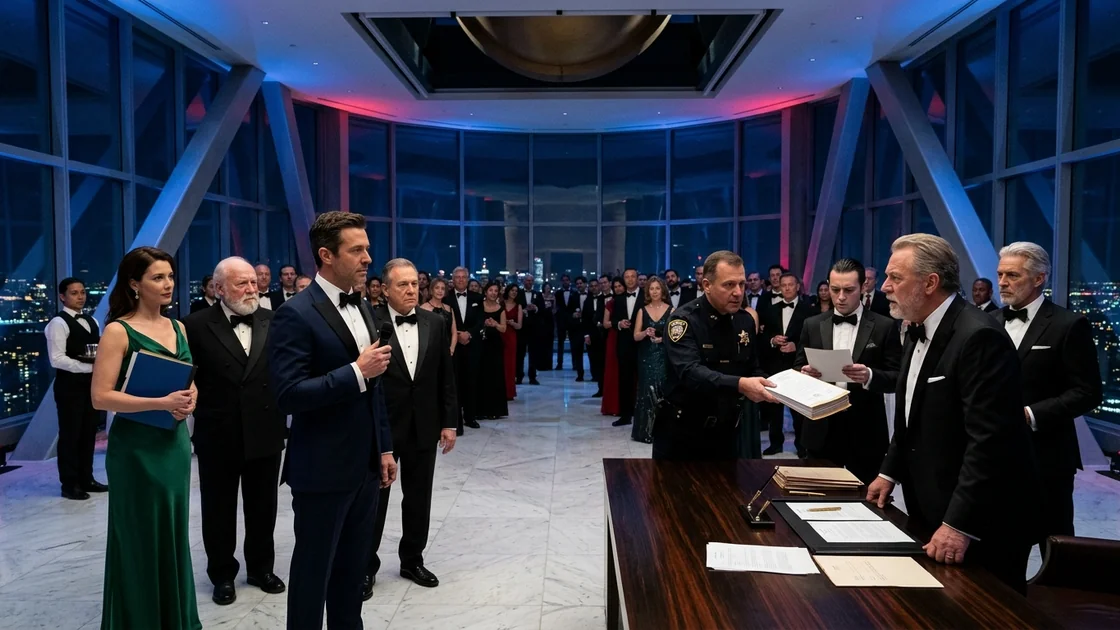
Julian Vance spent six years designing and building the Meridian Spire, only to have billionaire developer Victor Sterling refuse to pay the final thirty-eight million dollars owed to his architectural firm. Banking on the slow grind of the courts to bankrupt Julian before a lawsuit could ever reach trial, Sterling prepares to celebrate the grand opening of the skyscraper and secure a billion-dollar refinancing deal. However, Sterling and his battery of corporate lawyers have forgotten a critical forbearance addendum signed during a supply chain crisis three years earlier. Armed with an obscure cross-collateralized lien clause and a confessed judgment tied to the building occupancy permit, Julian attends the glittering opening night gala not as a defeated contractor, but as the man about to legally seize the entire tower in front of the city elite.
The wind at fourteen hundred feet did not blow; it sheared. It came off the Atlantic in invisible, heavy slabs of barometric pressure, striking the curved low-iron glass of the Meridian Spire’s crown and splitting into twin vortices that hummed at a frequency just below human hearing.
Julian Vance stood with his forehead pressed against the triple-glazed mullion of the one-hundred-and-tenth floor, feeling that sub-audible vibration travel through the soles of his Italian leather boots, up his shins, and into his teeth. To anyone else in the cavernous Sky Conservatory, the tower was dead still. Even in a forty-knot autumn gale, the champagne in the flutes resting on the caterers’ staging tables thirty feet behind him did not show a single concentric ripple.
Julian knew why. Seventy feet above his head, suspended within a structural steel cradle behind the acoustic ceiling baffles, hung a seven-hundred-ton sphere of cast bronze and laminated steel plates. It was a dual-stage tuned mass damper, tethered to computer-controlled hydraulic actuators that read the wind load on the building’s exterior diagrid exoskeleton millisecond by millisecond, shifting its immense weight counter to the sway of the tower. Julian had spent four months in a wind tunnel in Zurich perfecting the mathematics of that pendulum. He knew the exact yield strength of every high-tensile bolt holding it in the sky. He knew the quarry in Carrara from which the white statuary marble under his feet had been cut, and he knew the name of the master mason from Verona who had hand-selected the slabs so the grey veining would align across the expansion joints like continuous strokes of charcoal.
He knew everything about the Meridian Spire, except how he was going to tell his forty-two employees on Monday morning that they had built a monument to their own ruin.
"Magnificent, isn't it, Julian? You stand up here and the rest of the city looks like a circuit board someone dropped in the dirt."
Julian did not turn around immediately. Through the reflection in the glass, he watched Victor Sterling stroll across the polished stone floor. Sterling was sixty-one, though forty thousand dollars a year in hormone therapies, veneers, and bespoke Savile Row tailoring kept him looking like a remarkably preserved fifty. Behind him walked Gideon Cross, Chief Legal Officer of Sterling Horizon Development, carrying a slim calfskin portfolio as though it were a concealed weapon.
"The structural glazing passed its final hydrostatic pressure test this morning, Victor," Julian said, turning to face the developer. He reached into his coat pocket and drew out a thick cream-colored envelope bearing the embossed gold seal of his firm, Vance & Partners Architecture, alongside the municipal stamp of the Department of Buildings. "And the Deputy Commissioner signed off on the life-safety integration at noon. That is the final sign-off on the Certificate of Substantial Completion. The tower is legally habitable. Your gala next Friday is clear to proceed."
"I never doubted it," Sterling said, smiling warmly. He stepped beside Julian, clasping his hands behind his back and rocking on his heels as he looked out over the river. "When people told me I was crazy to hire a boutique design studio instead of Kohn Pedersen or Skidmore for a supertall, I told them they didn't understand vision. Corporations build boxes, Julian. Artists build landmarks. Look at that cantilever over the park. It’s arrogant. I love it."
Julian held the cream envelope in his hand, not yet extending it. "With the substantial completion certificate executed, the final retainage and the turnkey fabrication reimbursement are due. Thirty-eight million, four hundred thousand dollars. My comptroller sent the wire instructions to Gideon’s office at one o'clock."
The warmth in Sterling’s eyes didn't vanish; it simply froze over, becoming a glossy, impenetrable veneer. He glanced at Gideon Cross, then back out the window.
"Ah," Sterling murmured, as if Julian had brought up an mildly embarrassing personal ailment. "Yes. The final draw. Gideon, why don't you walk Julian through where our audit committee landed on that?"
Julian’s jaw tightened. "Audit committee? We aren't on a cost-plus contract, Victor. This is a fixed-fee and guaranteed reimbursement agreement."
Gideon Cross stepped forward. He was twenty years younger than Sterling, with hair slicked back so tightly it seemed to pull the corners of his eyes toward his temples, and he wore the serene, bloodless expression of a man who billed twelve hundred dollars an hour to ruin people's lives on paper.
"Mr. Vance," Cross said, his voice pitched to a polite conversational murmur that barely carried across the empty atrium. "Over the past sixty days, Sterling Horizon’s internal risk and compliance division has conducted a forensic review of the construction timeline and material procurement logs for the Meridian Spire. Regrettably, we have identified substantial variances from the baseline contract."
"Variances," Julian repeated. The word tasted like copper.
"Specifically," Cross continued, opening his calfskin folder to reveal a neatly tabbed stack of spreadsheets, "the four-month delay in the delivery of the curved curtain-wall units between floors seventy and ninety-two. Furthermore, our mechanical consultants have flagged the acoustic baffling in the mid-rise elevator shafts as non-compliant with the subjective comfort metrics outlined in Exhibit B of the initial design brief. Finally, there is the matter of the structural steel fabrication overruns from the Bavarian subcontractor."
Julian stared at the lawyer, then looked at Sterling. "Victor, what is this? The four-month delay three years ago wasn't caused by my firm. Your mezzanine lender froze your credit line while you were fighting the SEC over your Macau casino bonds! The German glass fabricator refused to load the shipping containers in Hamburg because your letters of credit bounced. I personally guaranteed that shipment. I mortgaged my firm's building and liquidated my family's real estate trust to wire twenty-two million dollars to Munich so your construction cranes wouldn't sit idle at eighty thousand dollars a day!"
"And we appreciated the team spirit," Sterling said, turning away from the glass and adjusting his cuffs. "Truly, Julian, it was heroic. The problem is, my institutional partners—specifically Harrison Thorne’s syndicate, who are refinancing the construction debt next Friday night—don't care about sentiment. They care about balance sheets. When a project comes in ninety days late, somebody has to absorb the carrying costs of the senior loan. That’s thirty-six million in interest alone."
"That delay was caused by your own illiquidity!" Julian’s voice echoed off the bare marble walls, rising toward the invisible bronze pendulum above them. "And the elevator acoustics? We tested them at thirty-two decibels! The spec called for thirty-five! It’s quieter than a library inside those cabs!"
"Subjective comfort metrics are notoriously open to interpretation," Cross said smoothly. "Our acoustic engineers found the tonal frequency of the counterweights displeasing. Under Section 9 of the Master Services Agreement, Sterling Horizon has the right to withhold final retainage and reimbursement pending the resolution of disputed performance metrics."
"You're holding back thirty-eight million dollars because you don't like the hum of an elevator counterweight?" Julian took a step toward Sterling. "Victor, twenty-two million of that isn't even my architectural fee. It’s the hard cash I fronted to Schuler-Glaskunst in Munich to keep your project alive! My bridge loan with Metro Commercial Bank matures in twenty days. If that wire doesn't hit my account by next week, the bank seizes my studio, my accounts are frozen, and Vance & Partners goes into Chapter 7 liquidation."
Sterling sighed, a long, theatrical exhalation, and placed a hand on Julian’s shoulder. Julian looked down at the hand until Sterling removed it.
"Julian, listen to me," Sterling said, adopting the tone of a patient father explaining the harsh realities of the world to a naive child. "You're a brilliant designer, maybe the best of your generation. Look around you. Your name is going to be in every architectural journal from Tokyo to London next month. You’ve already been paid fourteen million in progress draws over the last six years. You kept your lights on. You paid your staff. As for the final thirty-eight million... in the real world, the last ten percent of a billion-dollar development is always a negotiation."
"It is a signed contract," Julian said, his voice dropping an octave, cold and steady.
"A contract is just an invitation to a conversation," Cross interjected, snapping his leather folder shut. "Of course, if you disagree with our compliance assessment, you have remedies. You can file for arbitration, and should that fail, you can litigate in the Commercial Division of the State Supreme Court. Given the complexity of the engineering discovery—we have forty-six expert witnesses on retainer ready to depose your staff on every rivet and weld from the sub-basement to the spire—I estimate trial would commence in roughly four to five years. Discovery alone will cost your firm upwards of four million dollars."
Cross offered a thin, sympathetic smile. "However, because Mr. Sterling values his relationship with the creative community, he has authorized me to offer an immediate, full-and-final settlement. In exchange for the Certificate of Substantial Completion in your hand and a global release of all claims, Sterling Horizon will wire four million dollars to your operating account before five o'clock today."
The silence in the Sky Conservatory was absolute. Far below, the afternoon sun caught the surface of the harbor, turning the water the color of hammered brass.
"Four million," Julian whispered. "On a thirty-eight-million-dollar debt. Ten cents on the dollar."
"Ten and a half, actually," Cross corrected gently. "And it clears today. You can pay off your most aggressive creditors, restructure your personal debt, downsize your studio, and walk away with the greatest portfolio piece in the Western Hemisphere. Take the four million, Julian. Because if you don't, we’ll simply have the Department of Buildings issue the duplicate certificate directly to the owner of record on Monday morning, and you’ll get nothing until a judge says otherwise in 2030. Assuming your firm still exists to collect it."
Julian looked from the lawyer back to Victor Sterling. He had known Sterling was ruthless; no one amassed four billion dollars in metropolitan real estate by being a philanthropist. When Julian’s father, Marcus Vance—a lifelong structural engineer who had built bridges from Pittsburgh to Rotterdam—had warned him on his deathbed about working with men who treated steel and stone as mere financial derivatives, Julian had thought himself too careful to be burned. He had believed that excellence was a shield. He had believed that if he delivered a building so extraordinary, so structurally revolutionary that it added three hundred million dollars in immediate market equity to Sterling’s portfolio, the man would honor his word.
Now, looking into Sterling’s calm, sociopathic eyes, Julian realized the truth. Sterling wasn't withholding the money because he didn't have it, or because the elevators were loud. He was doing it because he could. To Victor Sterling, leaving thirty-four million dollars on the table simply because a piece of paper said he owed it was a failure of fiduciary aggression. He saw Julian’s looming bank default not as a tragedy to be averted, but as leverage to be exploited.
"You need the Certificate of Substantial Completion today so you can convert the Temporary Certificate of Occupancy into the Final Assembly Permit before Friday's gala," Julian said slowly, his mind suddenly shifting from the emotional shock of betrayal into the cold, structural calculus he used when analyzing a failing truss. "Harrison Thorne’s banking syndicate won't sign the one-point-two-billion-dollar takeout financing at the party unless the building is legally certified for full commercial occupancy."
"Which it is," Sterling said lightly. "As you just told me, the Deputy Commissioner signed off at noon. Whether you hand me your copy of the paperwork or Gideon picks up the certified duplicate from Municipal Plaza on Monday morning makes very little difference, except that handing it to me now buys you four million dollars of breathing room."
Sterling held out his hand, palm up, waiting for the cream-colored envelope.
Julian looked down at the envelope. Then, slowly, he slid it back into the inside breast pocket of his overcoat and buttoned the wool jacket.
"Keep your four million, Victor," Julian said. "You're going to need it for moving expenses."
Sterling chuckled, a dry, rasping sound. "Pride is an expensive luxury for an architect, Julian. Ask Stanford White. Take the weekend to think about it. On Monday morning, the offer drops to two million. By Wednesday, it’s zero, and you won't even be on the guest list for Friday night."
Julian didn't answer. He turned and walked across the vast expanse of Carrara marble toward the construction hoist, leaving the billionaire and his lawyer standing beneath the silent, seven-hundred-ton pendulum hanging in the dark above their heads.
The offices of Vance & Partners occupied a converted nineteenth-century ironworks in the historic district near the waterfront, a building with twenty-foot brick arches, timber trusses blackened by a century of foundry smoke, and tall clerestory windows that looked out toward the old slipways. Marcus Vance had bought the building in 1978 for forty thousand dollars when the neighborhood was a wasteland of abandoned warehouses; today, it was worth twelve million, and every brick of it was pledged as collateral to Metro Commercial Bank.
At nine o'clock that night, the main drafting hall was dark save for the green-shaded banker's lamp on Julian’s massive oak layout table in the mezzanine loft. The thirty workstations below were empty. Three months ago, to conserve cash while waiting for Sterling’s final milestone payment, Julian had been forced to furlough half his junior architects and forego his own salary entirely. The remaining staff worked with the quiet, brittle intensity of sailors on a submarine running out of oxygen.
Across the oak table sat two people: Arthur Pendelton, the firm’s sixty-eight-year-old Chief Structural Engineer, who had worked alongside Julian’s father for thirty years, and Elena Rostova, a partner at a boutique construction-law firm who had been Julian’s personal counsel since they graduated from Columbia together twenty years ago.
Between them sat four black archive boxes, their cardboard lids removed, spilling thousands of pages of bound riders, addenda, UCC filing receipts, and municipal permits across the architectural blueprints of the Meridian Spire.
"Twenty days," Elena said, rubbing her temples as she stared at the default notice from Metro Commercial Bank. She had kicked off her heels two hours ago, and her silk blouse was rumpled, her dark hair pinned up with a drafting pencil. "If Gideon Cross files a pre-emptive declaratory judgment suit on Monday claiming defective performance on the curtain wall, Metro’s risk committee will declare a technical covenant default on your bridge loan before the end of the week. They won't wait for the twentieth day. They'll sweep your operating accounts to cover the interest reserves."
"And a standard mechanic's lien?" Arthur asked, his gravelly voice thick with anger. He was a bear of a man with white bristles on his chin and permanent ink stains around his fingernails. "We built the damn thing! In this state, an architect and general turnkey manager has an automatic statutory right to slap a mechanic's lien on the real property the second a developer stiffs him!"
"Normally, yes," Elena said grimly. "If we filed a thirty-eight-million-dollar mechanic's lien against the deed of the Meridian Spire on Monday morning, it would cloud the title. Harrison Thorne’s syndicate would refuse to close the refinancing loan on Friday night until the lien was discharged. Sterling would be forced to either pay Julian or post a cash bond for a hundred and ten percent of the lien amount with the county clerk."
"Then let's file it at eight-thirty Monday morning!" Arthur slammed his palm onto the oak table, making the brass compasses rattle.
"We can't," Julian said quietly from the shadow beyond the green lamp.
Arthur blinked, turning toward him. "What do you mean we can't?"
Julian leaned forward into the pool of light and pulled a thick, blue-backed legal document from the third archive box. The staple at the top corner was rusted from three years in a humid storage vault. He slid it across the table toward Elena.
"Three years ago, in November," Julian said, "when Schuler-Glaskunst halted the glass shipments in Hamburg and I had to put up my own twenty-two million to save the construction schedule, Sterling’s senior construction lender—Continental Trust—panicked. To allow me to inject personal capital into the project without triggering a secondary debt default on their senior mortgage, Continental required Vance & Partners to sign an Absolute Subordination and Lien Waiver Agreement."
Elena picked up the blue-backed document, her eyes scanning the dense paragraphs of legalese. "I remember this week," she murmured, her brow furrowing. "I was in London handling the arbitration on the St. Pancras project. My senior associate, David Chen, handled the closing on this forbearance package with Gideon Cross while you were on the ground in Munich inspecting the glass autoclaves."
"Wait a minute," Arthur said, his face paling. "Are you telling me you waived our statutory right to file a mechanic's lien against the building? Julian, why in God's name would you sign that?"
"Because if I hadn't, Continental would have pulled the senior loan on Floor Sixty-Two, the project would have gone into receivership, and the sixteen million we already had tied up in engineering work would have been wiped out in bankruptcy court," Julian said. "Gideon Cross drafted the waiver himself. He pushed it across the table at four in the morning on the day the ship in Hamburg was scheduled to unload our glass back onto the dock. He thought he had pulled off the coup of the century—getting the architect to personally bail out the developer's supply chain while simultaneously stripping the architect of his statutory right to lien the real estate."
Elena was flipping pages rapidly now, the paper rasping in the quiet loft. "Wait. David Chen wasn't an idiot. He wouldn't have let you sign a naked lien waiver for twenty-two million dollars in hard cash advances without taking alternative security. Where is the counterpart addendum? If Continental Trust prohibited a lien on the real property—the land and the brick-and-mortar deed—what did David attach the security interest to?"
Julian reached back into the third box and pulled out a slim, burgundy-bound folder stamped CONFIDENTIAL: ESCROW INSTRUMENT #4409-B.
"My father was still alive that winter," Julian said softly, his fingers tracing the embossed lettering on the folder. "He was in the hospital on telemetry, three weeks before he died. When I told him what Sterling and Continental were demanding, he laughed so hard he set off his heart monitor. He told me: 'Julian, developers think the building is the dirt it sits on, because dirt is what banks understand. They forget that a modern skyscraper isn't just real estate. It's a machine held by a paper company. Don't lien the dirt. Lien the company, and keep the keys to the machine.'"
Elena opened the burgundy folder. As she read the first three pages, the color rose in her cheeks. She stopped slouching. Slowly, she reached over, pulled the drafting pencil out of her hair, let her dark locks fall over her shoulders, and sat bolt upright.
"Oh, my God," Elena whispered.
"What is it?" Arthur leaned over her shoulder, squinting through his bifocals. "Speak English, Elena, not bar-exam."
"Gideon Cross was so obsessed with keeping the real estate title clean for the senior mortgage lender that he fell into an Article 9 trap," Elena said, her voice trembling with a sudden, fierce exhilaration. She tapped the document with a manicured fingernail. "Look at the structure of the ownership. Victor Sterling doesn't own the Meridian Spire in his own name, and neither does his main parent company, Sterling Horizon. Like every major real estate development, the land and the building are owned by a single-purpose bankruptcy-remote entity: Meridian Spire Holdings, LLC."
"Standard practice," Arthur grunted. "Protects the billionaire if the building falls down."
"Yes, except look at how a Limited Liability Company is classified under the Uniform Commercial Code," Elena said, her eyes darting across the clauses of Rider G: The Turnkey Forbearance & Collateral Conversion Agreement. "Real estate is governed by real property law—mortgages, judicial foreclosures, statutory mechanic's liens that take four years to litigate in court. That's what Cross was counting on today when he threatened Julian with a five-year lawsuit. However, the membership shares of an LLC that owns real estate are not real property. Under UCC Article 9, membership interests in an LLC are classified as personal property—specifically, 'general intangibles' or 'investment securities.'"
Arthur looked from Elena to Julian. "Meaning what?"
"Meaning," Julian said, stepping into the light and placing both hands on the layout table, "to bypass Continental Trust’s ban on real estate liens, Cross agreed to pledge a hundred percent of the mezzanine equity of Meridian Spire Holdings, LLC as collateral for my twenty-two-million-dollar glass advance and my sixteen million in deferred architectural fees."
Elena turned four pages further in the burgundy folder, her breath catching as she saw a notarized signature page bearing Victor Sterling’s flamboyant, looping autograph in blue ink.
"He didn't just pledge the LLC shares," Elena breathed, looking up at Julian in awe. "David had him sign an Irrevocable Proxy and a Confession of Judgment for Execution upon Default, held in blind escrow by Fidelity National Title. Why didn't Cross redline this out?"
"Because of the trigger mechanism," Julian explained. "Cross wrote the trigger condition himself, thinking it made the clause completely toothless. Read Section 14.8(c)."
Elena read aloud, her finger tracing the text: "'The Security Interest, Proxy, and Confessed Judgment referenced herein shall remain dormant, non-enforceable, and subordinate during the entirety of the Construction Phase, and no Event of Default may be declared by Architect for non-payment of Deferred Fees or Advances unless and until Owner causes the premises to be occupied for a Commercial or Public Assembly of greater than five hundred (500) persons under a valid Certificate of Occupancy without having first remitted the Total Turnkey Balance in cleared funds to the Escrow Agent.'"
Elena stopped reading and looked up. A slow, wicked smile spread across her face.
"Cross thought that was a safe harbor for Sterling!" she exclaimed. "In 99.9 percent of commercial construction deals, the developer cannot get the final Certificate of Occupancy or hold a public event without paying off the general contractors and closing out the construction loan into permanent financing simultaneously! Cross assumed the refinancing bank would automatically pay your thirty-eight million out of the closing proceeds before the doors ever opened! He only put that language in to guarantee you couldn't pull the trigger and halt construction while the building was still unfinished!"
"Exactly," Julian said. "Three years ago, Sterling intended to close Harrison Thorne’s permanent refinancing loan ten days before the opening gala, which would have paid our thirty-eight million automatically through escrow, rendering Rider G null and void forever. By the time this week rolled around, three years and ten thousand legal documents later, Cross had completely forgotten the mechanics of the German glass forbearance rider. All he remembered was that Vance & Partners had signed a statutory mechanic's lien waiver."
"And instead of closing the permanent loan before the gala," Arthur said slowly, the gears turning behind his thick glasses, "Sterling moved the signing ceremony with Harrison Thorne’s syndicate to the gala itself—midnight on the one-hundred-and-tenth floor—so he could make a theatrical spectacle of it and squeeze you out of your money in the meantime!"
"Wait," Elena said, her lawyer's brain immediately testing the stress points of the structure, just as Arthur tested steel beams. "Let's check every weld on this before we get excited. For this to work on Friday night, three exact legal conditions have to be met simultaneously. First: the building has to have a valid Certificate of Occupancy allowing an assembly of more than five hundred people. Today, you didn't give Sterling the Certificate of Substantial Completion, which he needs to get the TCO upgraded on Monday."
"I didn't give it to Sterling," Julian corrected, pulling the cream envelope from his coat pocket and setting it on the table. "I had my courier file the original with the Department of Buildings at four-fifteen this afternoon, twenty minutes after I walked out of the tower. And I paid the expedited processing fee out of my own pocket so the Public Assembly Permit for the Sky Conservatory will be issued to Meridian Spire Holdings first thing Monday morning."
Elena stared at him. "You made sure his party was legal."
"If the party isn't legal, or if the Fire Marshal shuts it down before five hundred people walk into that room, the default trigger in Section 14.8(c) never fires," Julian said calmly. "I need Victor Sterling to throw the biggest, loudest, most crowded party in the history of this city. What's the second condition, Elena?"
Elena looked back down at the text. "Second: Sterling has to fail to wire the thirty-eight million four hundred thousand dollars to the escrow agent at Fidelity Title prior to the moment the five-hundred-and-first person steps into that building. If Gideon Cross smells a trap—if he realizes why you aren't suing him on Monday morning, or if he wonders why you filed the completion certificate yourself—he might pull the file from storage, see Rider G, and have Sterling wire the money from his personal credit lines on Friday afternoon just to kill the default."
"He won't look at the file if he thinks I'm broken and begging for scraps," Julian said. "On Monday afternoon, Elena, you're going to call Gideon Cross. Your voice is going to sound exhausted. You're going to tell him that Metro Commercial Bank has frozen our credit line, that I’m panicking, and that I’ll take his four-million-dollar settlement offer if he can just get Sterling to bump it to five million to cover our payroll taxes."
Elena’s eyes gleamed. "And Cross, being a sadist who bills by the hour, will tell me that Monday’s price dropped to two million, and he’ll stall our calls until the following week so he can watch you squirm during the gala. He won't look at the 2023 archive boxes because he thinks he’s negotiating from absolute strength."
"And the third condition?" Arthur asked, leaning forward on his knuckles.
"The execution," Elena said, tapping the Confession of Judgment and the UCC-9 Transfer of Control certificates. "Because this is a pledge of LLC membership shares accompanied by a signed Confession of Judgment and an Irrevocable Proxy held in escrow, we don't have to go through a judicial foreclosure sale. The moment the default condition is met—an assembly of over five hundred people with an unpaid escrow balance—the escrow agent at Fidelity is legally bound to release the endorsed LLC share certificates and the Proxy to Julian. Simultaneously, we file the Confession of Judgment with the County Clerk, who issues an immediate Writ of Execution to the Sheriff’s Civil Enforcement Division."
"Can the County Clerk issue a Writ of Execution at ten o'clock on a Friday night?" Arthur asked skeptically.
"No," Elena said, calculating rapidly. "The County Clerk's office closes at five o'clock sharp on Friday. Which means... Julian, how early does the gala start?"
"The VIP reception for the banking syndicate and the Mayor starts at eight o'clock in the Sky Conservatory," Julian said. "How do we bridge the gap between five o'clock and eight o'clock?"
Elena stood up and began pacing the length of the mezzanine, her bare feet silent on the old pine floorboards. "Wait. Look at the language again: '...causes the premises to be occupied for a Commercial or Public Assembly of greater than five hundred (500) persons...' It doesn't say five hundred VIP guests in tuxedos. It says five hundred persons occupying the premises for the assembly!"
Julian’s eyes narrowed as he followed her logic. "To put on a sit-down gala and culinary exhibition for six hundred VIPs across the top four floors of a skyscraper..."
"...Sterling’s event planners have to bring in at least three hundred caterers, sommeliers, floral riggers, lighting technicians, audio engineers, private security guards, valet staff, and musicians," Elena finished triumphantly, spinning around to face them. "And when do they load in for an eight o'clock black-tie gala?"
"By two o'clock in the afternoon," Arthur said, a slow grin splitting his grizzled beard. "And with two hundred building staff, lobby concierges, and the early press pool already inside the tower..."
"We hit five hundred people occupying the building for the assembly by three-thirty Friday afternoon!" Elena said, slapping the oak railing. "I can have a licensed private investigator and a certified public notary stationed at the freight and service entrances with digital clickers logging every catering worker and security guard who crosses the threshold under the Special Assembly Permit. At 4:15 PM, when the escrow account at Fidelity Title still shows a balance of zero, the escrow officer certifies the default and hands me the LLC transfer documents. At 4:40 PM—twenty minutes before the courthouse closes—I walk into the County Clerk’s office, stamp the Confession of Judgment, and hand the Writ of Execution directly to the Commander of the Sheriff’s Civil Enforcement Unit!"
Arthur let out a booming laugh that echoed off the old foundry roof trusses, then suddenly stopped, his brow furrowing again. "Hold on. Even if the Sheriff shows up at the gala with a piece of paper saying Julian now owns Meridian Spire Holdings, LLC, Victor Sterling has thirty armed private security guards on that floor, and every elevator, turnstile, and magnetic door lock in that building is controlled from the security bunker in sub-basement three. Cross will scream that the document is a forgery, tell his goons to throw you and two sheriff's deputies into the street, and lock down the building until Monday morning when he can run to an appellate judge for a temporary restraining order!"
The loft went quiet again. Arthur was right. In the physical world, possession was nine-tenths of the law. If Sterling physically ejected Julian from the gala, went ahead with signing the one-point-two-billion-dollar refinancing package with Harrison Thorne at midnight, and wired the money offshore before Monday morning, untangling the mess would take years—even with a valid UCC transfer. To stop Harrison Thorne from signing that loan with Sterling, and to make the seizure undeniable, Julian didn't just need the paper title to the LLC.
He needed physical, unmistakable command of the skyscraper itself.
Julian looked down at the master blueprint spread across the table. His fingers rested on the schematic of the one-hundred-and-eighth floor—the mechanical heart of the tower, where the seven-hundred-ton bronze tuned mass damper hung above the Sky Conservatory, and where the redundant fiber-optic spines of the Meridian Nerve converged.
The Meridian Nerve was the proprietary building automation matrix that Vance & Partners’ computational engineering team had spent three years coding from scratch. It controlled everything: the electrochromic tinting of the twelve thousand exterior glass panels, the regenerative braking of the twenty-four high-speed double-deck elevators, the theatrical LED architectural lighting embedded in the exterior diagrid exoskeleton, the acoustic reinforcement arrays in the atrium, and the hydraulic locking pins of the tuned mass damper.
"Elena," Julian said softly. "Look at Exhibit F of the Master Services Agreement. The Intellectual Property and Software Licensing Schedule."
Elena walked back to the table, flipped open the primary contract, and turned to Exhibit F. She read for ten seconds, then looked up at Julian.
"The software source code and root administrative credentials for the Meridian Nerve operating system remain the exclusive intellectual property of Vance & Partners Architecture," she read, "operating under a temporary developer's evaluation license, until the issuance of the Final Accounting Release upon full payment of all contract sums."
"Sterling’s IT security team changed the local operator passwords in the sub-basement bunker last week," Arthur noted. "They locked our field engineers out of the local terminals on Tuesday."
"They changed the local operator passwords," Julian said, a cold, geometric certainty settling over his features. "They didn't change the root kernel architecture, because they don't have the source code. And three months ago, when we installed the seismic and wind-load telemetry array inside the housing of the tuned mass damper on Floor 108, I had an air-gapped hardware master node wired directly into the structural fiber spine—keyed to my personal biometric token and the cryptographic key on our studio server."
Arthur stared at him. "Why the hell did you put a master override node inside the pendulum housing?"
"Because my father taught me never to hand over the keys to a bridge until the check clears," Julian replied.
The next five days were a masterclass in theatrical misdirection.
On Monday morning at ten o'clock, Julian’s municipal expeditor walked out of the Department of Buildings with the approved Public Assembly Permit for the Meridian Spire and messengered a courtesy copy directly to Gideon Cross’s office. An hour later, Cross called Elena Rostova.
Julian sat in Elena’s conference room, listening on speakerphone as Cross’s smooth, condescending voice filled the room.
"Elena, I must say I was pleasantly surprised to see that Julian came to his senses and filed the final sign-offs this morning," Cross said. "I assume this means you’re ready to execute the release documents for the settlement?"
Elena slumped in her chair as if she were physically on the verge of tears, letting her voice crack with just the right amount of professional desperation. "Gideon, please. We’re putting together the release language now, but you have to help me here. Metro Commercial Bank sent us a five-day cure notice this morning. Four million doesn't even cover the principal reduction they’re demanding to hold off on seizing Julian’s building, let alone the back wages for his staff. If Victor can just come up to six million—that’s still less than twenty cents on the dollar—Julian will sign a complete non-disparagement agreement and even attend the gala on Friday so the press doesn't suspect there’s a rift between the developer and the architect."
On the other end of the line, Cross gave a soft, practiced sigh. "Elena, you know how much I respect you, which is why it pains me to remind you of what Mr. Sterling told your client on Friday. The four-million-dollar figure was an expiring courtesy. Once my compliance team spent the weekend cataloging the acoustic deficiencies in the low-rise HVAC plenums, our internal valuation of Julian’s liability increased significantly. The current settlement figure is two million, two hundred thousand. Take it or leave it."
"Gideon, that will bankrupt him!" Elena pleaded, looking across the table at Julian and giving him a silent thumbs-up. "At least give me until Friday afternoon to get the bank's workout committee to accept two-point-two as a short payoff!"
"Tell you what," Cross said, his voice dripping with magnanimity. "Victor wants a unified front for the press and for Harrison Thorne’s syndicate on Friday night. It looks good for the brand to have the visionary architect smiling next to the developer when the champagne corks pop. If Julian shows up in black tie on Friday night, shakes hands with the institutional investors, and praises Victor’s leadership to the Wall Street Journal reporter, I will personally hold the two-point-two-million-dollar offer open until Monday morning at nine o'clock. Not a penny more, and if he breathes a single word about billing disputes to anyone at that party, the offer drops to zero and we file our counterclaim on Tuesday. Do we understand each other?"
Julian leaned forward slightly, his eyes fixed on the black plastic speakerphone.
"Yes, Gideon," Elena whispered, sounding utterly defeated. "I'll... I'll tell him to wear his tuxedo. Just please don't pull the two-point-two before Monday."
The line clicked dead. Elena straightened up, smoothed her skirt, and took a sip of espresso. "Hook, line, and sinker. He didn't even bother having a paralegal pull the 2023 forbearance binders. Why would he? He thinks he just bought a thirty-eight-million-dollar discount and a free publicity prop for the price of a phone call."
For the rest of the week, Julian moved like a ghost through the preparations for his coup.
On Wednesday morning, he met privately with Thomas Albright, the Senior Vice President of Commercial Escrow at Fidelity National Title. Albright was a fastidious man in his sixties who wore three-piece pinstripe suits and regarded escrow instructions with the fanaticism of a medieval monk guarding sacred scripture. For two hours in a windowless conference room at Fidelity’s headquarters, Julian and Elena walked Albright and Fidelity’s internal general counsel through Escrow Instrument #4409-B and Rider G.
Fidelity’s general counsel adjusted his spectacles, examining the original wet-ink signatures of Victor Sterling and Gideon Cross from three years prior, then comparing them against the wire ledger for Escrow Account #88104.
"The language of the escrow instruction is completely unambiguous, Mr. Albright," the title company’s counsel said after a long silence. "There is no discretionary cure period provided for in Section 14.8(c). It is a springing, self-executing condition precedent. If Mr. Vance’s counsel presents you with a notarized affidavit and municipal permit confirmation demonstrating that more than five hundred persons have occupied the Meridian Spire for a commercial assembly while Account #88104 holds a balance of less than thirty-eight million, four hundred thousand dollars, Fidelity National Title is legally obligated to date-stamp and release the endorsed LLC membership certificates and the Irrevocable Proxy to Mr. Vance immediately. If we delay even by an hour, we become liable for the thirty-eight million."
Albright nodded solemnly, placing the burgundy folder into his fireproof desk safe. "I will remain at my desk until five o'clock on Friday, Mr. Vance. If the wire has not crossed the Federal Reserve system by the moment your affidavit arrives, the certificates are yours."
On Thursday afternoon, while Victor Sterling was giving an exclusive television interview in the lobby of the Meridian Spire—gesturing grandly at the soaring diagrid columns and explaining to the anchor how he had personally sketched the structural concept on the back of a cocktail napkin in St. Barts—Julian was six blocks away in the basement of the Municipal Building, meeting with Captain Raymond Vance-Miller of the County Sheriff’s Civil Enforcement Division.
Captain Miller was a twenty-five-year veteran who had seized everything from Gulfstream jets and Warhol paintings to Wall Street hedge fund offices. He looked over the draft Writ of Execution and the UCC Article 9 Transfer of Control paperwork that Elena laid before him.
"Usually, when we execute a turnover order on a business entity, we show up at nine in the morning when the receptionist is making coffee," Captain Miller said, chewing on an unlit toothpick. "You're asking me to keep a six-man civil enforcement detail on overtime on a Friday night and serve a corporate eviction on Victor Sterling in the middle of a black-tie society gala with the Mayor in the room?"
"The statutory execution fee and the municipal overtime bond have already been certified by the clerk's pre-filing desk, Captain," Elena said smoothly. "And we aren't asking you to arrest anyone. Once the County Clerk stamps the Confessed Judgment at four-forty-five tomorrow afternoon, Mr. Vance becomes the sole lawful Managing Member of Meridian Spire Holdings, LLC. At ten o'clock tomorrow night, he will simply exercise his property rights to revoke the license of an unruly trespasser—namely, Mr. Sterling—and request that the Sheriff’s Department escort him off the premises to prevent a breach of the peace."
Captain Miller took the toothpick out of his mouth and looked at Julian with a glint of dry amusement in his eyes. "My brother-in-law is a drywall contractor in Queens. Nine years ago, Sterling Horizon stiffed him for four hundred grand on that luxury condo project in Midtown. My sister had to sell her house." He tapped the folder with a thick forefinger. "Get that clerk's stamp on the writ before five o'clock tomorrow, counselor. My boys and I will have our uniforms pressed."
Friday arrived cold and crystal clear, the kind of late October day that made the skyline look as though it had been carved out of blue diamond.
From noon onward, Julian sat with Arthur Pendelton inside an unmarked transit van parked across the avenue from the service entrance of the Meridian Spire on 54th Street. Inside the van, two licensed private investigators—both retired FBI agents hired by Elena’s firm—operated high-definition telephoto cameras paired with digital tally counters and facial-recognition logging software that prevented double-counting anyone who walked out and walked back in.
Through the windshield, Julian watched the machine he had designed come alive for its coronation.
A fleet of white refrigerated trucks from the city’s most exclusive catering house lined the curb. Sous-chefs in white jackets, floral designers wheeling towering arrangements of white orchids, union stagehands hauling crates of lighting trusses, and squads of broad-shouldered private security guards in dark suits with earpieces streamed continuously through the loading bay doors beneath the cantilevered steel ribs of the base.
"Count?" Julian asked quietly at two-thirty.
"Two hundred and eighty-four service and event personnel checked in through the loading dock," the older investigator said, eyes glued to his tablet monitor. "Plus one hundred and twelve building staff, engineers, and concierge personnel logged through the main employee turnstiles since the morning shift change. That’s three hundred and ninety-six."
At three-fifteen, four black Mercedes sprinter vans pulled up to the VIP side entrance. Out stepped the production crew for the television networks, followed by forty hired harpists and string players from the Philharmonic, and fifty-six white-gloved sommeliers and captains for the midnight champagne toast.
"Four hundred and ninety-two," Arthur muttered, his eyes fixed on the red digital readout on the investigator’s screen. "Come on, Victor. Invite a few more sycophants early."
At three-forty-two, a chartered bus bearing the logo of Sterling Horizon Development pulled into the loading zone. The doors hissed open, and thirty-five junior executives, publicists, and investor-relations staffers from Sterling’s headquarters spilled out onto the sidewalk, carrying gift bags and bound leather prospectuses for Harrison Thorne’s banking syndicate. They filed rapidly through the revolving glass doors of the atrium, flashing their credentials to the security desk.
The digital counter on the tablet clicked upward: 501... 510... 527.
"Five hundred and twenty-seven persons occupying the premises for the permitted assembly," the lead investigator announced, pressing a key that generated a cryptographic timestamp and exported the photographic log to a thumb drive. He signed the pre-printed affidavit on his clipboard, and the second investigator—a commissioned Notary Public—stamped it with his raised metal seal at 3:46 PM.
Elena, who was sitting in the back of a waiting town car ten feet behind the van, took the notarized packet through the window and tapped the shoulder of her driver. "Fidelity Title. Step on it."
Julian remained in the van, watching the sun begin its slow descent toward the New Jersey Palisades. As the light angled lower, the exterior of the Meridian Spire began to perform the optical trick Julian had spent a year perfecting: the bevels of the low-iron glass caught the amber wavelengths of the sunset while reflecting the deep cobalt of the zenith, making the fourteen-hundred-foot needle look like a pillar of liquid fire rising out of the grey granite of Manhattan.
At 4:18 PM, Julian’s phone buzzed once. It was a text from Elena: Wire ledger at zero. Albright has certified the default. I have the endorsed LLC shares and the Proxy in my briefcase. Heading to the Courthouse.
At 4:51 PM—nine minutes before the government of the county shut down for the weekend—his phone buzzed a second time: Judgment confessed and entered. Writ of Execution signed by the Clerk and handed to Captain Miller. You are officially the sole Managing Member of Meridian Spire Holdings, LLC. Go put on your tuxedo, boss.
At eight-thirty that evening, the base of the Meridian Spire was awash in the glare of flashbulbs and television spotlights. Velvet ropes held back a crowd of onlookers five deep along the Italian travertine plaza while a line of Maybachs, Rolls-Royces, and armored Cadillacs discharged the financial and political aristocracy of the Eastern Seaboard onto a slate-grey carpet.
Julian stepped out of a town car at the corner, accompanied by Elena—stunning in an emerald silk gown that concealed a leather legal portfolio strapped inside her evening wrap—and Arthur, looking remarkably dignified in a vintage double-breasted dinner jacket.
As Julian walked across the plaza he had designed, he felt a strange, weightless serenity. He looked up at the soaring diagrid entrance portal, where two forty-foot structural steel nodes transferred twelve thousand tons of gravity load around the column-free lobby without a single interior pillar obstructing the view. Nobody on the grey carpet was looking at the structural nodes; they were looking at each other, air-kissing and flashing fifty-thousand-dollar watches for the society photographers.
Inside the lobby, Gideon Cross was standing near the private express elevator bank, chatting with two city councilmen. When he spotted Julian walking across the polished granite, Cross excused himself and glided over, a flute of Dom Pérignon in his hand.
"Julian," Cross purred, his eyes sweeping approvingly over Julian’s midnight-blue tuxedo, then landing on Elena. "And Ms. Rostova. I’m glad to see reason prevailed. Victor is upstairs in the Conservatory holding court with the Mayor and Harrison Thorne. Have a drink, mingle, smile for the cameras. Just remember our little arrangement—keep the conversation to aesthetics, and on Monday morning, I’ll authorize that two-point-two-million-dollar wire so you can keep your doors open."
"You're all heart, Gideon," Julian said mildly. "Where is the signing ceremony with Thorne’s syndicate taking place?"
"On the dais right under the viewing mezzanine at ten o'clock," Cross said, glancing at his Patek Philippe watch. "We moved it up from midnight so the European markets will see the press release before the Frankfurt bond desk opens on Monday. Once Harrison Thorne signs the one-point-two-billion-dollar note, Victor is going to announce his next tower on the West Side. Enjoy the party, Julian. After tonight, you won't have much reason to visit a room like this."
Cross patted Julian’s arm and strolled back toward the councilmen.
Julian, Elena, and Arthur stepped into Express Cab Four. The doors slid shut with an almost imperceptible whisper. As the double-deck cab accelerated skyward at two thousand feet per minute, Arthur closed his eyes and listened to the faint, harmonic purr of the active magnetic rollers guiding the car up the laser-aligned rails.
"Thirty-one decibels," Arthur muttered with fierce pride. "Displeasing counterweight frequency, my ass."
Forty-two seconds later, the doors parted on the one-hundred-and-tenth floor.
The Sky Conservatory was breathtaking. Two stories of curved, mullion-free glass wrapped around three hundred and sixty degrees of the city, suspended fourteen hundred feet above the twinkling grid of avenues and bridges. Above the central atrium, the acoustic ceiling panels had been partially retracted as Julian had designed them to be for special occasions, revealing the lower hemisphere of the seven-hundred-ton bronze tuned mass damper, gleaming like a captive sun in its cradle of massive hydraulic rams.
Six hundred of the wealthiest people in the world filled the room. Waiters navigated the crowd with silver trays of Beluga caviar and Kobe beef tartare; a twenty-piece chamber orchestra played Vivaldi near the cantilevered sky-garden on the south face; and at the center of the north terrace, beneath a forty-foot ice sculpture of the Meridian Spire, stood a long table of polished macassar ebony where the closing binders for the one-point-two-billion-dollar refinancing loan were already laid out with gold Montblanc pens.
Standing beside that table was Victor Sterling, laughing uproariously with the Mayor and Harrison Thorne, the silver-haired patriarch of Thorne-Blackwood Capital.
Julian did not approach Sterling immediately. Instead, he walked slowly toward the eastern perimeter of the room, where a discreet glass staircase led up to the narrow structural inspection catwalk on Floor 109, just beneath the damper cradle. He took a champagne flute from a passing waiter, set it down untouched on a side ledge, and drew his slim titanium smartphone from his jacket pocket.
"Arthur," Julian said quietly, looking up at the bronze sphere above them. "What is the current wind velocity at the parapet?"
Arthur pulled out his own phone, checking the public meteorological feed from the spire’s weather mast. "Thirty-eight knots out of the northwest, gusting to forty-five."
"Without the active hydraulic damping of the pendulum," Julian murmured, "what is the natural period of oscillation at this height in a forty-five-knot crosswind?"
"About nine seconds," Arthur said, a wicked gleam appearing behind his bifocals. "Completely safe structurally—the diagrid steel could take a Category 4 hurricane without yielding a millimeter—but locking the damper pins in a forty-knot gust will allow the top ten floors to sway about fourteen inches off center. Just enough to make the chandeliers swing, spill a bit of thousand-dollar champagne, and remind every banker in this room that they are standing on top of a fourteen-hundred-foot tuning fork that only one man in this building knows how to quiet."
At nine-forty-five, a chime sounded through the invisible acoustic arrays embedded in the marble pilasters. The chamber orchestra brought their movement to a graceful halt.
Victor Sterling stepped up onto the low glass podium in front of the ebony signing table, tapping the brushed-steel microphone. The chatter of six hundred guests subsided into an attentive hush.
"My friends, Mr. Mayor, Harrison, ladies and gentlemen," Sterling began, his amplified voice booming warmly across the marble expanse as he spread his arms wide, framing himself against the glittering skyline of Midtown behind him. "Welcome to the top of the world."
Polite applause rippled through the room, accompanied by the flash of press cameras clustered near the ropes by the elevator foyer.
"Seven years ago, when I stood on an empty parcel of bedrock fourteen hundred feet below our shoes, people told me the era of the great American skyscraper was over," Sterling said, pacing the stage with the practiced cadence of a televangelist. "They said the engineering was impossible for a lot this narrow. They said the financial markets didn't have the stomach for a one-point-five-billion-dollar gamble. Well, tonight, I think we can safely say the skeptics were wrong!"
Louder applause now. Gideon Cross, standing near the front row beside the refinancing table, beamed and led the cheering.
"A building like the Meridian Spire doesn't happen by committee," Sterling continued, his voice swelling with emotion as he looked directly toward Harrison Thorne and the row of European banking directors seated beside the signing table. "It requires singular, uncompromising leadership. It requires a developer who is willing to bear the burden of every detail, every risk, every sleepless night, and who refuses to allow minor tradesmen and contractors to compromise perfection! Tonight, at ten o'clock, my friend Harrison Thorne and his syndicate at Thorne-Blackwood Capital will join me at this table to execute the largest single-asset commercial refinancing in the history of this city—one point two billion dollars—cementing Sterling Horizon’s absolute ownership of the crown jewel of the skyline for the next half-century!"
Sterling raised his champagne glass toward the bankers. "Before we put pen to paper, I did want to acknowledge the draftsman who helped execute my vision. Julian Vance is somewhere in the back of the room tonight. Julian, thank you for your assistance. We always take care of the people who work for us."
A few scattered claps sounded as heads turned toward the eastern edge of the conservatory. Gideon Cross looked directly at Julian, his eyes narrowing slightly with a smug, warning glint: Smile and wave, two million two.
At that exact moment, Julian’s phone vibrated twice in his palm. It was a text from Captain Raymond Miller down in the main lobby: We are in the building. My sergeant just served the local security chief in the sub-basement with the Writ. We are coming up in Express Cab Two.
Julian did not wave. Instead, he pressed his thumb to the biometric sensor on his phone, opening the encrypted SSH tunnel to the hardware master node buried inside the damper housing forty feet above his head. He typed a six-digit execution code and pressed ENTER.
Instantly, the warm, golden incandescent glow of the Sky Conservatory vanished.
A collective gasp rose from six hundred throats as the room plunged into deep, cobalt-blue emergency architectural lighting. Outside the glass, the vertical ribbons of white LEDs running up the exterior diagrid exoskeleton shifted simultaneously from Sterling Horizon’s signature gold to the deep crimson and silver of Vance & Partners’ corporate crest.
Then, above their heads, a sound like the bolt of a titanic vault sliding home echoed through the atrium: CLANG-THUD.
The hydraulic actuators of the seven-hundred-ton bronze pendulum locked into their static maintenance cradles. Four seconds later, as a forty-four-knot gust of October wind slammed into the broad northwest face of the spire, the one-hundred-and-tenth floor did something it had never done before.
It moved.
It was a slow, majestic, unmistakable lateral roll—fourteen inches to the southeast over four seconds, then fourteen inches back. Crystal pendants on the bar chandeliers chimed against one another. Across the room, platters of champagne flutes slid three inches across glass tables; fifty guests gasped and grabbed for the brass handrails or each other’s shoulders as their inner ears registered the sway of a fourteen-hundred-foot needle in the sky.
"What the hell is this?!" Victor Sterling barked into the microphone, grabbing the edge of the glass podium as his champagne sloshed over his knuckles. He glared toward the back of the room where his facility manager was frantically tapping an iPad that now displayed a red padlock icon. "Fix the lights! Why did the damper lock?!"
Sterling’s microphone suddenly cut dead with a sharp pop.
A second later, a single crisp spotlight from the ceiling truss illuminated the base of the inspection stairs on the eastern side of the room, where Julian Vance stood holding a slim wireless lavalier transceiver he had paired directly to the Meridian Nerve audio matrix.
"Good evening, ladies and gentlemen," Julian’s voice came through every speaker in the conservatory—clear, calm, and resonant. "Please don't be alarmed by the motion. What you are feeling is a fourteen-inch lateral deflection caused by a forty-four-knot wind load against sixty thousand square feet of curtain wall when my proprietary active-damping algorithm is placed in standby mode. The building is entirely safe. It will simply continue to rock like a schooner in the North Atlantic until I tell it to stop."
Every eye in the room spun toward Julian. Harrison Thorne stood up from the signing table, his silver eyebrows drawn together in alarm as he looked from Julian back to a red-faced Victor Sterling.
"Cut his mic!" Gideon Cross shouted at the audio technicians by the service doors, his calm veneer shattering as he strode toward Julian. "Security! Get him out of here! Julian, you just cost yourself two million dollars! You're trespassing!"
"Actually, Gideon, I'm not," Julian said, walking slowly forward through the parted crowd as the spotlight tracked him automatically across the Carrara marble. Beside him walked Elena Rostova, who reached into her evening wrap and withdrew the blue-backed, gold-stamped documents.
At that same instant, the bronze doors of Express Cab Two chimed and slid open.
Six uniformed deputies of the County Sheriff’s Civil Enforcement Division stepped out into the conservatory, led by Captain Raymond Miller, his gold shield gleaming under the blue lights. Flanking the deputies were four of Sterling’s own private security guards, their hands held visibly away from their sides, having already been informed by Captain Miller in the elevator that interfering with a supreme court writ of execution was a Class D felony.
"What is the meaning of this?!" Victor Sterling roared, stepping off the podium, his voice unamplified now and straining to carry over the murmur of the stunned crowd. "Mayor, do you see this? Who called the Sheriff?!"
"I did, Victor," Julian said over the building’s speakers, stopping ten feet from the ebony signing table. He tapped his phone screen once. Above them, the hydraulic pins retracted with a smooth pneumatic hiss, the bronze sphere shifted four inches to port to counter the wind, and the floor beneath their feet immediately became as solid and motionless as bedrock.
"Mr. Thorne," Julian said, addressing the head of the banking syndicate directly while ignoring Sterling’s purple-faced fury. "Before you put your signature on a one-point-two-billion-dollar refinancing note with Victor Sterling, your legal counsel should be aware that as of four-fifty-one this afternoon, neither Victor Sterling nor Sterling Horizon Development owns a single share of Meridian Spire Holdings, LLC."
A dead, suffocating silence fell over the conservatory. The Wall Street Journal reporter near the front row raised his phone, recording every word.
Gideon Cross let out a shrill, barking laugh, stepping between Julian and the bankers. "He’s delusional! Harrison, don't listen to a word of this. You have our title insurance binder from Fidelity National right on the table! Vance & Partners is an unpaid contractor throwing a tantrum because we held back their retainage for construction defects! He even waived his statutory mechanic's lien rights three years ago!"
"Tell him what he signed to get that waiver, Elena," Julian said calmly.
Elena stepped forward and laid two documents directly onto the ebony table in front of Harrison Thorne and his general counsel, then handed a duplicate copy to Gideon Cross.
"In November of 2023," Elena said, her voice amplified by Julian’s microphone so that every billionaire, politician, and journalist in the room heard every syllable, "to induce Mr. Vance to personally guarantee twenty-two million dollars in German structural glass shipments after Mr. Sterling’s credit lines froze, Mr. Sterling and Mr. Cross executed Rider G: The Turnkey Forbearance & Collateral Conversion Agreement. Because the senior bank prohibited a real estate lien on the deed, Mr. Sterling pledged one hundred percent of the UCC Article 9 membership equity of Meridian Spire Holdings, LLC as security for Mr. Vance’s thirty-eight million, four hundred thousand dollars in deferred fees and advances, accompanied by a signed Confession of Judgment and an Irrevocable Proxy held in escrow by Fidelity National Title."
Gideon Cross stared down at the paper in his hands. As his eyes hit the photocopy of his own signature beneath Section 14.8(c), the blood drained so completely from his face that he looked like one of the Carrara marble statues in the lobby.
"No..." Cross whispered, his fingers trembling as he flipped the page. "No, this was only a construction-phase covenant! It wasn't supposed to trigger unless..."
"...unless you occupied the building for an assembly of more than five hundred people under a valid Certificate of Occupancy without paying the thirty-eight million four hundred thousand dollars into escrow first," Julian finished for him. He looked at Sterling, whose mouth had opened slightly as the trap doors of the law slammed shut around him. "You wanted to save thirty-eight million dollars by daring me to sue you for five years, Victor. And you were so eager to throw yourself a coronation tonight before closing Harrison’s loan that you invited six hundred people into this room with an empty escrow account. We hit five hundred and twenty-seven occupants at three-forty-six this afternoon. At four-fifteen, Thomas Albright at Fidelity Title released the endorsed LLC share certificates to me. At four-fifty-one, the County Clerk entered your confessed judgment."
Captain Miller stepped forward, his leather duty belt creaking in the silence, and handed a thick, court-stamped packet directly to Victor Sterling.
"Victor Sterling," Captain Miller said in a flat, official baritone. "By virtue of a Writ of Execution issued by the Supreme Court of this State, I am placing Mr. Julian Vance in immediate legal and physical possession of Meridian Spire Holdings, LLC and all real and personal property appertaining thereto. At the direction of the Managing Member, your license to remain on these premises is hereby revoked."
"This is a joke!" Sterling shouted, throwing the legal packet onto the marble floor as spittle flew from his lips. He spun toward the Mayor and Harrison Thorne. "It’s a technicality! A paper trick! Gideon, get Judge Rollins on the phone right now! Get an emergency stay! This building is worth one point eight billion dollars! He can't take a two-billion-dollar skyscraper over a thirty-eight-million-dollar architectural bill!"
"Actually, under UCC Article 9 strict foreclosure and a confessed judgment of equity transfer, he can, Victor," said a quiet, gravelly voice from the signing table.
Everyone turned to look at Harrison Thorne’s chief legal counsel, an elderly Wall Street lawyer who had been reading Elena’s documents through his half-moon spectacles alongside the updated electronic title alert that had just popped up on his tablet from Fidelity National Title.
The old lawyer looked up at Harrison Thorne and shook his head slowly. "The escrow transfer is ironclad, Harrison. And it's already been recorded with the Secretary of State and the County Clerk. If you want to sue to unwind it on grounds of equitable windfall, Mr. Sterling, you're welcome to try—though given the complexity of the commercial discovery, I estimate a trial would take roughly four to five years. In the meantime, Mr. Julian Vance is the sole lawful owner of the Meridian Spire. If we sign these loan documents with Victor tonight, we’d be lending a billion dollars to a man who has as much legal connection to this building as the waiter holding that tray of shrimp."
Julian looked at Gideon Cross, whose knees seemed to be visibly buckling beneath his bespoke trousers. "Four to five years of litigation," Julian murmured softly. "Isn't it amazing how long discovery takes, Gideon?"
Sterling lunged forward two steps toward Julian, his fists clenched, fifty years of boardroom bullying boiling over into raw animal rage. "You ungrateful little bastard! I made you! That’s my name on the brochure!"
Two sheriff's deputies stepped smoothly into Sterling’s path, their hands resting near their batons.
"Mr. Sterling," Captain Miller said calmly. "You can walk into Express Cab Two on your own two feet right now, or you can take the ride down in handcuffs for disorderly conduct and criminal trespass in front of the Wall Street Journal. Your choice."
Sterling froze. He looked around the glittering conservatory—at the Mayor, who was suddenly studying the pattern of his own shoes; at the socialites and hedge fund titans who were backing subtly away from him as if poverty were contagious; and at the press photographers whose shutters were clattering like machine guns, capturing the exact moment the billionaire developer became a trespasser in his own monument.
Trembling with a fury that had nowhere to go, Victor Sterling yanked his tuxedo jacket straight, turned on his heel, and marched stiffly into the open elevator cab alongside a shell-shocked Gideon Cross. Four sheriff's deputies stepped in behind them.
Julian watched the bronze doors slide shut. Then, with a tap of his phone screen, he restored the warm golden lighting to the Sky Conservatory and cued the chamber orchestra’s monitors to resume playing.
Waiters hesitated, then slowly began circulating again, though the buzz of conversation in the room was now electric with shock and awe.
Julian walked over to the macassar ebony table, where Harrison Thorne was still standing beside the open leather binders of the one-point-two-billion-dollar refinancing package. The silver-haired banker studied Julian for a long moment, his shrewd grey eyes taking the measure of the man who had just executed the most ruthless corporate ambush in the history of Manhattan real estate without raising his voice above a conversational tone.
"Well, Mr. Vance," Thorne said finally, glancing down at the loan documents. "I have a problem. My syndicate has one point two billion dollars sitting in a clearing account in Zurich ready to pay off the nine-hundred-million-dollar senior construction loan to Continental Trust tonight and distribute three hundred million in net equity proceeds to the owner of Meridian Spire Holdings, LLC. Our underwriting was based on the building being fully certified for occupancy and structurally sound. However, our borrower appears to have just taken the express elevator to the street."
"The borrower hasn't changed, Mr. Thorne," Julian said, picking up the gold Montblanc pen from the ebony table and uncapping it. "Your loan is made to Meridian Spire Holdings, LLC. The company is still right here. Only the signature of the Managing Member requires a minor clerical update."
Thorne’s lips twitched into the faintest hint of a smile. "Sterling had negotiated a six-point-four percent coupon on the ten-year note, Julian. Given the... sudden change in management experience at the top of the LLC, my risk committee might feel inclined to ask for six-point-eight."
"Your risk committee now has an owner-operator who actually knows how the building works, has zero exposure to failing Macau casino bonds, and holds the intellectual property rights to the software that keeps the upper floors from swaying fourteen inches in the wind," Julian countered smoothly. "Moreover, out of the three-hundred-million-dollar equity payout at closing, I will leave one hundred million in an interest-bearing capital reserve account at Thorne-Blackwood Capital for the first thirty-six months. Which lowers your loan-to-value ratio by eight points. I think five-point-nine percent is a fairer reflection of the reduced risk."
Harrison Thorne stared at the architect for three seconds, then let out a dry, genuine laugh. He turned to his general counsel. "Have the clerks strike Victor Sterling’s name from the signature blocks and insert Julian Vance as Managing Member. Five-point-nine percent."
At dawn, the guests, the bankers, the politicians, and the deputies were gone.
The caterers had packed up their silver trays and crystal flutes, leaving the one-hundred-and-tenth floor of the Meridian Spire pristine, quiet, and vast beneath the lightening sky. Down in the safe of Elena’s town car sat the executed closing binders of the refinancing deal; on Monday morning at nine o'clock, when the Federal Reserve wire window opened, Continental Trust’s construction loan would be paid in full, Metro Commercial Bank’s bridge loan against Julian’s old ironworks studio would be retired, every subcontractor and junior architect at Vance & Partners would receive their back pay with a twenty percent bonus, and Julian’s firm would hold controlling equity in the greatest skyscraper in the world, backed by nearly two hundred million dollars in liquid working capital.
Arthur Pendelton stood near the bar, nursing two fingers of thirty-year-old single malt Scotch he had liberated from Victor Sterling’s private reserve cabinet, watching the first pink rays of the sun strike the Brooklyn Bridge far below.
Julian walked alone to the north glass wall—the exact spot where, seven days earlier, Victor Sterling had told him that pride was an expensive luxury for an architect.
He placed his palm flat against the cold, triple-glazed low-iron glass. Above his head, hidden behind the ceiling baffles, the seven-hundred-ton bronze pendulum shifted a fraction of a millimeter, silently absorbing the morning breeze off the Atlantic, holding the fourteen-hundred-foot needle of steel and stone completely, effortlessly still against the sky.