The Architecture of Sanctuary
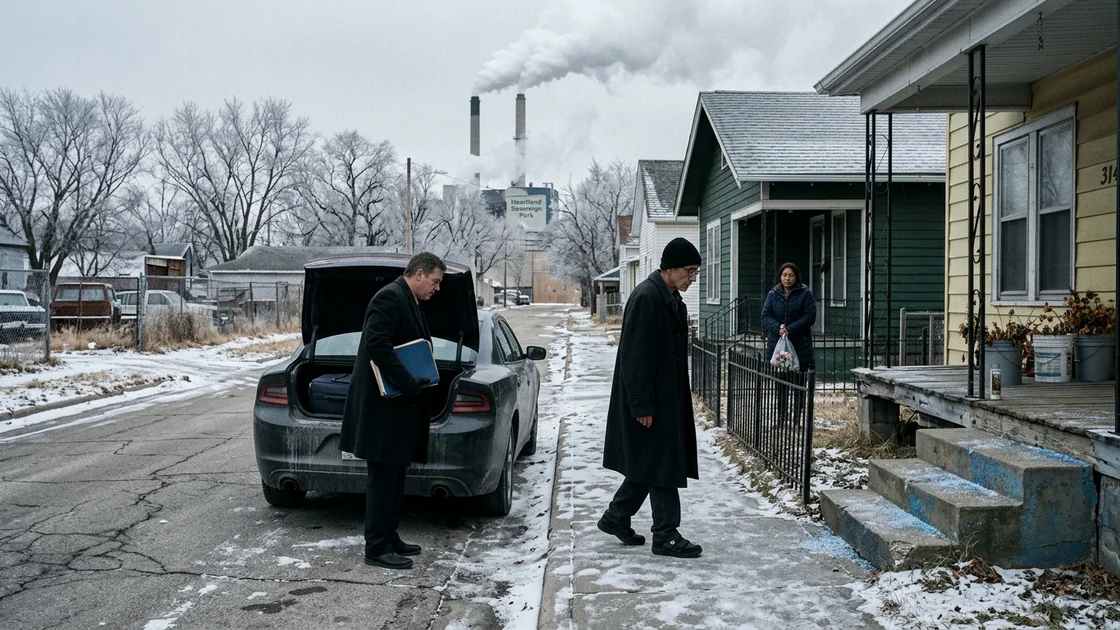
Deputy United States Marshal Marcus Vance spends twenty years building false lives for the worst criminals in the hemisphere before he decides to use the bureaucracy of the federal witness protection program as an instrument of retribution. Assigned to relocate Hector Valladares, a high-ranking cartel logistician responsible for the massacre and displacement of an entire Mexican village, Vance manipulates federal threat-assessment databases to bypass standard geographical restrictions. Instead of placing the informant in a sterile suburb far from his past, Vance moves him into a dilapidated duplex in a small Iowa meatpacking town populated almost entirely by the surviving families of the village Valladares destroyed. Over the course of a thirty-day transition period, Vance plays the role of the dutiful government handler while methodically stripping away the informant's illusions of safety, orchestrating a slow and inevitable recognition between the monster in hiding and the grieving community living across the street.
The plastic binder on the passenger seat of the unmarked sedan was three inches thick, bound in dark blue vinyl that smelled faintly of industrial adhesive and the basement print shop at the Department of Justice in Washington. Inside was the birth, life, and dreary career of a man named Victor Morales. Victor Morales was fifty-four years old. According to the laser-printed pages, he had spent thirty-one years working as an inventory clerk for a mid-sized plumbing supply wholesaler in Corpus Christi, Texas, before a degenerative disc in his lower spine forced him onto private disability. He had a moderately poor credit score of six hundred and twelve, a history of mild hypertension, two defunct checking accounts at regional credit unions that had merged out of existence during the subprime mortgage crisis, and a single traffic citation from nineteen ninety-eight for failing to yield at an uncontrolled intersection in Nueces County.
Victor Morales had never existed until eleven days ago, when Marcus Vance finished compiling his history on an air-gapped terminal in a windowless room in Arlington.
The man sitting in the back seat behind the steel mesh partition, however, had existed with catastrophic specificity for fifty-two years. His name was Hector Valladares, though in the transcripts of the wiretaps that had occupied three years of federal court dockets in the Southern District of New York, the voices on the phones rarely used his given name. They called him El Ingeniero. The Engineer.
"The heater in this thing makes a ticking sound," Hector said from the back seat. He spoke English with the clipped, formal cadence of a man who had learned it at a private boarding school in Monterrey before finishing his degree in civil engineering at the state university in Guadalajara. "Every three seconds. Tick, tick, tick. Like a cheap watch. You would think the American government could afford to service its fleet."
Marcus did not look into the rearview mirror. He kept his eyes on the two-lane blacktop of Highway 61 as it unspooled through the flat, frozen stubble of eastern Iowa. It was late November, and the sky was the color of wet zinc, pressing down so low against the horizon that the tops of the grain silos five miles off looked as if they were scraping the clouds.
"It's the blend door actuator behind the glove box," Marcus said, his voice flat and unhurried. "Plastic teeth on the gear strip out when the temperature drops below twenty. Fleet maintenance doesn't replace them unless the defrost fails completely."
"It is irritating," Hector said. He shifted his weight on the vinyl bench, his heavy wool overcoat rustling. "My ears are sensitive. The doctors at the detention center in Otisville gave me drops for an inner ear inflammation, and the cold makes the fluid thicken. How much farther to this place?"
"Twelve miles," Marcus said.
"Twelve miles from what?"
"Twelve miles from where we are right now, Victor."
Silence settled over the interior of the Dodge Charger, broken only by the hum of the winter tires on the salted asphalt and the faint, rhythmic click behind the dashboard. Whenever Marcus used the new name, Hector needed a few seconds to swallow the indignity of it. For fifteen years, Hector Valladares had controlled the northern logistics corridor for the Nueva Sangre organization. He had not been a street-level gunman with gold-plated pistols and Saint Jude medallions hanging from his neck; he had been a man of spreadsheets, municipal bribes, freight manifests, and actuarial ruthlessness. When a town along a secondary highway in northern Zacatecas became inconvenient—when its local police chief refused a payout, or when its young men declined to serve as lookouts on the ridgelines—Hector did not rage or curse. He simply calculated the cost of ammunition, fuel, and bulldozer rental against the projected quarterly revenue of the smuggling route, and then he signed an authorization voucher.
Until eighteen months ago, when the DEA intercepted him at a private airfield outside Querétaro and presented him with an indictment carrying twelve consecutive life sentences, Hector had never worn a shirt that wasn't tailored in Mexico City. Now he was wearing a flannel button-down from a big-box discount store in suburban Maryland, pleated khaki trousers that were an inch too long in the inseam, and orthopedic walking shoes with Velcro straps.
"Victor," Hector repeated softly, tasting the syllables like sour milk. "A name for a busboy. Or a man who cuts grass for widows."
"It's a name that doesn't draw a second look on a lease application in Black Hawk County," Marcus said. He reached down and adjusted the fan speed by one notch, not to quiet the ticking, which continued unabated, but simply to have something to do with his right hand. "You signed the Memorandum of Understanding in front of Judge Calloway, Hector. Paragraph four, subsection B. You don't pick the region, you don't pick the climate, and you don't pick the nomenclature. Once we cross the city limits of Mercer, the name Hector Valladares doesn't come out of your mouth or mine again. If you slip up at the post office or the pharmacy, I don't build you a new package. I file a breach of protocol report, the Marshals Service terminates protection, and you serve the remainder of your five-year cooperation sentence in general population at Terre Haute. You know who's sitting on the C-block tier at Terre Haute right now?"
In the mirror, Marcus saw Hector's eyes narrow behind his new wire-rimmed glasses. The glasses had plain polycarbonate lenses with no prescription, added solely to alter the geometry of his face after the government plastic surgeon in Bethesda had shaved four millimeters of bone from the bridge of his nose and dissolved the fat pads under his jawline.
"Arturo's cousins," Hector said quietly.
"Three of them," Marcus agreed. "Plus four guys from the Durango faction who caught twenty years each off the ledger books you handed over to the U.S. Attorney in April. They have plenty of time on their hands, and the guards at Terre Haute make fifty-two thousand dollars a year. How much do you think Arturo's family is paying for a cell door to accidentally pop open during the four o'clock count?"
Hector looked away, turning his altered face toward the passenger window. Outside, the harvested cornfields were giving way to the ragged outskirts of an industrial river town. There were salvage yards fenced with corrugated tin that had rusted to the color of dried blood, gravel lots full of repossessed fifth-wheel trailers, and a defunct John Deere dealership whose plate-glass windows were boarded up with unpainted OSB plywood.
Ahead of them, rising above the leafless cottonwoods that lined the Cedar River, stood the twin smokestacks of the Heartland Sovereign Pork plant. Thick plumes of white steam billowed from the rendering vents, flattening out against the gray sky and drifting south over the town of Mercer. Even with the car windows rolled up and the climate control set to recirculate, the smell found its way through the rubber door seals—a heavy, greasy odor of boiled bristles, wet iron, and ammoniacal offal that coated the back of the throat like lard.
Hector lifted a hand to his face, pressing the sleeve of his cheap coat against his nostrils. "Madre de Dios," he muttered. "What is that stench?"
"Economic stability," Marcus said. He flipped on his turn signal and guided the sedan down the exit ramp onto Highway 20, which became Riverview Avenue as soon as the speed limit dropped from fifty-five to thirty. "That plant processes fourteen thousand hogs a day. Two shifts of twelve hundred people, plus a night crew of four hundred for high-pressure sanitation. It never shuts down except for Christmas Day and the Fourth of July."
"You are putting me next to a slaughterhouse."
"I'm putting you in a jurisdiction that has zero federal wiretaps, no DEA resident office within ninety miles, and a municipal police department of fourteen officers who spend ninety percent of their shift dealing with domestic disputes and methamphetamine possession," Marcus said. The lie rolled off his tongue with the smooth, practiced weight of a coin sliding across a glass counter. Every word was technically true, and every word was entirely beside the point.
Marcus had spent nineteen years in the Witness Security Division. For the first fifteen of those years, he had believed in the machinery. He had believed that the federal government was a neutral arbiter that occasionally had to buy the soul of a lesser devil to drag a greater devil into the light. He had sat in hotel rooms in Scranton and Boise and Eugene with Mafia capos who had strangled their best friends with piano wire, with biker gang presidents who had bombed witness houses, with cartel lieutenants who had dissolved college students in fifty-five-gallon drums of lye. He had taught them how to use a debit card without triggering FinCEN alerts, how to talk to a neighbor about lawn care without revealing they didn't know what fescue was, and how to sleep through the night without a pistol under the pillow.
Then, four years ago, he had been detailed to a bilateral task force in Zacatecas as a security assessor for potential high-value cooperators. That was before Hector Valladares had ever thought about cutting a deal. Marcus had arrived in the mountain municipality of Ojo Caliente thirty-six hours after Hector's men had finished a three-day clearance operation.
The town had not been a cartel stronghold. It had been an agricultural community of four thousand people who grew beans, raised goats, and worked the small silver tailing piles left behind by nineteenth-century mining companies. Its only crime was sitting directly astride a dirt canyon road that bypassed the federal military checkpoint at Sombrerete. When the town council erected concrete bollards across the canyon road to stop the forty-ton precursor-chemical trucks from tearing up their irrigation ditches, Hector Valladares had issued what he later described to prosecutors in New York as a "corrective directive."
Marcus remembered the silence of Ojo Caliente more than the smell, though the smell had been bad enough in the dry high-desert heat. The dogs had all been shot first so they wouldn't bark when the trucks rolled in at three in the morning. Then the cell tower on the hill above the Catholic church had been pulled down with a winch cable. By the time the Mexican Marines arrived two days later—with Marcus riding in the back of the third Humvee—there were sixty-eight men and teenage boys lined up along the limestone wall of the primary school, their hands zip-tied behind their backs, each with a single 5.56-millimeter round through the base of the skull. The municipal bakery had been burned to the foundation with the baker's family inside. Every house on the north side of the plaza had its roof collapsed by a tracked excavator that Hector had leased from a state highway contractor in Fresnillo.
And in the dirt courtyard behind the parish rectory, Marcus had found a seven-year-old girl sitting on an overturned plastic bucket, holding a dead parakeet in a rusted wire cage, staring at the boots of a dead parish priest whose spectacles were still neatly hooked behind his ears.
Six months ago, when the Deputy Attorney General's office approved Hector's admission into WITSEC in exchange for testimony against the head of the Sinaloa financial directorate—a man who ended up dying of pancreatic cancer in a Mexican military hospital three weeks before the trial even began—Marcus had not complained. He had not written a dissenting memo. He had simply walked down the hall to the division supervisor's office, volunteered to take the Valladares intake package personally so the younger inspectors wouldn't get bogged down by a high-maintenance foreign national during the holiday rotation, and then gone back to his desk to look at census tract data for the upper Midwest.
It had taken him four weeks of late nights to trace the diaspora of Ojo Caliente.
When a Mexican village dies all at once, the survivors do not scatter randomly to the four winds. They go where the first cousin who left ten years earlier already has a foothold. In nineteen ninety-nine, a former goat farmer from Ojo Caliente named Ramiro Castellanos had found work on the kill floor at the Heartland Sovereign plant in Mercer, Iowa. He was a steady worker who never missed a shift, and when the plant expanded its boning lines in two thousand and six, Ramiro vouched for his nephews, his brothers-in-law, and his neighbors.
By the autumn of the massacre, there were already forty families from Ojo Caliente living in the six-block neighborhood known locally as the Flats, sandwiched between the railroad tracks and the river levee on the south side of Mercer. Within six months of the killings, that number had doubled as the widows, the surviving brothers, and the orphaned children crossed the river at Eagle Pass or Laredo, claimed asylum or slipped through the brush, and made their way north to the only place on earth where people still spoke with the specific, singing cadence of the Zacatecas highlands and knew the names of the dead without having to see them on a poster.
According to WITSEC Automated Threat Matrix protocols, any zip code with a demographic concentration exceeding two percent from an informant's region of operational history was automatically red-flagged and excluded from site selection.
It had been surprisingly easy to defeat the algorithm. The system relied on the Geographic Origin Code entered during the initial DEA debriefing. Before the digital file was migrated from the DEA server in El Paso to the Marshals Service mainframe in Virginia, Marcus had used a borrowed administrative credential to alter two digits in the secondary incident table. Ojo Caliente, Zacatecas—code 32-036—became Ojo de Agua, Chiapas—code 07-061, nine hundred miles to the south near the Guatemalan border. And for the town of Mercer itself, Marcus had pulled the site survey from a dormant file compiled in two thousand and eleven, before the second wave of migration had been recorded by the school district or the census bureau. On paper, the south side of Mercer was seventy-eight percent Anglo-German retired factory workers and twelve percent Bosnian refugees from the nineties.
No one checked the raw data behind a GS-14 Senior Inspector's site selection. Marcus had twenty years of spotless evaluations and three Director's Citations on his wall. If Marcus Vance said a dreary river town in Iowa was the safest place on the continent to bury Hector Valladares, the division chief signed the cover sheet without reading past the budget summary.
Marcus turned left off Riverview onto Sycamore Street. The pavement here was older, cracked into irregular plates by fifty winters of frost heave and patched with black snakes of tar. The houses were narrow, two-story wood-frame structures built in the nineteen-twenties for railroad brakemen and packinghouse laborers. Most had sagging front porches held up by turned wooden posts whose white paint had peeled back to gray cedar. Chain-link fences divided the narrow side yards, where dead hydrangea bushes rattled in the wind off the river.
Halfway down the three-hundred block, Marcus pulled the Charger to the curb in front of 314 Sycamore. It was a duplex covered in pale yellow aluminum siding that had gone chalky with oxidation. The concrete steps leading up to the shared porch were chipped at the corners, and someone had salted them heavily with coarse blue crystals that hadn't quite melted the crust of Tuesday's sleet.
Marcus put the transmission in park, pulled the keys from the ignition, and turned around in his seat.
"Here we are," Marcus said. "Three-fourteen Sycamore, Unit B. The left door is yours. The right door goes to the upstairs unit, which is currently vacant because the landlord hasn't replaced the water heater up there since the last tenant moved to Cedar Rapids in August."
Hector stared through the mesh partition and out the side window at the yellow house. His mouth was slightly open. In Guadalajara, Hector had owned a compound in Puerta de Hierro with four thousand square feet of imported travertine marble, a koi pond fed by an artesian well, and six armed guards living in a gatehouse above the four-car garage. Even the safe house in Maryland where the DEA had kept him during his grand jury prep had been a four-bedroom colonial on two wooded acres with a sub-zero refrigerator and a catering budget.
"This is a joke," Hector said. His voice had lost its aristocratic smoothness; it was thin and tight. "This is a hovel for peasants. Look at the roof. The shingles are curling."
"The roof doesn't leak," Marcus said, stepping out of the car into the raw November air. The wind off the river bit through his wool trousers immediately. He walked around to the rear passenger door, checked the street in both directions—empty except for an old Ford F-150 parked three houses down with a plastic rosary swinging from its rearview mirror—and opened the door. "Come on. Get out. You don't want to sit in the back of an unmarked unit with government plates any longer than necessary, even if the plates are registered to an insurance salvage pool in Des Moines."
Hector stepped out onto the cracked sidewalk slowly, wincing as the cold air hit his surgically altered nose. The scar tissue along his septum always ached when the barometric pressure dropped. He pulled the collar of his cheap coat up around his throat and looked up and down Sycamore Street.
Across the street at number 315, a dark green bungalow with immaculate white trim sat behind a low wrought-iron fence. On its porch stood three five-gallon plastic buckets filled with frozen soil and the brown, woody stalks of dead marigolds, alongside a small wrought-iron table holding an unlit glass candle jar with the image of Our Lady of San Juan de los Lagos printed on the side.
Hector frowned, his eyes lingering on the candle jar for two seconds before he turned back to Marcus, who was pulling two scuffed nylon suitcases from the trunk of the Charger.
"What did the prosecutor promise me?" Hector asked, keeping his voice low as he followed Marcus up the salted concrete steps. "In the conference room in Manhattan. Mr. Rosenstein sat across from my lawyer and said my standard of living would be commensurate with my cooperation. I gave them forty-two bank accounts in Panama. I gave them the maritime shipping schedules out of Manzanillo. Millions of dollars in seizures, Marcus. Tens of millions."
"And the U.S. Attorney's office recommended a downward departure from life without parole to time served plus five years of supervised release," Marcus said, setting the suitcases down on the painted plywood floor of the porch. He took a brass key with a red plastic tag from his coat pocket and unlocked the front door of Unit B. "They don't run WITSEC, Victor. We do. Our mandate isn't to make you comfortable. Our mandate is to make you invisible until the cartel forgets you exist or everyone you testified against dies of old age. Get inside."
The interior of Unit B smelled of freshly applied latex paint, lemon pine-sol, and the dusty, metallic scorching of an old forced-air furnace kicking on for the first time in a month. The living room was twelve feet by fourteen. It contained a brown microfiber sofa with rounded arms, a laminated particleboard coffee table, a thirty-two-inch flat-screen television sitting on a black metal stand, and a single brass floor lamp with a pleated paper shade still wrapped in clear cellophane.
Hector stood in the center of the beige commercial carpet, his shoulders hunched under his coat, looking toward the narrow galley kitchen at the back of the house. Through the doorway, he could see a white refrigerator from the late nineties with textured steel doors and a harvest-gold gas range whose burner grates were stained with decades of baked-on grease that no amount of oven cleaner could remove.
"I cannot live here," Hector whispered. For the first time since Marcus had picked him up at the secure facility in Maryland thirty-six hours ago, the cartel boss sounded genuinely frightened—not of an assassin's bullet, but of the sheer, crushing banality of the room around him. "I have a degree in engineering. I speak three languages. I have dined with the governor of Jalisco."
"And now you're Victor Morales, who hurt his back lifting crates of cast-iron pipe fittings in Corpus Christi," Marcus said. He walked into the kitchen and set the blue vinyl binder down on the small Formica dinette table beside the back window. The window looked out over a muddy alley and the high corrugated fence of a pallet-recycling yard that bordered the railroad tracks. "Let's go over the parameters before I go to my motel. Come in here and sit down."
Hector walked slowly into the kitchen, his Velcro shoes making a soft scuffing sound on the linoleum. He pulled out one of the chrome-legged chairs, inspected the vinyl seat cushion as if he expected to find beetles on it, and sat down.
Marcus remained standing, leaning his hip against the edge of the laminate counter by the sink. He opened the blue binder to the first tabbed divider.
"Your monthly subsistence stipend is eighteen hundred and forty dollars, deposited on the first business day of each month into the checking account at First Midwest Bank on Main Street," Marcus said, tapping a yellow carbon sheet. "Rent on this unit is six hundred and fifty, utilities included except for gas, which averages ninety dollars in the winter. That leaves you roughly eleven hundred a month for groceries, clothing, and incidentals. The stipend lasts for six months. By May, you're expected to be self-supporting or transitioned onto the private disability policy we backstopped for you through Hartford."
"Eleven hundred dollars," Hector said, staring at the yellow paper. "I used to tip the valet at the country club in Zapopan five hundred dollars just to keep my car in the shade."
"There aren't any valets in Mercer," Marcus said. "Inside the fridge you've got milk, eggs, butter, a loaf of wheat bread, two pounds of ground chuck, and a jar of instant coffee. In the pantry there's rice, canned beans, cooking oil, and salt. That's standard initial provisioning. Tomorrow morning at ten, I'll come by and take you over to the driver's license station in Waterloo to get your Iowa non-operator ID card, and then we'll stop by the bank so you can sign your signature card in front of the branch manager."
Hector looked up from the table. His dark eyes, still sharp despite the puffy, bruised skin around his reconstructed nose, fixed on Marcus's face. "How long do you stay in this town?"
"Thirty days," Marcus said. "Standard high-risk transition protocol. Because you're a foreign national with no prior domestic residency history in the United States, the division requires a handler on-site for the first four weeks to ensure you don't accidentally trip an immigration database flag or do something stupid with a telephone. I've got a room at the Super 8 out by the highway. I'll check in on you every morning at ten, and you'll call my work cell every evening at seven sharp to confirm you're inside the residence."
"And there is no internet?"
"No internet," Marcus said firmly. "No smartphone. You have the landline on the wall there for local calls and emergencies, and you have the prepaid flip phone in the binder that only dials two numbers: mine, and the twenty-four-hour command center in Arlington. If I walk in here and find a laptop, a tablet, or a prepaid smartphone you bought at the Dollar General, I pack my bags and notify the U.S. Attorney that you violated condition seven of your agreement."
Hector exhaled through his nose, a long, whistling breath that ended in a slight wince as the cold air inside the drafty kitchen irritated his nasal passages. He reached up and rubbed his left collarbone through his flannel shirt—an old habit Marcus had noted in the DEA surveillance videos from three years ago. Whenever Hector was calculating angles or feeling boxed in, his right thumb and forefinger found the bump of a childhood collarbone fracture under his shirt and worried it like a rosary bead.
"What about the people here?" Hector asked, nodding toward the front of the house. "The neighbors. Who lives on this street?"
Marcus looked past Hector's shoulder, out the kitchen window toward the frost-rimmed weeds along the alley fence. "Working people. Most of the older folks are retired from the tractor factory up in Waterloo. The younger ones work at the pork plant or the grain elevator. Keep your head down, keep your porch swept, don't complain about the smell from the rendering vents, and nobody on Sycamore Street will ask you two questions between now and the spring thaw."
Marcus closed the binder with a soft snap.
"Get unpacked, Victor. Turn the thermostat up to sixty-eight if you're cold, and don't open the door for anybody who isn't me. I'll see you at ten tomorrow."
Marcus walked back through the small living room and let himself out onto the front porch. The afternoon light was already fading into a bruised, early twilight, and the streetlights at the corner of Sycamore and Fourth were flickering to life with an orange sodium buzz.
As Marcus descended the concrete steps to the sidewalk, the front door of the green bungalow across the street at number 315 opened.
A woman stepped out onto the porch carrying a small plastic grocery bag filled with empty aluminum cans. She was perhaps forty-eight years old, though the deep brackets around her mouth and the iron-gray streaks in her thick black braid made her look ten years older. She wore a faded navy-blue quilted parka over the white cotton smock of the Heartland Sovereign packaging department, and her hands were red and chapped from working six hours in the thirty-four-degree chill of the vacuum-sealing room.
Her name was Elena Castellanos. Marcus knew her full biography without having to consult any binder. He knew she had been born in Ojo Caliente in nineteen seventy-five. He knew her husband, Eduardo, had been the town's master mason, and that his body had been the fourteenth from the left along the primary school wall. He knew her oldest son, Diego, nineteen years old, had been the fifteenth from the left. And he knew her younger son, Luis, sixteen, had never been found at all, because the men who operated the leased excavator had dumped six truckloads of rubble and brush into an abandoned mine shaft four miles outside of town and poured four hundred gallons of diesel fuel down the hole before lighting a flare.
Elena paused at the top of her porch steps, her eyes dropping to the unfamiliar black sedan parked across the street, and then rising to Marcus. In the Flats, a white man in a tailored wool overcoat and polished oxfords driving a dark Dodge Charger meant only one of three things: immigration, a process server from the county hospital collection agency, or the police.
Her posture stiffened instantly. The plastic bag of cans stopped swinging against her knee.
Marcus stopped beside the driver's door of his car and gave her a small, polite nod—the kind of neutral, unthreatening gesture a mid-level municipal employee or an insurance adjuster might offer.
"Evening, ma'am," Marcus called out across the narrow ribbon of cracked asphalt. "Cold one tonight."
Elena looked at him for a long moment, her dark, exhausted eyes taking in his gray hair, the absence of a visible badge on his belt, and the pale yellow duplex behind him where the living room lamp was now glowing weakly through the dusty venetian blinds.
"Yes," she said, her voice quiet and heavily accented, carrying the flat, clipped vowels of the high desert. "Very cold. Someone moves in?"
"My uncle's old coworker from down in Texas," Marcus said easily, resting his gloved hand on the roof of the Charger. "Retired plumbing supply guy. Bad back, doesn't get around too fast anymore, and he's a little hard of hearing. Just looking for someplace quiet where the rent doesn't eat up his pension."
Elena's gaze shifted back to the yellow window of 314 Unit B. Behind the blinds, a shadow moved—Hector walking back into the living room to inspect the television set, his hand raised to rub his left collarbone. The blinds were angled downward, blocking any clear view of his face from the street, showing only the silhouette of his shoulders and the stiff, upright carriage of his neck.
The tightness around Elena's eyes relaxed by a fraction of an inch. An old retired Mexican-American from Texas was not ICE, and he was not a landlord's lawyer coming to raise the assessments on the block.
"It is quiet here," Elena said, stepping down to place her bag of cans into the blue recycling bin beside her porch. "Except when the six o'clock train goes by the river. Tell him to put a rolled towel at the bottom of the front door. The wind comes right underneath when it blows from the north."
"I'll tell him," Marcus said. "Thank you, ma'am."
He got into the Charger, started the engine, and pulled away from the curb without looking back. As he turned the corner onto Fourth Street, heading toward the highway and the neon sign of the Super 8, the heater behind the dashboard began its steady, mechanical rhythm again. Tick. Tick. Tick.
For the first time in four years, the sound didn't bother him at all.
The first week of a witness relocation is always governed by friction. A man who has lived his entire adult life inside a web of status, fear, and deference does not know how to occupy space when nobody knows who he is.
On the fourth morning, a Friday, Marcus arrived at 314 Sycamore at ten minutes to ten. A light snow had fallen during the night—not enough to require a shovel, just a dry, powdery dusting that filled the cracks in the sidewalk and sat like powdered sugar on the dead weeds along the chain-link fences.
When Marcus knocked and let himself into Unit B, he found Hector sitting at the kitchen table in his overcoat, drinking instant coffee out of a thick white stoneware mug. On the Formica in front of him were three yellow legal pads filled with neat, tiny columns of figures written in blue ballpoint pen.
"The furnace went out at four in the morning," Hector said without looking up from his legal pad. "I woke up and I could see my breath in the bedroom."
Marcus walked over to the hallway thermostat. The mercury needle was sitting at fifty-eight degrees, and the little switch on the top of the beige plastic housing was pushed all the way to the left, over the word OFF.
"You bumped the switch with your sleeve when you walked down the hall to the bathroom last night," Marcus said, clicking the switch back to HEAT. Down in the cellar beneath their feet, the pilot valve clicked and the blower fan groaned to life within ten seconds. "It's an old Honeywell unit. The toggle is loose."
Hector did not acknowledge the mistake. He tapped the tip of his pen against the top sheet of the legal pad. "I have been reviewing the numbers you gave me on Monday. The budget. It is mathematically absurd. A pound of decent coffee at the supermarket on Riverview costs nine dollars. The ground beef you left in my refrigerator was thirty percent fat; when I cooked it in the skillet yesterday, it shrank to the size of a hockey puck and filled the kitchen with grease smoke. If I am to eat food that does not give me stomach ulcers, I require at least another six hundred dollars a month."
"The stipend is set by the Witness Security Reform Act scale, adjusted for county cost-of-living indices," Marcus said, pulling out the opposite chair and sitting down. He took off his gloves and laid them beside the legal pads. "Black Hawk and Bremer counties are rated Tier Three rural. Eighteen-forty is the statutory maximum for a single adult with no dependents. If you want an extra six hundred a month, the guy who runs the pallet yard behind the alley here is always looking for somebody to run the nail-puller on the day shift. Pays fourteen-fifty an hour under the table."
Hector stared at him across the table, his jaw clenching until the small muscle beneath his right ear twitched. "You speak to me as if I were a dog you found on the highway, Marcus. Do you forget who I am? Do you think because a plastic surgeon broke my nose with a little hammer and you gave me a paper card that says Victor Morales, that my mind has changed? In two thousand and nineteen, the Minister of Public Security for the state of Coahuila waited outside my office in Torreón for four hours just to ask my permission to pave a highway."
"In two thousand and nineteen, you had four hundred men on a payroll and thirty armored Suburbans," Marcus said calmly. "Today it's Friday in Mercer, Iowa, and you have four hundred and twelve dollars in a checking account and a half-loaf of bread on top of the fridge. The sooner you let go of Torreón, the easier your blood pressure is going to be."
Hector threw the ballpoint pen down onto the legal pad. He stood up, walked to the kitchen window, and looked out into the gray backyard, his right hand slipping inside his coat lapel to rub his left collarbone.
"What are all these numbers anyway?" Marcus asked, turning one of the legal pads around so he could read it.
The pages were covered in complex structural load calculations, concrete volume estimates, and hydraulic flow charts, all labeled in small, precise Spanish engineering shorthand.
"A bridge," Hector said, his back still turned. "A four-span prestressed concrete girder bridge over the Río Aguanaval. I designed it for my senior thesis in Guadalajara thirty years ago. When my mind becomes restless in this box, I recalculate the pier foundations for different soil densities. Clay, alluvial gravel, fractured limestone. It keeps me from going mad listening to that refrigerator hum."
Marcus looked down at the neat, geometric sketches of bridge pilings and stress vectors. The handwriting was remarkably steady—clean, architectural block lettering with little diagonal slashes through the zeros and sevens. It was the exact same handwriting Marcus had seen on sixty-four pages of subpoenaed ledger sheets in the DEA evidence vault in El Paso:
14-Mayo. Ojo Caliente. Diesel: 1,200 L. Retroexcavadora (3 días): $45,000 MXN. Bonificación tropa (24 elementos): $240,000 MXN. Limpieza total.
Total cleansing. Two hundred and eighty-five thousand pesos—roughly fourteen thousand American dollars at the time—to erase a four-hundred-year-old village from the map of Zacatecas. Hector had balanced the column at the bottom of the page with the exact same little diagonal slash through the zeros.
"You're out of milk," Marcus said, pushing the legal pad back across the table.
"I do not drink milk," Hector said. "I used it in the terrible coffee."
"Well, you're going to need groceries for the weekend, and I'm not driving you out to the Hy-Vee on the highway every three days," Marcus said, standing up and picking up his gloves. "Put your boots on. We're going to walk down to the market on the corner of Sixth and Sycamore so you know where it is."
Hector turned around, frowning. "Walk? In this wind? You have the car sitting right out front."
"Part of the thirty-day integration checklist is establishing local pedestrian routines," Marcus said, reciting a regulation that didn't exist. "If the guy in 314 Unit B only ever leaves the house in the passenger seat of a late-model sedan driven by an Anglo guy in a suit, the neighborhood starts wondering if you're on house arrest or a sex offender registry. If you walk three blocks down the street once a week carrying a plastic bag of tomatoes and tortillas, you're just the quiet old guy from Corpus Christi with the bad back. Get your hat."
Five minutes later, they were walking side by side down the cracked concrete of Sycamore Street. Hector walked with a stiff, reluctant shuffle, his hands jammed deep into his coat pockets, a black acrylic knit beanie pulled down to the tops of his ears.
Because of the cold, the street appeared deserted at first glance, but Marcus knew the rhythms of the Flats. The first shift at Heartland Sovereign ran from five in the morning until one-thirty in the afternoon; the second shift ran from two-thirty until eleven at night. At ten-fifteen in the morning, the men and women who worked the afternoon boning and packing lines were awake in their kitchens, drinking coffee, frying chorizo and eggs, and watching the morning news from Univision on satellite dishes bolted to the south walls of their houses.
As they passed 318 Sycamore, a heavy lace curtain in the front window twitched aside half an inch. Two doors down, at 322, an older man in a sheepskin vest and a stained Stetson hat was sweeping the dry snow off his driveway with a stiff corn broom.
The man was Ramiro Castellanos—Elena's brother-in-law, the original pioneer who had brought Ojo Caliente to Iowa twenty-five years ago. Ramiro was sixty-three now, his left hand missing the top two joints of the index and middle fingers from an encounter with a band saw on the pork loin line back in two thousand and eight. He had lost two sisters and four nephews in the plaza of Ojo Caliente.
As Marcus and Hector approached the driveway, Ramiro paused in his sweeping and leaned both hands on the top of the broom handle, watching them with the unhurried, assessing gaze of a country man who noticed every stray dog and unfamiliar truck that crossed his horizon.
"Buenos días," Ramiro said in Spanish as they reached the edge of his concrete apron. His voice was gravelly, roughened by forty years of unfiltered cigarettes and the damp air of the kill floor.
Beside Marcus, Hector stiffened slightly. For five decades, men who wore stained Stetsons and swept their own driveways did not speak to Hector Valladares unless their hats were in their hands and their eyes were on the floor. More than that, Marcus saw the tiny, instantaneous hitch in Hector's stride as his ear registered Ramiro's accent.
It was not the flat, nasal Spanish of the Texas border, nor the rapid, clipped slang of Sinaloa, nor the heavy, singing cadence of central Jalisco. It was the dry, archaic Spanish of the high sierra between Sombrerete and Fresnillo, where the old people still dropped the final s on plural nouns and drew out the vowels at the end of a greeting like a low wind through pine trees.
"Morning," Marcus said in English before Hector could open his mouth, giving Ramiro a brisk, neighborly nod. "Supposed to get another two inches before Sunday."
Ramiro's dark eyes moved from Marcus to Hector, lingering for a beat on Hector's wire-rimmed glasses, the thin gray beard Hector had been forced to grow in the Maryland safe house, and the stiff, slightly unnatural bridge of his reconstructed nose.
"Maybe three," Ramiro said in English, his gaze still fixed on Hector's face. "When the smoke from the plant goes straight down toward the river like that, it brings the heavy snow from Minnesota. You are the new neighbor down by Elena?"
Hector stopped walking. Every protocol Marcus had drilled into him during the sixteen-hour drive from Maryland dictated that Hector should smile politely, mutter two words in broken border English or Texas Spanish, and keep moving. Instead, Hector looked at the old man's maimed left hand resting on the broom handle, then up at the front door of the house, where a small brass horseshoe nailed above the lintel had the name ZACATECAS stamped into the metal in faded black enamel.
"Yes," Hector said. He spoke in English, keeping his voice purposefully husky and low, the way the speech coach in Arlington had instructed him to do to mask his natural baritone. "Victor Morales. From Texas. I don't speak much anymore. My throat... I had an operation."
Ramiro nodded slowly, his face unreadable under the brim of his Stetson. "Texas is warm. You come to a bad place for an old man's bones in November, Señor Morales."
"My nephew found the house," Hector said, gesturing vaguely toward Marcus without looking at him. "The rent is cheap."
"Nothing is cheap if it is cold," Ramiro said, and went back to sweeping the dry powder off the edges of his driveway. "Go by the store on the corner. Tell Don Chema to give you the thick wool socks from the box behind the counter. The ones from Aguascalientes. The American socks at the Walmart are only cotton; your feet will freeze on the linoleum."
"Thank you," Marcus said, touching Hector's elbow lightly to get him moving again. "Have a good one."
They walked half a block in silence before Hector spoke. When he did, he kept his lips barely parted, his eyes fixed straight ahead on the brick storefront at the end of the street.
"Where is that man from?" Hector asked softly.
"How should I know?" Marcus said. "Mexico, originally. Been working at the packing plant since the nineties, according to the landlord."
"Did you see the horseshoe over his door?"
"I don't look at people's porch ornaments, Victor. I look at license plates and sightlines."
"It said Zacatecas," Hector said. His right hand was inside his coat again, thumb digging hard into the bump on his left collarbone. "And his accent. I know that accent. That is from the northwest of the state. Near the Durango line."
"Zacatecas has a million and a half people in it, and half of them moved to the Midwest between nineteen eighty and two thousand and ten," Marcus said, his tone mildly bored, as if Hector were an anxious child complaining about shadows in a bedroom closet. "You told the debriefers in New York that you never even went to Zacatecas personally during the two thousand andtwenty operations. You said you ran everything out of the office in Guadalajara and the ranch in Jalisco."
"I did," Hector snapped, then immediately lowered his voice as they approached the corner of Sixth Street. "Of course I was never there in person. I am not a field sergeant. Still, a man from that region... what if he has family who know my name?"
"Your name is Victor Morales," Marcus said, stopping ten feet from the entrance of the corner store. He turned to face Hector fully, blocking the sidewalk. "And even if the guy sweeping his driveway was the governor of Zacatecas himself, Hector Valladares was fifty pounds heavier, had a clean-shaven face, jet-black hair, a hawk nose, and wore ten-thousand-dollar Brioni suits in every single photograph that ever appeared in Proceso or on the DEA poster. Look at yourself in the glass there."
Marcus nodded toward the plate-glass window of the grocery store, which was plastered with neon poster-board signs advertising pork shoulder at a dollar ninety-nine a pound and international calling cards. Reflected in the dark glass between a poster for Jarritos soda and a flyer for a church raffle was a stooped, gaunt man with hollow cheeks, a patchy gray-white beard, a flattened, slightly crooked nose, and cheap wire glasses sitting beneath a three-dollar knit cap.
Hector looked at his reflection for several seconds. He hated what he saw—which, Marcus knew from twenty years of psychology briefings, was precisely what kept an arrogant informant from bolting during the first week. A vain man would rather believe he was completely unrecognizable than admit how thoroughly his power had been stripped away.
"Go inside," Marcus said, nodding toward the glass door with its hanging brass bell. "Buy your coffee, buy some eggs, buy whatever cut of meat meets your standards, and pay with a twenty-dollar bill. I'll wait right here on the corner."
"You are not coming in?"
"If I follow you around a twenty-foot neighborhood bodega like a parole officer, the guy behind the counter is going to remember both of us," Marcus said. "Go on. Take five minutes."
Hector hesitated, adjusted his glasses with a gloved finger, and pushed open the door. The little brass bell jangled sharply in the cold air.
Marcus stepped back to the curb, leaned his shoulder against the wooden utility pole at the corner, and watched through the gap between the neon price signs in the window.
The store was called Carnicería y Abarrotes La Esperanza. It was narrow and deep, smelling of dried guajillo chilies, sawdust, cilantro, and raw beef. Along the left wall ran a refrigerated butcher case tended by a broad-shouldered man in a blood-streaked white apron—José María "Don Chema" Villalobos, whose older brother had been the parish sacristan in Ojo Caliente, shot on the steps of the bell tower when he tried to ring the alarm at three-fifteen that May morning.
Marcus couldn't hear the conversation through the thick plate glass, but he could see the choreography of it clearly.
Hector walked down the center aisle with his stiff, measured stride, picking up a tin of Bustelo coffee and a carton of brown eggs. He approached the butcher counter at the back to ask for two beef ribeyes. Don Chema looked up from his cutting board, his heavy cleaver resting flat against a side of pork ribs, and smiled the automatic, welcoming smile of a small shopkeeper greeting a new customer.
Then Hector spoke to order the meat.
Even with the husky register Hector was forcing into his throat, there were things a voice coach in Arlington could not scrub out in ten days. When Hector asked for a specific thickness of steak—dos dedos de grueso, sin el hueso largo—he used the precise, slightly imperious syntax of an educated urban Mexican speaking to a butcher. More than that, as Hector waited for Don Chema to wrap the meat in white butcher paper, he lifted his left hand to rest his fingers lightly on the glass top of the display case.
In the DEA file, under the section labeled Distinguishing Physical Characteristics, there was a single line on page twelve that the plastic surgeon in Bethesda had not touched because it wasn't on the face: Subject has a crescent-shaped white scar across the dorsal aspect of the left thumb knuckle, resulting from a machete cut sustained on a family sugar estate at age fourteen; additionally, the left ring finger carries a permanent pale indentation from thirty years of wearing a heavy university class ring.
Don Chema taped the white butcher paper shut, wrote the price on the top with a thick black grease pencil, and handed the package across the glass counter. As he did, his eyes dropped to Hector's ungloved left hand resting on the display case, then rose slowly to Hector's face.
The smile did not leave Don Chema's face, not entirely, because he had never seen Hector Valladares in the flesh; Hector had been a voice on a radio and a name on a government indictment five hundred miles away in Guadalajara.
Instead, Don Chema turned toward the front cash register, which sat beside a small alcove near the door. And as Hector followed him up the aisle to pay, Hector's eyes drifted into that alcove.
Marcus watched from the sidewalk as Hector stopped dead between a rack of corn tortillas and a barrel of pinto beans.
The alcove beside the register was six feet wide. Instead of shelves of canned goods, the wall was covered from waist height to the ceiling with framed photographs, laminated prayer cards, dried white roses, and small brass plaques. Above the frames hung a hand-painted wooden banner suspended from two chains: EN MEMORIA DE NUESTROS MÁRTIRES — OJO CALIENTE, ZACATECAS — 15 DE MAYO DE 2020.
There were sixty-eight photographs pinned to the corkboard beneath the banner. Some were formal studio portraits taken at weddings twenty years ago; some were grainy, enlarged cell-phone snapshots of teenage boys standing beside pickup trucks in baseball caps; one was a blurry newspaper clipping showing the blackened, roofless walls of the municipal bakery.
In the center of the board, framed in heavy dark oak, was an eight-by-ten photograph of the limestone wall of the primary school after the bodies had been removed, showing the sixty-eight white chalk numbers the state forensic investigators had drawn on the stones above the dark stains in the dirt.
Through the window, Marcus watched the blood drain out of Hector's face until his skin matched the gray slush on the sidewalk.
Don Chema stood behind the cash register, four feet from the memorial wall, punching the price of the coffee, the eggs, and the ribeye steaks into the old mechanical keys of the NCR machine.
"Seventeen eighty-five, jefe," Don Chema said quietly.
Hector did not look at the butcher. His eyes were locked on the wooden banner at the top of the alcove, reading the name of the town and the date over and over again, as if the letters might rearrange themselves into something harmless if he stared hard enough.
His hands trembled so violently that when he pulled a twenty-dollar bill from his wallet, he dropped it onto the rubber mat covering the counter. He did not wait for the two dollars and fifteen cents in change. He snatched up the plastic bag holding his meat and eggs, shoved the front door open with his shoulder, and stumbled out onto the sidewalk so fast the brass bell hit the glass and stayed pinned against the doorframe for a second before falling back.
"Get in the car," Hector hissed as he passed Marcus, not even realizing in his panic that they had walked from 314 Sycamore and the Charger was parked three blocks away. He took four rapid strides toward the curb, saw the empty street, and spun back around on the icy concrete, his breath coming in short, white gasps. "Where is the car? Where did you leave the car?"
Marcus pushed himself off the utility pole slowly, keeping his hands in his coat pockets. Inside the store, through the gap in the neon posters, he could see Don Chema standing beside the cash register, two dollar bills and three nickel coins still held in his outstretched palm, staring out through the glass at the new neighbor's back.
"The car is in front of your house, Victor," Marcus said in a low, steady voice. "Keep your voice down and start walking. You're making a scene."
"Don't call me Victor!" Hector's voice cracked on the second syllable, a high, ragged sound that made two sparrows lift off from the chain-link fence across the street. He grabbed the front of Marcus's wool coat with his free hand, his fingers bunching the heavy fabric before Marcus calmly reached up, took Hector by the wrist, and twisted just enough to make the older man wince and let go.
"Walk," Marcus said. "Three blocks. If you run, or if you open your mouth again before that front door is locked behind us, I leave you standing right here on Sixth Street with your groceries."
They walked back to 314 Sycamore at a brisk, silent march. Hector's orthotic shoes slipped twice on the frost-slicked concrete, and both times he caught himself on the chain-link fences without looking up at the houses they were passing. Every window on the block now seemed to him like a gun port; the smell of woodsmoke and frying onions drifting from the roof vents was the smell of the high desert; the distant clatter of a boxcar coupling down by the river levee sounded like the heavy steel tailgate of a dump truck slamming shut.
As soon as they were inside Unit B and the deadbolt clicked into the strike plate, Hector dropped the plastic grocery bag onto the living room carpet. The carton of eggs broke open on its side, two brown shells cracking silently against the beige fibers.
"You knew!" Hector shouted, spinning on Marcus in the middle of the small room, his chest heaving under his flannel shirt, spittle flying from his lips. "You son of a bitch, you knew! That wall in the store—those people—they are all from Ojo Caliente! Every one of them on this street!"
Marcus walked past him into the kitchen, took off his gloves, and laid them neatly on the counter beside the sink. He turned around and leaned back against the laminate edge, crossing his arms over his chest.
"What wall?" Marcus asked, his face a mask of mild, bureaucratic confusion.
"In the store! By the cash register!" Hector followed him into the doorway of the kitchen, pointing a shaking finger back toward the front of the house. "Sixty-eight photographs! The schoolhouse wall! A sign with the date—May fifteenth, two thousand and twenty! The man behind the counter, the old man with the broom—this whole neighborhood is from the village we cleared on the Sombrerete road!"
Marcus frowned, uncrossing his arms and reaching over to pick up the blue vinyl binder from the kitchen table. He flipped to the back section, past the banking forms and the medical history, to the green-tinted pages of the Geographic Site Survey.
"Let me see here," Marcus said, running his index finger down a column of census tables as if he were reading them for the first time. "Mercer, Iowa. Census Tract four-zero-two. Hispanic population twelve point four percent, primary municipality of origin recorded by the school district... Celaya, Guanajuato, and Ciudad Juárez." He looked up at Hector, his brow furrowed. "Where did you say they were from?"
"Ojo Caliente!" Hector screamed, slamming his open palm against the doorframe so hard the cheap wooden trim rattled against the drywall. "Do not read me your stupid papers! I saw the photographs with my own eyes! That was my operation! The prosecutor in New York questioned me about it for two days before they agreed to seal that count of the indictment! If these people find out who I am—"
"Lower your voice," Marcus said, his tone dropping an octave, cold and flat as river ice. "This is a wood-frame duplex built in nineteen twenty-four. Even with the upstairs vacant, if you stand in this doorway screaming in Spanish, the woman across the street is going to hear you through the storm windows."
Hector clamped his mouth shut, swallowing hard. He looked toward the living room window with wide, bloodshot eyes, then stepped fully into the kitchen and lowered his voice to a frantic, rasping whisper.
"We have to leave," Hector said, grabbing the edge of the Formica table with both hands and leaning toward Marcus. "Right now. Do not even pack the suitcases. Put me in the back of your car and drive me back to Des Moines, or Chicago, or wherever the regional office is. Put me in a hotel room until Washington assigns a new city."
Marcus closed the blue binder slowly. "I can't do that, Victor."
"What do you mean you can't do that? You are a United States Marshal! Your job is to protect me from a compromised environment!"
"A compromised environment, under Section Nine of the WITSEC Operations Manual, is defined as a verifiable sighting or database breach by an active member of a hostile criminal organization," Marcus recited, his voice taking on the infuriating, singsong cadence of a government clerk explaining why a tax refund has been delayed for six months. "Are the people in the grocery store members of the Nueva Sangre cartel? Are they sicarios on Arturo's payroll?"
"They are the families of the dead!" Hector hissed. "It is the same thing! Worse! If they recognize me, they will cut my throat in my sleep or they will call someone in Mexico who will pay a local gang fifty thousand dollars to burn this house down!"
"How could they possibly recognize you?" Marcus asked reasonably. "You told me ten minutes ago on the sidewalk that you never set foot in Ojo Caliente in your entire life. You were five hundred miles away in Guadalajara drinking espresso while your field commanders ran that road clearance. None of the people in that village ever saw your face, heard your voice, or knew your name until the indictment was unsealed in New York last spring—and the Ojo Caliente count was sealed under a Rule Sixteen protective order because the Mexican government didn't want the embarrassment of the leased state highway equipment coming out in open court. Isn't that right?"
Hector opened his mouth, then closed it. His mind—the precise, compartmentalized mind of the engineer—was racing through the discovery packets he had reviewed with his defense attorneys in Manhattan.
It was true. The massacre at Ojo Caliente had never been publicly linked to Hector Valladares in the Mexican press; the newspapers in Zacatecas had blamed an unnamed regional plaza boss from Durango who had been killed in a shootout with the Federal Police six months later. And none of the survivors from the town had ever laid eyes on the man who signed the diesel vouchers in Guadalajara.
"Then why did the butcher look at me like that?" Hector whispered, though a tiny thread of doubt had already entered his voice. "When I took the package of meat. He looked at my hand, and then he looked at my face."
"Because you dropped a twenty-dollar bill on the counter and ran out of his store like you just robbed the place without waiting for your change," Marcus said dryly. "Before that, he was probably wondering why an old guy from Texas who claims he doesn't speak Spanish just ordered ribeye steaks using Guadalajara butcher terms. Which is on you, by the way, not the site survey."
Hector stood over the table, breathing heavily through his mouth, his fingers digging into the aluminum trim along the edge of the Formica. "Even so. It is an unacceptable coincidence. Out of ten thousand towns in the United States, you put me three blocks from a shrine to a village I destroyed. I want a relocation review. I demand to speak to your supervisor in Washington."
"That's your right under the MOU," Marcus said without hesitation. He reached into his breast pocket, pulled out a small black notebook and a government-issue Skilcraft pen, and tore out a blank sheet of paper. "Write down your formal request for a Site Threat Reassessment. I'll take it back to my motel this afternoon, type up an Inspector's Field Addendum confirming that an unindexed population from northern Zacatecas is residing within the primary zip code, and transmit it via secure fax to the Review Board in Arlington before five o'clock."
Hector's shoulders dropped half an inch in relief. "Good. And when do we move to the hotel?"
"We don't move anywhere until the Review Board authorizes a secondary disbursement voucher," Marcus said, capping his pen. "You're already on your permanent identity package, Victor. To pull you out of here and generate a second Social Security number, a second credit history, and a second lease in a new state costs the division roughly forty-two thousand dollars. The Board only meets on the second and fourth Wednesdays of the month. Next Thursday is Thanksgiving, which means half the Justice Department is already on annual leave until December second. Realistically? An administrative transfer where there's no active cartel hit squad on the ground takes twenty-one to twenty-eight business days to clear the Deputy Director's desk."
Hector stared at him in disbelief. "Twenty-eight days? I have to stay on this street for a month?"
"Unless you want to sign a Voluntary Termination of Protection form right now," Marcus said, tapping the blue binder. "In which case I drive you straight to the Linn County Jail in Cedar Rapids by suppertime, sign you over to the federal detention transport unit, and you're back on the ConAir jet to Terre Haute by Tuesday morning. Your choice."
Hector looked from the binder on the table to the small kitchen window, and then toward the front room where the broken eggs were soaking into the carpet. The trap was constructed entirely out of triplicate forms, federal holiday schedules, and statutory regulations. There were no bars on the windows and no guards at the door, yet the walls of the twelve-by-fourteen living room were as thick and inescapable as the concrete tiers at Otisville.
"I will stay inside the house," Hector muttered, turning back to the sink and gripping the porcelain rim with both hands. "I will not go back to that store. You will bring me my food when you come in the mornings. When the paper comes from Washington next month, we leave in the middle of the night."
"Write your request," Marcus said. "I'll pick up your groceries on Monday."
Marcus walked out through the living room, stepping carefully around the broken egg carton on the carpet, and closed the front door behind him.
When he reached his car at the curb, he did not drive back to the Super 8. Instead, he drove three blocks down Sycamore to the corner of Sixth, parked in the gravel lot beside Carnicería La Esperanza, and walked inside.
The little brass bell jangled above the door. The store was empty of customers. Don Chema was standing behind the butcher counter at the back, wiping down the stainless-steel meat slicer with a bleach rag. When he saw Marcus walk up the center aisle, the big man stopped wiping and laid the rag flat on the counter.
"Afternoon," Marcus said, stopping in front of the cash register beside the memorial alcove. Lying on the corner of the rubber counter mat, weighted down by a small plastic bottle of Tajín seasoning, were the two one-dollar bills and the three nickels Hector had left behind.
"Good afternoon," Don Chema said carefully. Like Elena, he knew the look of federal law enforcement even when it wasn't wearing a windbreaker with yellow letters on the back. "Can I help you find something?"
"Just came back to apologize for my uncle's friend," Marcus said, nodding toward the two dollars and fifteen cents on the mat. "Victor's been having a rough time since he moved up here. His doctors down in Texas—well, actually he spent most of his life down in Guadalajara before he came across a couple years ago—they put him on some new medication for his nerves, and sometimes he gets confused in new places. Saw all those pictures on the wall there and I think it rattled him."
Don Chema's eyes didn't move toward the cash register or the change. They stayed fixed on Marcus's face.
"Guadalajara," Don Chema repeated softly. "He told Ramiro this morning on the sidewalk that he was from Corpus Christi."
Marcus gave a small, rueful sigh, rubbing the back of his neck as if he were embarrassed by a difficult relative. "Yeah, well. His paperwork says Corpus Christi, if you know what I mean. Man works in logistics and heavy equipment down in Jalisco for thirty years, makes some bad friends with the wrong people around twenty-twenty, and suddenly he needs a clean birth certificate from Texas and a quiet place to sit out his retirement where nobody asks what he used to do for a living. I'm sure you've seen how that goes."
Silence fell over the narrow store. In the back room behind the butcher counter, the compressor on the walk-in freezer kicked off with a heavy clunk, leaving only the faint hiss of the fluorescent tubes overhead.
Don Chema looked slowly from Marcus's eyes to the memorial wall beside the register—at the sixty-eight faces pinned to the corkboard, at the blackened stones of his brother's church, at the white chalk numbers drawn on the schoolhouse wall.
Then Don Chema remembered the pale crescent scar across the back of the old man's thumb knuckle, the way the old man had ordered his meat in the crisp, educated cadence of a Jalisco engineer, and the sheer, suffocating terror in the man's eyes when he had looked at the wooden banner reading OJO CALIENTE — 15 DE MAYO DE 2020.
"Logistics," Don Chema said, his voice barely above a whisper. "And heavy equipment."
"That's what my uncle told me," Marcus said mildly. He reached out and picked up the two dollar bills and the three nickels from the rubber mat, dropping them into the small plastic jar beside the register labeled Parroquia de San Juan — Fondo para las Viudas. "Anyway, he won't be bothering you folks for long. He's got some people in Washington working on moving him out to California or Florida right after Thanksgiving. Just figured I'd square up his tab so there weren't any hard feelings on the block."
Marcus turned and walked back down the aisle toward the front door. Before he pushed it open, he paused and looked back over his shoulder.
"Oh, and if his furnace acts up again while I'm out of town next week—the landlord gave me the spare key to the back door off the alley, just in case the pipes freeze," Marcus said, tapping the small magnetic key box he had stuck to the underside of the galvanized gas meter behind Unit B twenty minutes earlier. "Have a good weekend."
The brass bell jangled once as the door closed behind him.
During the second and third weeks, the snow came in earnest.
It came down out of the Dakota plains in long, horizontal gray sheets that buried the rusted boxcars down by the river levee and piled up in three-foot drifts against the chain-link fences of Sycamore Street. The city snowplows cleared Riverview Avenue and the truck gates around the Heartland Sovereign plant every four hours, their amber roof lights flashing through the dark mornings, but they rarely turned down the side streets of the Flats until the storms had blown themselves out.
Inside 314 Unit B, Hector Valladares lived like a submarine commander trapped on the ocean floor.
He never opened the venetian blinds in the living room. He never turned on the porch light. He moved his mattress out of the front bedroom—whose window faced the street and Elena Castellanos's green bungalow—and dragged it into the narrow dining alcove between the living room and the kitchen, where there were no windows at all. He spent sixteen hours a day sitting on that mattress with his back against the radiator, wrapped in two cheap acrylic blankets, filling legal pad after legal pad with bridge specifications, dam spillways, and highway grading curves that nobody would ever build.
Every morning at ten o'clock, Marcus stamped the snow off his boots on the front porch, unlocked the door with his key, and set a brown paper sack of groceries on the kitchen counter.
"Any word from Arlington?" Hector would ask before the door was even shut.
Since the incident at the grocery store, Hector had stopped shaving the edges of his gray beard and had stopped washing his flannel shirts. The small apartment smelled sour, thick with the odor of unwashed wool, stale instant coffee, and the boiled cabbage that Hector cooked because it didn't smoke on the greasy stove burners.
"It's in the pipeline, Victor," Marcus told him on the eighteenth day of the relocation, tossing a loaf of bread and two cans of salmon onto the counter. Marcus hadn't faxed a single piece of paper to Arlington. Hector's handwritten request for a site reassessment had gone into the trash barrel beside the ice machine at the Super 8 the same afternoon Hector had written it. "The Deputy Assistant Director for Region Four had gallstone surgery in Bethesda on Tuesday. The acting chief is reviewing the backlog alphabetically by district. Since we're Northern District of Iowa, we're behind Illinois and Indiana."
"Call him on the telephone!" Hector said, rising from the mattress in the corner, his hair standing up in greasy gray tufts on one side of his head. "Tell him there is an immediate threat to the principal!"
"And what's the immediate threat?" Marcus asked, leaning against the refrigerator and looking around the dim room. "Has anybody knocked on your door? Has anybody left a note in your mailbox? Has a single car with out-of-state plates driven down this street in two weeks?"
"They are watching the house," Hector whispered. He walked into the kitchen in his stocking feet, stopping two feet from Marcus. His eyes were rimmed with red from staring at legal pads under a forty-watt bulb, and the skin over his cheekbones was pulled tight. "At night, when the second shift gets out from the slaughterhouse at eleven-thirty. I look through the little crack between the blind and the doorframe. They walk down the middle of the street in groups of four and five because the sidewalks are full of snow. When they pass this house, they stop talking. Every single one of them turns their head and looks at this door."
Marcus shrugged, unbuttoning the top button of his overcoat. "You're the only guy on the block who hasn't shoveled his walk in twelve days and keeps his blinds shut at noon. In a neighborhood like this, people look at a dark house when they walk past."
"It is not just that," Hector said, his voice dropping even lower. He reached out and gripped Marcus's forearm with cold, clammy fingers. "Two nights ago. Wednesday. At two in the morning. Someone was in the backyard by the alley."
Marcus looked down at Hector's hand on his sleeve until Hector pulled it back. "Probably a raccoon getting into the trash cans, or one of the stray dogs from the pallet yard."
"Does a raccoon smoke tobacco?" Hector demanded. "I went into the kitchen at six in the morning to boil water, and I looked out the back window here. In the snow right underneath the gas meter, there were boot tracks. Work boots with deep lugs on the soles. A man stood right outside this window in the dark for at least twenty minutes. There were three cigarette butts pushed into the snow drift against the foundation. Unfiltered cigarettes, rolled in brown paper."
Marcus turned his head and looked through the kitchen window. Fresh snow had fallen since Wednesday night, smoothing over the yard between the back steps and the alley fence into an unbroken sheet of white, though the galvanized housing of the gas meter just to the left of the window frame was clearly visible.
Marcus thought of Ramiro Castellanos leaning on his corn broom two weeks ago, his gravel voice rough from forty years of hand-rolled brown-paper cigarettes.
"Kids from the high school cutting through the alley from the river levee," Marcus said evenly. "They stop behind vacant-looking duplexes to smoke out of the wind so their mothers don't smell it on their coats. You're letting the cabin fever get to you, Victor. You've got ten days left on my transition detail. By the time my thirty days are up next Friday, the travel voucher from Arlington will be sitting on the fax machine at the Waterloo resident office, and I'll drive you down to Tampa myself."
"Tampa," Hector breathed, the word hanging in the stale air of the kitchen like a prayer. "Yes. Florida. Near the water. Where the air is warm and there are no slaughterhouses."
"Just keep your head down for one more week," Marcus said, turning toward the front door. "I'm driving down to Cedar Rapids tomorrow morning to sign my monthly expense vouchers at the district clerk's office, so I won't be by at ten. I'll call you on the landline at seven tomorrow night as usual."
When Marcus stepped out onto the front porch of 314 Sycamore, the sky was clear for the first time in a week—a hard, brilliant dome of winter blue that hurt the eyes where the sunlight struck the snowbanks. The temperature was four degrees above zero. Every footstep on the painted plywood porch made a loud, dry screech like nails being pulled from oak planks.
Across the street at number 315, Elena Castellanos was standing on her porch with a square metal snow shovel, scraping the thin layer of windblown powder off her top step. Beside her stood Don Chema from the grocery store, wearing a heavy canvas Carhartt coat and carrying a cardboard box of pantry staples he had delivered up the street. Neither of them was scraping or talking as Marcus came out the door of Unit B. Both of them were standing completely still, looking across the snow-choked street at the yellow duplex.
Marcus walked down the steps to the sidewalk, paused beside the driver's door of his Charger, and looked across the hood at the two of them.
Don Chema did not nod this time, and he did not smile. He simply stood with his gloved hands resting on the porch railing beside Elena, his breath rising in slow, white plumes into the freezing air. Elena held the wooden handle of the snow shovel upright against her shoulder like a sentry's rifle, her dark eyes fixed not on Marcus, but on the narrow vertical gap at the left edge of Hector's living room blinds.
Marcus held their gaze for three seconds. Then, very deliberately, he looked back over his shoulder at the narrow side yard that led around the yellow duplex toward the back alley and the gas meter. He gave a single, almost imperceptible nod toward the rear of the house, opened his car door, and drove away.
He did not go to Cedar Rapids on Saturday.
Instead, Marcus spent the afternoon sitting at the small round table in Room 114 of the Super 8 motel off Highway 20, cleaning his service weapon—a Glock 19 that he had never once fired outside the qualification range at Glynco in twenty years with the Marshals Service—and typing his End-of-Detail Transition Report on his government laptop.
He wrote the report with the thorough, bloodless precision that had made him a favorite of division supervisors for two decades:
Principal Victor Morales (WITSEC Case File #884-21-NDIA) has completed twenty-eight (28) days of supervised on-site integration in Mercer, Iowa. All identity backstopping mechanisms (State ID, banking credentials, Social Security verification, utility accounts) are fully operational and have generated zero anomalous inquiries in federal or state credit bureaus. Principal has exhibited moderate adjustment anxiety typical of foreign-national cooperators transitioning from high-income criminal environments to rural Tier-3 placements, resulting in self-imposed isolation within the residence. However, no external security breaches or hostile surveillance indicators have been observed during the assessment period. Reporting Inspector recommends routine transition to Phase II quarterly telephone monitoring effective 0800 hours, December 8.
Marcus read the paragraph twice, checked the formatting of the case number in the header, and saved the file to his encrypted thumb drive.
At seven o'clock that evening, he picked up the motel room telephone and dialed the landline at 314 Sycamore, Unit B.
Hector answered on the first half-ring, so fast he must have been sitting on the floor beside the wall jack with his hand on the receiver.
"Marcus?" Hector's voice was a dry croak.
"Evening, Victor. Confirming your seven o'clock check-in."
"They turned off my electricity," Hector whispered rapidly into the phone. "Twenty minutes ago. At six-forty. The television went black and the blower on the furnace stopped."
Marcus looked out the window of his motel room toward the highway, where the streetlights and the neon signs of the truck stop were burning brightly under the clear night sky. "Probably a transformer blew down by the river from the ice buildup on the lines. The landline runs on its own low-voltage copper pair from the central office, so the phone stays live even when the grid drops."
"It is not the grid!" Hector said, his voice rising in pitch. "I looked out the front window—just for a second, through the edge of the blind! The streetlights are on! The green house across the street has all its lights burning in the kitchen! There are six or seven men sitting at the table over there with that woman—I could see them through her window! Only my house is dark!"
Marcus leaned back in his chair, holding the plastic receiver loosely against his ear. In older duplexes like 314 Sycamore, the main breaker disconnect boxes had been retrofitted onto the exterior back wall beside the electric meter during the nineteen-seventies so firemen could cut the power from the alley without entering a burning building. A simple steel lever inside an unlocked gray metal box.
"Maybe you tripped the main breaker running that little space heater in the bathroom while the furnace fan was kicking on," Marcus said calmly. "Check the fuse box in the hallway."
"I checked it! None of the switches are moved! The box is on the outside of the house, isn't it? Behind the kitchen?"
"I wouldn't know, Victor. I didn't do the electrical inspection."
"You have to come here right now," Hector said. Across the line, Marcus could hear the chattering of Hector's teeth—partly from the rapidly dropping temperature inside the uninsulated house, and partly from terror. "Listen to me, Marcus. I have money. Not the money the Americans seized in Panama. I have three accounts in the Cayman Islands under the name of a textile company in Medellín that my cousin's wife controls. Four million dollars. Nobody in the Justice Department knows they exist. If you drive over here right now and put me in your car, I will give you the routing numbers and the passphrase before we reach the highway. Two million for you, two million for me. You can retire tomorrow."
Marcus looked down at the blue vinyl binder sitting beside his laptop on the motel table.
In his mind, he was not in a motel room in Iowa. He was standing in the dirt courtyard behind the parish rectory in Ojo Caliente, in the dry, blinding heat of a May afternoon in the sierra, looking at a seven-year-old girl sitting on an overturned bucket with a dead yellow bird in a rusted cage, while thirty yards away Mexican Marines in dust masks used shovels to pry swollen boys away from the limestone wall of a primary school so their mothers could identify them by their belt buckles.
"There are no accounts in the Caymans, Victor," Marcus said softly. "You're a retired plumbing clerk from Corpus Christi with four hundred dollars in the bank and a bad back. Put another blanket over your shoulders and go to sleep. The power company will have the line fixed by morning."
"Marcus, don't hang up! Please, por el amor de Dios, listen to me—"
Marcus lowered the receiver onto the cradle until the plastic switch clicked. Then he reached behind the motel nightstand and unplugged the modular telephone cord from the wall jack so the room wouldn't ring again during the night.
Sunday morning broke gray and windless. The extreme cold had broken slightly around four in the morning as a warm front pushed up from Missouri, bringing with it a thick, freezing fog that rolled off the Cedar River and swallowed the smokestacks of the packing plant and the houses of the Flats in a dense white shroud. Visibility on Sycamore Street was less than a hundred yards, and every tree branch and chain-link fence was encased in a quarter-inch sheath of milky rime ice.
Marcus arrived at 314 Sycamore at nine-thirty—thirty minutes earlier than his usual schedule, because today was the thirtieth and final day of his transition assignment, and he wanted to be on Highway 20 heading toward the airport in Des Moines before noon.
The street was completely silent in the fog. At 315 Sycamore across the street, Elena Castellanos's green bungalow was dark, the curtains drawn closed behind the frost-rimmed storm windows. Down at 322, Ramiro's Ford pickup was parked in the driveway with a clean windshield, though fresh tire tracks in the slush at the curb showed that several vehicles had parked along the block during the night and left before dawn.
Marcus carried the blue vinyl binder under his arm as he walked up the concrete steps of 314.
He did not knock on the door of Unit B. He took his key from his pocket, slid it into the deadbolt, and turned it to the right.
The bolt was already unlocked.
Marcus pushed the door open and stepped into the living room.
The first thing that struck him was the cold. It was thirty degrees inside the house, colder than the fog on the street, as if the plaster walls had absorbed the sub-zero chill of the night and were radiating it back into the dark room. The second thing was the absence of the smell that had filled the apartment for the past two weeks; the sour odor of boiled cabbage and unwashed wool had been swept out by a long, steady draft blowing through the house from the back kitchen.
The living room was exactly as it had been the day before. The brown microfiber sofa sat undisturbed against the north wall. The thirty-two-inch television stood dark on its metal stand. In the dining alcove, the bare mattress lay on the carpet with its two acrylic blankets folded neatly at the foot—not thrown aside in a struggle, not stained or torn, just folded into a square pile the way a woman who had worked twenty years in a hotel or a packinghouse laundry might fold them out of habit before leaving a room.
Marcus walked slowly into the kitchen.
The back door leading out to the alley stood ajar by two inches, held from swinging open by a small drift of frozen slush on the threshold. On the Formica table beside the window, Hector's yellow legal pads were stacked in a single tidy pile. Sitting on top of the stack were the wire-rimmed non-prescription glasses, folded shut, alongside the Iowa non-operator ID card in the name of Victor Morales and the prepaid government flip phone.
Nothing was broken. None of the chrome dinette chairs were overturned. There was not a drop of blood on the linoleum, nor a single scuff mark on the freshly painted baseboards.
When people who spend their lives on the kill floor and the boning lines of a fourteen-thousand-head-a-day packing plant decide to remove something from a room, Marcus thought, they do not do it like movie gangsters firing machine guns through plasterboard. They do it with the quiet, methodical, industrial economy of people who know how to move heavy weight in silence, how to leave a work station clean at the end of a shift, and where twelve thousand gallons of boiling rendering tallow go every night between midnight and four in the morning when the night sanitation crew owns the plant.
Marcus walked over to the kitchen table.
Beneath the folded wire-rimmed glasses, on the top sheet of the yellow legal pad where Hector had been calculating the pier foundations for his imaginary bridge over the Río Aguanaval, someone had placed a single three-by-five laminated prayer card.
It had been taken down from the corkboard at the grocery store on Sixth Street. The photograph on the front showed a sixteen-year-old boy with dark, serious eyes and a slight gap between his front teeth, wearing the red-and-white jersey of the Ojo Caliente municipal youth soccer team. Beneath the photograph, in small black type, was printed:
Luis Castellanos Vargas. Nacido el 12 de Agosto de 2003 — Desaparecido el 15 de Mayo de 2020. Que la tierra te sea leve.
May the earth rest lightly upon you.
Marcus picked up the laminated card with his gloved fingers and slipped it into the inside breast pocket of his overcoat. He left the glasses, the flip phone, and the Victor Morales ID card sitting on the legal pad.
He walked to the back door, stepped out onto the small wooden stoop to retrieve his magnetic key box from the underside of the gas meter—it was already sitting neatly on the top railing of the stoop waiting for him—dropped the box into his pocket, and pulled the back door shut until the spring latch clicked into place.
Then he walked back through the cold house, locked the front deadbolt from the outside with his brass key, and walked down the steps to the sidewalk.
The freezing fog was beginning to thin slightly as the morning sun climbed above the cottonwoods along the river, turning the mist into a pale, luminous gold. Three blocks away, the ten o'clock shift horn at Heartland Sovereign blew a single long, low blast that echoed off the grain silos and rolled across the roofs of the Flats.
Across the street, the front door of 315 Sycamore opened.
Elena Castellanos stepped out onto her porch wearing her Sunday coat—a long black wool overcoat with a black lace mantilla draped loosely over her braided hair, ready for the ten-thirty Spanish Mass at Saint Joseph's over on Eighth Street. In her hands she carried a fresh white glass candle jar with a new wick, which she set down on the small wrought-iron table beside the buckets of dead marigolds.
She took a small wooden matchbox from her coat pocket, struck a match against the side, and cupped her red, chapped hands around the flame until the wick caught and burned with a steady yellow light inside the glass.
Only then did she look across the street at Marcus standing beside his car.
Her face was still lined with the permanent, unhealing grief of a mother who had buried two men and never found the bones of the third, and Marcus knew that nothing that had happened in the dark hours between midnight and dawn would ever bring the bakery back, or rebuild the roofs on the north side of the plaza, or put the parish priest's spectacles back on a living face. Justice did not resurrect the dead; at best, it balanced a ledger so the living could breathe the cold morning air without choking on it.
Elena looked at Marcus for a long moment through the drifting river fog. Then she inclined her head in a slow, quiet nod.
"Safe travels, Señor," she called out softly across the street.
"Thank you, ma'am," Marcus said. "Stay warm this winter."
He got into the Dodge Charger, started the engine, and pulled away from the curb. Behind the dashboard, the little plastic gear on the heater actuator clicked three times as the defroster warmed up, then caught on a tooth and went completely silent as Marcus turned north toward the highway.
Four days later, in a corner office on the sixth floor of the Witness Security Division headquarters in Arlington, Virginia, Supervisory Inspector Robert Callahan tossed a three-page printout onto his blotter and looked across his desk at Marcus.
"Absconded," Callahan said, rubbing his temples with both thumbs. "Fifty-two years old, six weeks out of a federal cooperation debriefing with three cartel factions looking for his head, and he walks out the back door of an Iowa duplex on the twenty-ninth night of his thirty-day transition."
"Left his state ID, his glasses, and his emergency phone on the kitchen table," Marcus said, sitting with his hands folded loosely over his knee. He was wearing a fresh gray suit and a blue silk tie; his fingernails were clean, and his expense receipts from the Super 8 in Mercer were already stapled to his travel voucher in the outbox. "According to the teller at First Midwest Bank on Main Street, he came in on the Friday after Thanksgiving and withdrew three hundred and eighty dollars in cash from his stipend account—everything except the twenty-dollar minimum balance required to keep the account open. Looks like he had a ride waiting for him in the alley Saturday night after he made his seven o'clock check-in call to my motel."
Callahan sighed, picking up the printout and scanning Marcus's crisp, meticulous prose. "You think he had an outside line to somebody in Mexico we missed during intake? A cousin or a girlfriend with a stash of cash?"
"He spent the whole three weeks complaining about the cold and the food, Bob," Marcus said evenly. "And three days before he vanished, he tried to feel me out about some unindexed bank accounts he claimed he had hidden in the Caymans under a Colombian textile shell. My guess is he realized a Tier-Three stipend in a meatpacking town wasn't how he wanted to spend the next forty years, walked down to the Greyhound depot in Waterloo with his three hundred bucks, and bought a ticket to Brownsville or San Diego to cross back over on foot and access his accounts."
Callahan shook his head in disgust, tossing the report into a manila folder stamped BREACH / TERMINATED. "Idiot. We spend a hundred and eighty grand on facial reconstruction, protective housing, and identity backstopping, and the guy walks right back into the teeth of the people he testified against because he didn't like the weather in Iowa. Well, the U.S. Attorney in Manhattan doesn't care anyway—the guy he was supposed to testify against died in Mexico City in October, so the docket's already closed."
Callahan picked up a thick black fountain pen and signed his name across the bottom of the Voluntary Abandonment of Protection form, officially erasing both Hector Valladares and Victor Morales from the active rolls of the United States government.
"What's your rotation look like before Christmas, Marcus?" Callahan asked, closing the folder and dropping it into the wire basket for the basement archives. "You want to take two weeks of use-or-lose leave?"
Marcus stood up and buttoned his suit jacket, looking past Callahan's shoulder at the gray December rain streaking the window above the Potomac River. In his inside breast pocket, resting flat against his ribs behind his credentials badge, the laminated edge of a three-by-five prayer card pressed lightly through the silk lining of his vest.
"No," Marcus said. "I've got plenty of leave banked for the spring. What's sitting on the intake desk?"
Callahan reached over to a stack of fresh blue vinyl binders on the credenza behind his desk and pulled the top one off the pile.
"Russian logistics guy out of Brighton Beach who flipped on the Bratva's fentanyl distribution ring in Newark," Callahan said, handing the heavy binder across the desk. "Ran three stash houses in Queens where two teenage girls overdosed last winter, and then his crew dumped them in the weeds out by Jamaica Bay. The U.S. Attorney gave him immunity on the homicides to get the port manifests. Needs a thirty-day rural transition somewhere in the mountain west."
Marcus took the blue vinyl binder in both hands, testing the weight of it, smelling the familiar scent of industrial adhesive and fresh laser toner from the basement print shop.
"I'll take a look at the census tracts this afternoon," Marcus said, and walked back down the hall toward his terminal.