The Architect of Ruin
Julian Vance is the most sought-after crisis public relations consultant in the world, known for rescuing billionaires and corrupt corporations from the brink of destruction. When the toxic conglomerate Vanguard-Kestrel hires him to bury a catastrophic chemical leak in a rural town, the company executives believe they have bought their salvation. However, Julian harbors a decade-old secret connected to the very valley they poisoned. Using the conglomerate's own arrogance, paranoia, and unlimited budget against them, Julian methodically designs a multi-stage public relations campaign that appears brilliant on the surface but is secretly engineered to trigger the most devastating corporate meltdown in modern history.
Chapter One: The Midnight Summons
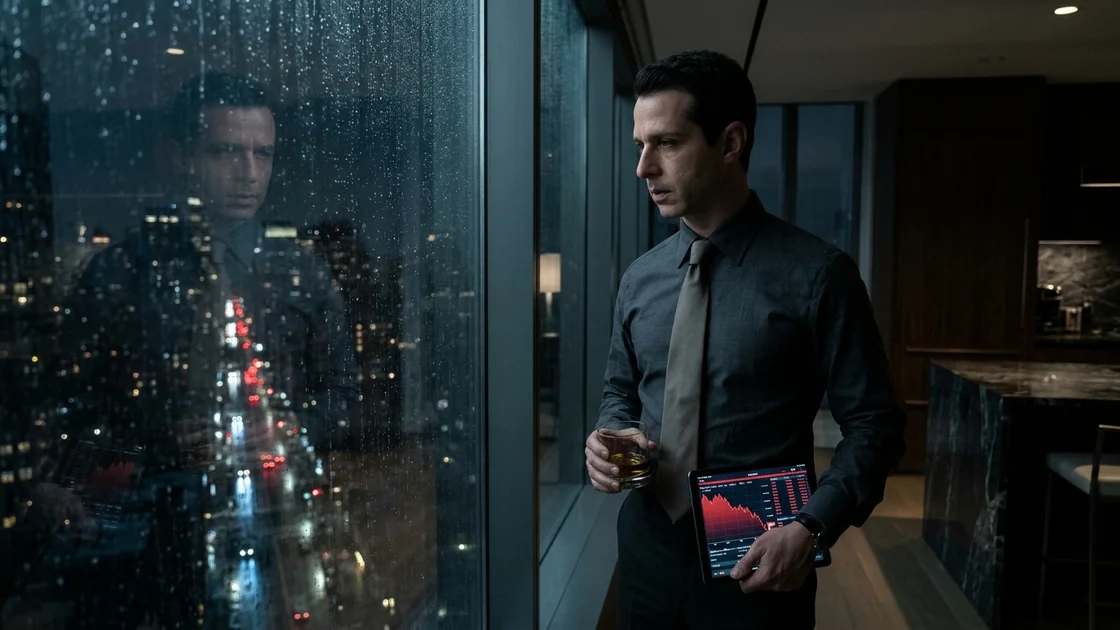
The rain against the floor-to-ceiling glass of Julian Vance’s penthouse did not sound like weather; it sounded like static. Fifty stories below, the avenues of Manhattan were slick ribbons of obsidian and smeared brake lights. Julian stood by the window, a glass of neat scotch warming in his palm, watching a digital ticker on his tablet bleed red.
Vanguard-Kestrel Holdings was down four percent in after-hours trading in Frankfurt. By the time the opening bell rang on Wall Street in seven hours, the rumors whistling through encrypted journalism servers would become headlines, and that four percent would become twenty.
His phone vibrated on the marble countertop. It was 1:42 AM.
Julian did not rush. In the architecture of crisis management, haste was a confession of weakness. Clients paid him five hundred thousand dollars as a base retainer not because he panicked along with them, but because he operated with the slow, glacial certainty of a coroner. He let it ring four times before tapping the speaker icon.
"Mr. Vance," a woman’s voice said. It was tight, vibrato-thin, stripped of its usual courtroom baritone. Diane Mercer, General Counsel for Vanguard-Kestrel. "I assume you are awake."
"I am reading the European futures, Diane," Julian said, his voice a calm, measured baritone. "Your agro-chemical division is having an expensive night."
"It’s an extortion attempt dressed up as citizen journalism," Diane snapped, though the tremor in her breath betrayed her. "A rogue hydrologist in West Virginia and a local clinic doctor think they’ve found a cluster. They have leaked preliminary soil and blood assays to The National Ledger. Alistair wants you on the sixty-fourth floor in thirty minutes. A car is already downstairs."
"Alistair waits until the water is at his chin before learning to swim," Julian replied smoothly. "Send my standard contract to my escrow attorney. Include Addendum C. When the wire for the first two million clears my Zurich account, I will get into the car."
Silence stretched across the line, heavy with corporate indignation. "Addendum C gives you unilateral sign-off on all external communications, bypassing legal review during active mitigation. That is unacceptable, Julian. We are a forty-billion-dollar conglomerate."
"By Friday afternoon, you will be a twenty-billion-dollar conglomerate under federal indictment," Julian said, taking a slow sip of his scotch. "By Monday, the pension funds will dump your stock to avoid ESG contagion, and Alistair will be negotiating the size of his ankle monitor. Sign Addendum C, wire the funds, and brew some decent espresso. Not the pods you keep in the boardroom. I want the whole bean."
He hung up before she could reply.
Julian walked into his dressing room. As he buttoned a charcoal bespoke shirt and knotted a silk tie the color of dried slate, his eyes drifted to the small cedar box resting at the back of his watch drawer. He did not open it. He did not need to. He knew its contents by the weight of the memory alone: a faded silver locket, a dried pressed dogwood blossom, and an obituary clipping from the Canaan Valley Gazette dated eleven years ago.
Clara Vance, 28. Acute myeloid leukemia.
For eleven years, Julian had made himself into a monster’s best friend. He had scrubbed the reputations of predatory pharmaceutical executives, buried the labor violations of fast-fashion empires, and redirected public outrage away from oil spills using manufactured culture-war distractions. He had become the patron saint of the irredeemable, all to build a reputation so bulletproof, so fiercely amoral, that when Vanguard-Kestrel finally choked on its own poison, they would beg him to perform the tracheotomy.
Twelve minutes later, his phone chimed. The wire had cleared. Addendum C was signed.
Julian put on his overcoat, picked up his leather briefcase, and went downstairs.
The headquarters of Vanguard-Kestrel occupied the top twelve floors of a neo-gothic glass monolith in Midtown. At 2:30 AM, the sixty-fourth floor smelled of scorched coffee, expensive dry cleaning, and terror.
When the elevator doors parted, Diane Mercer was waiting for him. She was a woman in her late fifties with steel-gray hair pulled back so tightly it gave her a permanent expression of startlement. She didn't offer her hand.
"You're a pirate, Julian," she said, walking briskly beside him down the mahogany-paneled corridor.
"Pirates take things without permission, Diane. You invited me aboard and handed me the helm. Who is in the room?"
"Alistair, naturally. Harrison Cross from Finance. And Arthur Pendelton—he runs the Aethel-Chem subsidiary that operates the Canaan Valley facility."
"Leave Pendelton in the room for five minutes so I can smell his sweat, then put him in an office down the hall," Julian instructed. "When people are guilty of cutting corners on waste containment, they talk too much to prove they’re useful. I don't want him contaminating the strategy."
Julian pushed open the heavy double doors of the boardroom.
Alistair Sterling, CEO and Chairman of Vanguard-Kestrel, stood at the head of a forty-foot table made of polished walnut. He was sixty-two, tanned from a weekend in St. Barts, wearing a cashmere sweater over an open-collared dress shirt—the uniform of a billionaire who believed rules were written for people who flew commercial. Seated to his left was Harrison Cross, the CFO, a pale man whose fingers were drumming a frantic rhythm against a stack of balance sheets. To his right sat Arthur Pendelton, bulky and red-faced, dabbing his forehead with a linen handkerchief despite the aggressive air conditioning.
"Julian," Alistair said, spreading his arms in a gesture of forced magnanimity. "The cleaner arrives. Tell me my two million dollars just bought me a quiet weekend."
Julian didn't smile. He set his briefcase on the table, removed his coat, and draped it neatly over a leather chair before sitting down. He looked at Pendelton.
"Mr. Pendelton," Julian said softly. "What is the half-life of Trichloro-Vex in an alluvial aquifer?"
Pendelton blinked, his mouth opening slightly. "I—well, Trichloro-Vex is a proprietary defoliant precursor. We haven't used that specific isomer since the twenty-fourteen regulatory shift—"
"You rebranded it as Iso-Vex-9 by adding an inert ester chain to bypass the EPA registry," Julian interrupted, his voice never rising above a conversational purr. "And instead of shipping the sludge to the high-temperature incinerator in Baton Rouge, which costs fourteen hundred dollars a metric ton, your plant manager in Blackwater County has been injecting it into deep-well limestone caverns three miles upstream from the Oakhaven municipal water intake. What is the half-life, Arthur?"
The silence in the room became absolute. Harrison Cross stopped drumming his fingers. Alistair’s artificial smile vanished, replaced by a hard, predatory scowl.
"How the hell do you know that?" Diane demanded, stepping up to the table. "The Ledger leak only mentioned elevated organochlorines. They didn't have the isomer profile."
"If a mid-tier investigative reporter has the organochlorine data on Tuesday, they will have the isomer profile by Thursday," Julian lied effortlessly. He knew the isomer profile because he had funded the independent hydrology lab in Zürich that had secretly tested Oakhaven’s water six months ago—and then anonymously mailed the results to the local clinic doctor to start this exact fire. "Answer the question, Arthur."
"Forty years," Pendelton whispered, his face turning the color of cold tallow. "In cold groundwater, without sunlight... forty to sixty years."
Julian nodded once. He looked at Diane. "Put Mr. Pendelton in a room down the hall. Take his phone. If he calls his wife, his lawyer, or his priest, my contract is void and I walk out that door."
"Alistair—" Pendelton started, rising from his chair.
"Get out, Arthur," Alistair barked, not looking at him. "Go sit in the annex."
Once the heavy doors clicked shut behind the trembling subsidiary head, Julian leaned back, steepling his fingers. He looked at the three remaining titans of industry.
"Here is the reality of your situation," Julian began. "Thirty-eight people in Oakhaven Valley—eleven of them children—have developed rare neuro-degenerative symptoms or hematological malignancies over the last thirty-six months. Dr. Aris Thorne at the county clinic partnered with a hydrologist from Virginia Tech. They mapped the plume. They have internal manifests supplied by a former night-shift supervisor at the Blackwater facility named Gary Miller. And they gave all of it to Thomas Webb at The National Ledger."
Alistair scoffed, pacing behind his chair. "Gary Miller was fired for drinking on the job three years ago! He’s a disgruntled hillbilly with an axe to grind. And Thorne is a country quack looking for a class-action payday. We bury them. Diane files a five-hundred-million-dollar defamation and trade-secret theft suit at eight o'clock this morning. We freeze their assets, subpoena their notes, and drag them through federal court in Delaware until they die of old age."
"And if you do that," Julian said calmly, "you will hand Thomas Webb a Pulitzer Prize, trigger an immediate DOJ criminal investigation into witness intimidation, and watch your stock lose sixty percent of its value before lunch."
Alistair slammed his palm onto the walnut table. "Then what am I paying you for, Vance?! To lecture me on chemistry? Give me a play!"
Julian let the echo of the slap die away. He looked at Alistair with cold, clinical detachment—the exact look Alistair respected.
"The standard crisis playbook is dead, Alistair," Julian said, leaning forward. "Deny, delay, and litigate worked in the nineties. Today, in the age of algorithmic outrage, defense is death. If you act like a guilty corporation hiding behind lawyers, the public will convict you in six minutes on social media, and institutional investors will dump your shares before the algorithms even finish parsing the headline."
"Then what is the alternative?" Harrison Cross asked, his voice tight with financial dread. "We have a three-billion-dollar bond issuance next month. If our credit rating gets downgraded over environmental liability, our debt covenants trigger. We’re over-leveraged from the logistics acquisition in Q3. We cannot survive a protracted siege."
I know, Julian thought. I read your debt covenants three weeks ago.
"We don't play defense," Julian said, his eyes gleaming in the recessed lighting. "We play hyper-aggressive, paradoxical offense. We use a strategy I call Total Inoculation. We don't wait for Thomas Webb to publish his story on Friday. We break the story ourselves tomorrow afternoon. We claim we discovered an anomaly during a routine, voluntary 'Next-Gen Environmental Stewardship Audit.' Notice the phrasing. And then, we accuse Gary Miller and his cohorts of industrial sabotage."
Diane frowned, her legal instincts flaring. "Sabotage? Julian, the manifests show systematic dumping over eight years."
"Manifests can be altered, Diane. Especially when we reveal that our internal audit uncovered corrupted metadata in those exact files—metadata we will quietly insert tonight," Julian said smoothly. "Listen carefully. If we just call the whistleblower a liar, people believe the whistleblower. That’s David versus Goliath. Everyone roots for David. So we have to turn David into a mercenary. We create a trail showing that a short-seller hedge fund paid Miller and the hydrologist to spike the monitoring wells near Oakhaven to tank Vanguard-Kestrel’s stock ahead of your bond issuance."
Alistair stopped pacing. Slowly, a slow, predatory grin spread across his tanned face. "Market manipulation. Eco-terrorism for profit."
"Precisely," Julian said. "It shifts the narrative from corporate negligence to financial crime. The business press will eat it up because it involves short-sellers. The conservative media will champion you as a victim of green-extortion. And by the time the scientific community sorts out the isomer half-lives, the public will be bored and confused. Doubt is our product, gentlemen. We don't need to prove we are innocent; we just need to make the truth look too exhausting to figure out."
"It’s audacious," Diane murmured, though she looked uneasy. "Falsifying metadata on material that might be subject to a federal subpoena... Julian, that’s obstruction of justice."
"Only if it comes from your servers," Julian replied. "It won't. My team operates through triple-blind offshore contractors. Plausible deniability is baked into my retainer. However, for this to work, I cannot be flying blind. If Thomas Webb has a second source, or if there are other skeletons in Vanguard-Kestrel’s closet that the press might dig up once they start looking into your corporate structure, my entire inoculation strategy collapses."
Julian stood up, buttoning his suit jacket. He looked directly at Alistair.
"I need the Black Vault, Alistair."
The room went colder than before. Harrison Cross looked down at his hands. Diane stiffened.
"I don't know what you're talking about," Alistair said flatly.
"Every conglomerate has one," Julian said, his tone bored. "The air-gapped server in the General Counsel’s private safe. The archive of every buried internal investigation, every NDA paid to a silenced executive, every failed clinical trial, every toxic asset hidden in a Cayman shell company, and every back-channel payment to a state regulator. If I am going to put Vanguard-Kestrel under the brightest spotlight in the world to blind your enemies, I need to know exactly where your shadows are. If I get surprised by a secondary scandal mid-campaign, you all go to prison."
Alistair stared at him for a long, agonizing minute. The billionaire’s ego warred with his terror. Finally, fear won—or rather, the arrogance of believing that Julian Vance was just another whore who could be bought with enough zeroes.
"Give him the drive, Diane," Alistair said.
"Alistair, that archive contains twenty years of privileged—"
"Give him the damn drive!" Alistair roared. "If we don't survive Friday, twenty years of privilege won't matter anyway!"
Ten minutes later, Julian walked out of the Vanguard-Kestrel building into the thin, gray drizzle of late night. Inside his inner breast pocket rested a solid-state encrypted hard drive enclosed in brushed titanium.
He didn't take the company town car waiting at the curb. He walked three blocks south, descended into the subway, and took the uptown train toward Harlem. For the first time in eleven years, Julian Vance felt his heart beating above sixty beats per minute.
The monsters had just handed him the keys to their dungeon, convinced he was going to lock the door from the outside.
Chapter Two: The Audit of Sins
The brownstone on West 138th Street looked like a mid-tier architectural restoration firm on the outside, complete with frosted glass windows and a brass plaque reading Vance & Associates: Strategic Logistics. Inside, the parlor floor had been gutted and rebuilt into a Faraday-shielded digital bunker.
When Julian entered at 3:45 AM, two people were already awake, bathed in the blue glow of six curved monitors.
Elena Rostova was twenty-six, a former NSA cryptologic linguist who had washed out of Fort Meade after hacking a senator’s personal accounts to expose akickback scheme involving her brother’s veterans' hospital. Beside her sat Marcus Cole, fifty-two, a veteran investigative journalist who had spent twenty years watching his best exposés killed by media conglomerate owners who shared country club memberships with his targets.
Julian hadn't hired them for their public relations acumen. He had hired them because, like him, they wanted to watch the world’s untouchables burn, and they possessed the patience to build the pyre stick by stick.
"Did he bite?" Marcus asked, not looking up from his keyboard, a half-burnt cigar resting in a heavy glass ashtray beside a cold mug of black coffee.
Julian reached into his coat, pulled out the titanium drive, and set it on the steel desk between them. "He swallowed the hook, the line, and the lead sinker. Diane wrote me the decryption key on a sticky note. Her hand was shaking so badly the seven looks like a one."
Elena let out a low whistle, picking up the drive with static-free gloves. She plugged it into an isolated, air-gapped terminal running a custom Linux kernel. Her fingers flew across the mechanical keyboard, the clatter filling the quiet room.
"Let's see what forty billion dollars of institutional rot looks like," she murmured.
For twenty minutes, nobody spoke. Progress bars filled and vanished. Directory trees bloomed across the central forty-inch display like dark, digital mycelium. There were terabytes of data: PDFs of sealed settlements, audio recordings of compliance committee meetings, unredacted toxicology reports, and spreadsheets tracking dark-money contributions through fifty-two separate 501(c)(4) organizations.
"Good God," Marcus muttered, leaning in, his glasses reflecting the scrolling file names. "Look at the directory structure. They didn't even use code names. They organized it by subsidiary and fiscal year. That’s not just criminality; that’s bureaucratic pride."
"When you own three appellate judges and sit on the President’s export council, you stop believing in consequences," Julian said, pulling up a chair beside them. "Elena, run a keyword cross-reference first. 'Blackwater,' 'Oakhaven,' 'Iso-Vex,' and 'Sterling.'"
Elena executed the query. Almost instantly, seventy-four files highlighted in crimson. She opened a video file dated four years prior, marked Internal Compliance Review - Asset Optimization.
On the screen, a grainy conference room camera showed Alistair Sterling, Harrison Cross, and Arthur Pendelton. Alistair was laughing, swirling a glass of red wine.
"So the filtration membranes at the Blackwater plant are degraded," Alistair’s recorded voice echoed through the studio monitors. "What’s the capital expenditure to replace the line, Arthur?"
"Fourteen million, plus six weeks of downtime," Pendelton replied on the tape.
"And what’s the projected legal settlement if the state DEP catches the runoff in the next five years?" Alistair asked, turning to Diane Mercer, who was sitting just off-camera.
"With statutory caps in West Virginia? Four million, max," Diane’s voice replied coolly. "Assuming anyone connects the groundwater plume to the plant. The valley population is aging and poor. Half of them smoke, and the coal mines closed twenty years ago. Any oncology cluster gets blamed on legacy mining dust and lifestyle choices."
"Fourteen million versus four," Alistair said on the recording, raising his glass. "Gentlemen, I didn't go to Wharton to fail basic subtraction. Inject it into the limestone wells and put the ten million toward the Q4 stock buyback. I want my performance bonus tier unlocked before Aspen."
Elena froze the frame on Alistair’s smiling face. The silence in the bunker was suffocating. Elena turned slowly in her chair to look at Julian. She was the only person on earth who knew where Julian had grown up, though even she didn't know the whole story of Clara’s final months in the sterile white room in Morgantown, coughing up blood while Vanguard-Kestrel’s stock hit all-time highs.
"Julian," Elena said softly. "If we leak this single video right now to the Associated Press and the Department of Justice, Alistair Sterling is in handcuffs by noon."
"No, he isn't," Julian said, his voice flat and cold. "If we leak this right now, Diane Mercer claims the drive was stolen—which she will easily deduce it was, since I’m the only one who touched it tonight. Their defense attorneys will get the video ruled inadmissible as fruit of a poisoned tree or claim it’s an AI deepfake. Alistair will take a temporary leave of absence with a ninety-million-dollar golden parachute, Arthur Pendelton will take a plea deal for eighteen months in a minimum-security camp in Pensacola, the company will pay a three-hundred-million-dollar fine—which is less than their quarterly marketing budget—and they will rebrand as 'Kestrel Earth' by next spring."
Marcus nodded grimly, chewing on the unlit end of his cigar. "He’s right. I’ve covered twenty corporate scandals just like this. A single leak is a lightning strike. It scorches a branch, maybe splits the trunk, but the root system survives. The board sacrifices a CEO, writes off the fine as a tax loss, and the machine keeps grinding."
"We aren't here to prune the tree," Julian said, standing behind Elena and pointing at the massive directory tree on the screen. "We are here to salt the earth so thoroughly that not a single dollar of equity, not a single pension fund, and not a single corrupt official survives the blast radius. Look at the other folders, Elena. What else is in the vault?"
Elena minimized the video and began opening adjacent directories. Over the next two hours, the true scale of Vanguard-Kestrel’s empire came into focus.
In the Kestrel-Med directory, they found raw clinical data showing that the conglomerate’s flagship blood-pressure medication, Cardiovex, caused fatal liver failure in four percent of patients with a specific genetic marker—data they had hidden by bribing a contract research organization in Mumbai to delete twelve hundred patient records.
In the Vanguard Civic directory, they found the accounting ledgers for their private detention facilities in the Southwest, detailing how they systematically falsified inmate violent-incident reports to deny parole to non-violent offenders, thereby maintaining the ninety-five percent occupancy rate guaranteed in their state contracts.
And in the Executive Compensation & Board Governance directory, Marcus found the crown jewel.
"Julian," Marcus breathed, his eyes wide as he scrolled through a series of encrypted PDF memos between Harrison Cross and Diane Mercer. "Look at this. They aren't just hiding environmental crimes from the public. They’re hiding financial fraud from each other."
Julian leaned over Marcus’s shoulder. "Explain."
"Alistair has been using Vanguard-Kestrel’s pension fund as collateral for personal margin loans through a shell bank in Liechtenstein," Marcus said, pointing at the ledger entries. "Meanwhile, Harrison Cross and Diane Mercer have been quietly shorting the company's bonds through a blind trust in Delaware because they know the Aethel-Chem liabilities are going to sink the Q3 refinancing. And look at this folder—Alistair hired a private intelligence firm in Tel Aviv to tap the phones of his own board of directors, including his largest institutional shareholder, Cornelius Thorne."
Julian stared at the screen. Slowly, a cold, terrifying smile touched the corners of his mouth.
It was better than he had ever dreamed. A toxic corporation was dangerous, yes, but it was also inherently unstable—a pressurized vessel of narcissists held together only by the shared profit of their silence. Once the pressure dropped, they wouldn't unite; they would cannibalize each other to reach the lifeboats first.
"Here is how we build the trap," Julian said, walking over to a glass whiteboard and picking up a black dry-erase marker.
He drew a timeline stretching from Wednesday morning to the following Tuesday—the day of Vanguard-Kestrel’s annual Global Investor Summit and live-streamed Shareholder Town Hall.
"Phase One starts at nine o'clock this morning," Julian said, writing THE FLAWED SHIELD on the board. "I promised Alistair an aggressive counter-offensive accusing the Oakhaven whistleblowers of working with short-sellers to sabotage the wells. We are going to give it to him. Marcus, you are going to write a brilliant, vicious press release and a forty-page 'Independent Internal Audit' exonerating Vanguard-Kestrel."
"Hold on," Marcus said, frowning. "You want me to actually write their defense?"
"I want you to write a defense that looks bulletproof to an arrogant billionaire, but contains three fatal, microscopic flaws that a veteran investigative journalist like Thomas Webb will spot within forty-eight hours," Julian explained. "Elena, you are going to fabricate the 'corrupted metadata' on the chemical manifests that Alistair wants to use to frame Gary Miller. Except, in the hexadecimal header of those fabricated files, you are going to leave the digital watermark of a boutique PR server registered to a subsidiary of Vanguard-Kestrel’s own legal department."
Elena grinned, a sharp, feral expression. "So when Webb’s digital forensics team checks the 'proof' that the whistleblower forged the documents, the metadata will prove beyond a shadow of a doubt that Vanguard-Kestrel forged the forgery this morning."
"Exactly," Julian said. "And we won't stop there. Tomorrow afternoon, to support Alistair’s press release, we will unleash an army of fifty thousand automated social media bots to flood the internet with attacks on Dr. Aris Thorne and Gary Miller, calling them paid eco-terrorists. Alistair will love it; billionaires love watching digital mobs tear their critics apart. What Alistair won't realize is that Elena is going to rent the cheapest, sloppiest Russian botnet on the dark web, and route the payment through an unmasked corporate credit card belonging to Arthur Pendelton’s division."
"The Streisand Effect on steroids," Marcus murmured, beginning to see the architecture of the catastrophe. "A regional chemical leak story is bad, sure, maybe page four of the paper. It gets bogged down in scientific jargon. Nobody understands parts-per-billion of Trichloro-Vex. Everybody understands a forty-billion-dollar corporation getting caught red-handed framing a country doctor and buying Russian bots with a company Visa card."
"That moves the story from the science section to the front page of every newspaper in the world by Saturday morning," Julian said, drawing an arrow to PHASE TWO: FRACTURE. "When the botnet and the forged metadata blow up in their faces on Saturday, the stock won't drop four percent—it will drop thirty. The SEC and the FBI will open active inquiries into wire fraud and obstruction. At that moment, panic will set in on the sixty-fourth floor. And when wolves panic, they look for someone to eat."
Julian tapped the whiteboard with the marker.
"That is when I will go back into that boardroom. I will use the secrets on this hard drive to convince Alistair that Diane and Harrison intentionally sabotaged the metadata to force him out and profit off their short positions. Simultaneously, I will convince Diane and Harrison that Alistair ordered the sloppy forgery himself and is preparing to hand them over to the DOJ as the architects of the cover-up. I will turn their C-suite into a circular firing squad."
"And what keeps them from firing you on Saturday when the first play blows up?" Elena asked shrewdly.
"Because I won't take responsibility for the metadata or the bots," Julian said smoothly. "Look at the email logs on the Black Vault drive, Elena. Arthur Pendelton has a thirty-year-old nephew who works in Vanguard’s IT department—a kid they used two years ago to scrub some embarrassing emails after a Christmas party. You’re going to spoof internal emails showing that Alistair bypassed me and ordered Arthur’s nephew to do the hack to save money. To Diane, it will look like classic Alistair arrogance. To Alistair, it will look like Diane setting him up."
Marcus leaned back, lighting his cigar at last, letting the blue smoke curl toward the ceiling extractor fan. "And Phase Three? Tuesday’s Shareholder Summit?"
Julian looked at the final section of the whiteboard. He wrote a single word: SINGULARITY.
"When a narcissist is cornered, betrayed by his lieutenants, and watching his empire crumble because of 'incompetent subordinates,' he only trusts one person to save the day," Julian said softly. "Himself. I am going to convince Alistair Sterling that the only way to save the stock before the bond covenants default is an unprecedented act of radical, live-streamed dominance. A coast-to-coast, unedited broadcast where he addresses the shareholders, the press, and the public directly, accompanied by the launch of a revolutionary 'Open-Source Environmental & Governance Portal' to prove Vanguard-Kestrel has nothing to hide."
Elena’s hands hovered over her keyboard, her eyes wide with dark comprehension. "And instead of linking the portal to the sanitized PR database..."
"You are going to link it directly to the decrypted Black Vault," Julian finished. "Every video. Every bribed trial. Every margin loan. Every wiretap on his own board of directors. All searchable, all indexed, all downloadable by every journalist, regulator, and short-seller on earth, going live at the exact second Alistair steps up to the microphone."
Julian capped the marker and set it down in the tray. Outside, the gray light of dawn was beginning to bleed through the edges of the frosted windows.
"Marcus, start drafting the press release. Make it sound like Ayn Rand wrote it after three martinis. Elena, start building the botnet trail and the spoofed IT logs. I have to go back to Midtown at noon to look Alistair in the eye and tell him he’s a genius."
Chapter Three: The Inoculation Fallacy
At 12:30 PM on Wednesday, the mood on the sixty-fourth floor of Vanguard-Kestrel had shifted from midnight terror to manic, caffeinated aggression.
Julian walked into the boardroom to find Alistair Sterling standing in front of a wall of television monitors tuned to CNBC and Bloomberg. The initial National Ledger article by Thomas Webb had gone live at 11:00 AM: Dark Water in Canaan Valley: Whistleblower Links Vanguard-Kestrel Plant to Rare Illness Cluster.
The stock had dipped six percent on the headline, hovering at $142 a share.
"They ran it," Alistair growled as Julian entered, pointing a remote control at the screen where a financial anchor was summarizing Webb’s reporting. "Look at them. Vultures. Talking about 'potential Superfund liabilities' and 'class-action exposure.' Did you bring the counter-strike?"
"I brought a masterpiece, Alistair," Julian said, opening his leather briefcase and handing out four bound copies of a glossy, forty-page dossier titled Project Clearstream: The Anatomy of a Coordinated Short-Seller Attack on American Industry.
Diane Mercer, Harrison Cross, and Alistair sat down, flipping through the pages. Julian watched their faces carefully. He knew the psychology of the corporate elite intimately: they did not read for truth; they read for validation. Anything that confirmed their worldview—that they were the persecuted creators of wealth being harassed by parasites—bypassed their critical faculties entirely.
Marcus had outdone himself. The press release didn't just deny the chemical leak; it framed Vanguard-Kestrel as a heroic whistle-blower in its own right. It claimed that three weeks prior, Vanguard’s internal cybersecurity team had detected unauthorized access to the Blackwater plant’s environmental monitoring servers. According to the report, an unknown external actor had altered historical waste manifests to fabricate a dumping trail, coinciding precisely with an unusual spike in put-options purchased through offshore accounts in the Cayman Islands.
"Look at Appendix B," Julian said, leaning over Alistair’s shoulder and pointing to a series of complex hexadecimal data tables that Elena had generated four hours earlier. "This shows the digital timestamps on the manifests Gary Miller handed to The National Ledger. As you can see, the file creation dates were manually rolled back from last month to twenty-seventeen. We’ve already briefed three friendly financial columnists at the Street Watch and Market Pulse. The moment we release this at 1:00 PM, they will publish op-eds questioning whether Thomas Webb was duped by a hedge-fund sabotage ring."
Harrison Cross looked up from the charts, a flush of relief coloring his pale cheeks. "This... this actually ties directly into the bond market jitters we saw last week. If the institutional desks believe the Ledger story is a synthetic short attack, they won't just hold our stock—they'll buy the dip to squeeze the shorts."
"Exactly," Julian said. "Greed beats morality on Wall Street every single time, Harrison. Give them an excuse to make money without feeling guilty, and they will defend you to the death."
Diane Mercer, however, was still staring at Appendix B, a deep crease between her eyebrows. "Julian, if Thomas Webb takes these hexadecimal tables to an independent digital forensics lab, will they hold up? Because if we publish this to the market, it constitutes a material statement to shareholders under SEC Rule 10b-5. If it’s fabricated, it’s securities fraud."
Julian looked at Diane with an expression of mild, wounded professionalism. "Diane, you hired me to build a firewall, not to explain how the bricks are baked. The metadata in Appendix B was pulled directly from the Blackwater server mirrors by my technical team using a proprietary recovery algorithm. All you need to know is that when the media looks at this today, they will see a technical dispute between two sets of experts. And while they spend the next three months arguing over hexadecimal timestamps, Harrison closes his three-billion-dollar bond issuance, and Alistair rings the bell."
Before Diane could press further, Alistair slapped his copy of the dossier shut. "It’s brilliant. It puts our boots right on their throats. Release it immediately. And what about the local angle? That doctor in West Virginia—Thorne. He’s going on cable news tonight at eight."
"By six o'clock tonight," Julian said smoothly, "Dr. Aris Thorne will be the most radioactive man on the internet. We have prepared a digital saturation campaign. Grassroots energy coalitions, chemical industry workers' alliances, and forty thousand independent accounts will begin circulating records showing that Thorne’s clinic received a fifty-thousand-dollar grant three years ago from an environmental foundation whose board includes a prominent short-seller."
It was true—Elena had found the grant in public tax filings. The short-seller had donated to a pediatric rural health charity, completely unrelated to Vanguard-Kestrel, and the charity had bought Thorne’s clinic an ultrasound machine. By twisting that benign philanthropy into a sinister conspiracy, Julian knew he was crossing a line that would drive Dr. Thorne—and Thomas Webb—into a righteous fury.
"Destroy him," Alistair said, his eyes bright with malice. "I want people throwing bricks through his clinic windows by tomorrow morning. Nobody takes a swing at Vanguard-Kestrel and walks away with their license."
Remember that sentence, Alistair, Julian thought, his face remaining an impassive mask of corporate servitude. Wait until you hear how it sounds on a hot mic.
At 1:05 PM, Julian gave the signal.
The counter-offensive hit the wires like a cluster bomb. Within twenty minutes, the financial media pivoted exactly as Julian had predicted. The narrative shifted from Did Vanguard-Kestrel poison a town? to Is Vanguard-Kestrel the victim of the first high-tech ESG short-and-distort conspiracy?
By 2:30 PM, Elena’s botnet went live. Across every major social platform, hashtags attacking Thomas Webb’s journalistic integrity and accusing Dr. Aris Thorne of faking cancer diagnoses for hedge-fund blood money rocketed to the top of the trending lists. Memes depicting Gary Miller as a greedy drunk flooded local West Virginia community groups.
On the sixty-fourth floor, champagne was literally uncorked at the 4:00 PM closing bell. Vanguard-Kestrel’s stock hadn't just recovered its six percent loss; it had rallied to close up two point four percent on the day, driven by institutional algorithms buying into the "short squeeze" narrative.
Alistair clapped Julian on the shoulder in front of the entire executive team, a crystal flute in his hand. "Two million dollars! Best bargain I’ve ever struck, Vance! Look at that chart! We turned poison into rocket fuel!"
Julian smiled thinly, raising a glass of sparkling water. Across the room, he caught Diane Mercer watching him. She wasn't drinking champagne. She was holding her phone, reading the legal disclaimers at the bottom of the press release Julian had issued—specifically the line tucked into the metadata properties of the PDF that identified the document author as D_Mercer_GC_Vanguard.
At 6:00 PM, Julian left the tower and took the subway back to Harlem.
Inside the bunker, the atmosphere was electric, though entirely free of champagne. Marcus was monitoring the National Ledger’s internal Slack channels via a sympathetic source on the copy desk, while Elena was tracking network traffic hitting Vanguard-Kestrel’s public servers.
"How did Webb take it?" Julian asked, hanging up his coat.
"Like a bull taking a harpoon," Marcus said, grinning around his cigar. "For the first two hours, his editors were panicking, asking him if he got played by Gary Miller. Webb didn't argue. He took the PDF of Project Clearstream that you released and sent it to Citizen Lab in Toronto and two digital forensics professors at MIT."
"And?"
Elena tapped a key, bringing up an intercepted email thread on the center monitor. "MIT took thirty-eight minutes to crack it. Look at the professor's note to Webb: 'Tom, not only were the whistleblower’s original files completely authentic, the "audit" Vanguard-Kestrel published today was fabricated at 4:12 AM this morning using a hex-editor. Worse, whoever faked it forgot to strip the local machine path from the temp file registry. It was compiled on an internal network drive assigned to Vanguard-Kestrel’s Legal and IT departments.'"
Julian nodded slowly. "And the botnet?"
"Even better," Elena said, pulling up a secondary dashboard. "A cybersecurity researcher at Stanford noticed that forty thousand accounts attacking a rural pediatrician in West Virginia all came online within ninety seconds of each other using Russian residential proxies. He traced the command-and-control server to a broker in Minsk, who leaves his payment portal logs unindexed on an open port. Ten minutes ago, the researcher sent Thomas Webb the invoice showing the botnet was paid for at 5:00 AM today using a Vanguard-Kestrel corporate American Express card issued to Arthur Pendelton’s division."
Julian looked at the clock on the wall. "When does Webb publish the follow-up?"
"He’s holding it until tomorrow morning at 8:30 AM," Marcus said. "Right before the market opens. And Julian... he didn't just write it up for the Ledger. Because of the securities fraud angle with the press release, he shared an embargoed copy of the MIT forensics report with the Enforcement Division of the SEC and the U.S. Attorney for the Southern District of New York."
Julian walked over to the coffee machine and poured himself a cup. His hand was completely steady.
"Elena," he said quietly. "Tonight at 2:00 AM, while everyone at Vanguard is sleeping off their champagne, penetrate their internal Microsoft Exchange server using the credentials from the Black Vault. Plant the spoofed email trail between Alistair’s private tablet and Arthur Pendelton’s nephew in IT, ordering the fake audit behind my back. Then plant a second encrypted trail on Harrison Cross’s local machine showing him communicating with the Delaware blind trust that’s shorting Vanguard’s bonds."
"Consider it done," Elena said. "By the time they wake up tomorrow, that building won't be a headquarters. It'll be a cage full of starving rats."
Chapter Four: The Controlled Burn
Friday morning did not dawn on Wall Street; it detonated.
At 8:30 AM, The National Ledger published its banner headline across every digital platform: CAUGHT RED-HANDED: Forensics Prove Vanguard-Kestrel Fabricated Evidence and Hired Russian Botnet to Frame Poisoned Town’s Doctor.
At 8:45 AM, CNBC broke the news that the SEC had issued an emergency halt on Vanguard-Kestrel’s upcoming three-billion-dollar bond offering pending an investigation into market manipulation and false statements under Rule 10b-5.
At 9:30 AM, the opening bell rang. Vanguard-Kestrel’s stock didn't drop; it experienced a liquidity vacuum. There were no buyers. The share price gapped down twenty-eight percent in the first four minutes of trading, triggering an automatic NYSE circuit breaker. Twelve billion dollars of market capitalization evaporated before the foam had settled on Manhattan’s morning lattes.
When Julian Vance stepped off the elevator onto the sixty-fourth floor at 10:00 AM, the silence of Tuesday night had been replaced by pure, unvarnished pandemonium.
Assistants were crying at their desks. Phones were ringing off the hook across the entire floor as institutional investors, Senate staffers, and news producers demanded comment. Through the glass walls of the corner offices, Julian saw compliance officers frantically shredding paper documents while IT staff wheeled server racks toward the freight elevators.
Julian walked into the boardroom without knocking.
Alistair Sterling was purple in the face, his suit jacket thrown into a corner, his shirt soaked through at the armpits. He was screaming at Diane Mercer and Harrison Cross, who were screaming right back. In the corner, Arthur Pendelton sat slumped in a chair, staring blankly at the carpet, looking like a man waiting for a firing squad.
"—twenty-eight percent!" Alistair roared, veins bulging in his neck. "Cornelius Thorne just called me from London! He said if the stock drops below eighty dollars, the board is convening an emergency Sunday session to strip me of the chairmanship for cause! For cause! No severance!"
"Because your press release just committed textbook felony securities fraud in front of the entire planet!" Diane shrieked, slamming a printout of the Ledger article onto the table.
Then Alistair saw Julian standing in the doorway.
The billionaire lunged across the room with shocking speed for a man his age, grabbing Julian by the lapels of his bespoke coat.
"You!" Alistair spat, his breath hot and sour with stale champagne and bile. "You did this! Your 'proprietary recovery algorithm'! Your 'triple-blind offshore contractors'! MIT traced the fake metadata straight to our own servers! Stanford traced the bots to Arthur’s corporate Amex! You ruined us!"
Julian didn't flinch. He didn't even raise his hands to remove Alistair’s grip. He just looked down at the billionaire’s white-knuckled fingers, then up into his bloodshot eyes with an expression of icy, lethal disgust.
"Take your hands off me, Alistair," Julian said softly, "or I will walk out that door and tell the U.S. Attorney on the ground floor what your nephew in IT did on Tuesday night."
Alistair froze. His grip slackened by a fraction of an inch. "What? What the hell are you talking about?"
Julian gently pried Alistair’s fingers off his lapels, smoothed his jacket, and walked calmly to the center table. He opened his briefcase and tossed three sets of printed server logs onto the walnut surface.
"When I left this room on Tuesday night after you gave me the Black Vault," Julian said, his voice cutting through the room like a scalpel, "I instructed my team in Zurich to build an airtight, untraceable metadata package. It was scheduled to deploy at noon on Wednesday. Imagine my surprise when my technicians logged in at 10:00 AM Wednesday morning and found that the Blackwater server mirrors had already been clumsily edited at four in the morning from inside this building, and someone had bought a bargain-basement Minsk botnet using a company credit card."
"That's a lie!" Arthur Pendelton choked out from the corner. "I didn't buy any bots! My card is kept in the department safe!"
"Which your nephew, Kevin Pendelton in Tier-2 IT Support, has the combination to," Julian snapped, turning on him. He pointed at the printed logs on the table. "When the Ledger story broke this morning, I had my people run a deep-packet audit on your internal Exchange server. Look at the timestamps. At 3:15 AM Wednesday, twenty minutes after I left this building, an encrypted message was sent from an executive device on this floor to Kevin Pendelton’s workstation, ordering him to manually edit the hex tables on the Miller manifests and purchase immediate social media suppression using the Aethel-Chem corporate card because—and I quote the message—'Vance charges too much for subcontractors and we can do this in-house without leaving a trail outside the company.'"
Alistair stared at the printout, his jaw dropping. "I never sent that! I don't even know who the hell Kevin Pendelton is!"
"Really?" Diane Mercer’s voice dropped an octave, turning deadly quiet. She picked up the printout and read the header routing data that Elena had meticulously forged. "Because the originating IP address on that 3:15 AM message came from the private Wi-Fi router in your executive washroom, Alistair. And the PDF released to the press had my digital signature manually injected into the properties tag from the same terminal."
Diane looked up from the paper, her eyes locked onto Alistair with pure, concentrated hatred.
"You tried to save fifty thousand dollars on Julian’s subcontractors by having Arthur’s idiot nephew do the dirty work," Diane whispered, her voice trembling with rage, "and you tagged the file with my name so that if the SEC caught the forgery, the General Counsel would take the fall for the CEO."
"Are you out of your mind?!" Alistair yelled, backing away from the table. "Why would I sabotage my own company?! Julian, tell her! Somebody spoofed my router!"
Julian looked from Alistair to Diane, then let his gaze slide slowly toward Harrison Cross, who was backing quietly toward the credenza.
"Wait a minute," Julian said, his voice dropping as if a sudden, horrifying realization had just struck him. "Wait. If someone inside the C-suite intentionally used Alistair’s router to order an amateurish, easily traceable forgery... and tagged Diane’s name to it... the only reason to do that would be if they wanted the cover-up to get caught by Friday morning."
Alistair stopped yelling. The room went dead silent save for the distant ringing of telephones outside.
"Why would anyone on this floor want our stock to crash thirty percent before the bond offering?" Alistair whispered.
Julian slowly reached into his briefcase and pulled out a single, thin folder—the genuine files Marcus had extracted from the Black Vault the night before. He slid it across the table toward Alistair.
"When I audited the Black Vault," Julian said quietly, "I found something I assumed you already knew about, Alistair. A blind trust registered in Dover, Delaware, called Ironwood Holdings. Over the last fourteen days, Ironwood Holdings has purchased forty million dollars in credit-default swaps and deep out-of-the-money put options against Vanguard-Kestrel’s corporate bonds and common stock. As of ten minutes ago, when the stock hit a hundred and two dollars, that trust made a profit of roughly one hundred and eighty million dollars."
Alistair ripped the folder open. His eyes scanned the wire transfer authorizations and the beneficial ownership declarations.
Slowly, Alistair raised his head and stared at Harrison Cross and Diane Mercer.
"Ironwood is yours," Alistair breathed, his voice a hollow rattle. "Both of yours. You’ve been shorting the company since last month."
Harrison Cross went white as a sheet, sweat beading instantly on his upper lip. "Alistair—that was a hedge! Diane and I knew the Aethel-Chem environmental exposure wasn't disclosed in the Q2 filings! We were protecting our personal liquidity in case the bond offering failed—"
"You traitorous bastards!" Alistair lunged across the walnut table, sending crystal water pitchers and binders crashing to the floor as he tried to grab Harrison by the throat.
Harrison scrambled backward, tripping over his chair and falling onto the carpet. Diane stepped between them, grabbing a heavy glass paperweight from the table and holding it like a weapon.
"Touch him and I call the Southern District right now, Alistair!" Diane screamed, all veneer of corporate civility completely stripped away. "Do you think we don't know about the Liechtenstein margin loans?! You pledged four hundred million dollars of the employees' pension fund as collateral for your personal real estate portfolio! When the stock hit one-ten this morning, you got margin-called! You're bankrupt, Alistair! You're an insolvent crook who poisoned thirty-eight people in West Virginia to buy a chalet in Aspen!"
"And you signed off on the legal memo telling me it would only cost four million dollars!" Alistair roared back, chest heaving, standing over the wreckage of the table. "I have you on tape in the compliance review, Diane! If I go down, you die in a federal cage right next to me!"
Julian stood at the head of the room, watching them.
It was a work of art. In less than ten minutes, thirty years of corporate solidarity had dissolved into primal survival instinct. He didn't even have to tell them to destroy each other anymore; the gravity of their own crimes was pulling them into the black hole.
"Enough!" Julian’s voice cracked like a whip across the boardroom.
All three executives froze, breathing heavily, glaring at one another like cornered jackals.
"Look at yourselves," Julian said, his tone dripping with supreme authority. "The circuit breaker on the NYSE lifts in eleven minutes. If word gets out that the CEO, the CFO, and the General Counsel are physically assaulting each other while the SEC prepares subpoenas, the stock won't stop at a hundred. It will go to twenty by 4:00 PM, your banks will seize your collateral, and the US Marshals will meet you at the elevators."
Harrison pulled himself up from the floor, wiping his mouth with the back of his hand. "There's no stopping it now, Vance. The Ledger proved the audit was fake. The press smells blood. Nobody is going to believe another press release."
"Of course they won't believe a press release," Julian said calmly. "Press releases are for cowards hiding behind lawyers. There is only one play left on the board. One move so radical, so blindingly transparent, that it freezes the SEC in its tracks, forces the short-sellers to cover their positions over the weekend, and keeps the stock above ninety dollars until you can restructure your debt."
Alistair wiped the sweat from his forehead, his eyes darting desperately to Julian. "What is it? Tell me."
"We burn the scapegoats in the town square," Julian said coldly, glancing toward the corner where Arthur Pendelton was shaking uncontrollably. "Within the hour, we announce the immediate termination of Arthur Pendelton and his nephew Kevin for conducting an unauthorized, rogue cover-up of the Blackwater plant without the knowledge of the parent company's board."
"No!" Arthur gasped, stumbling to his feet. "Alistair, you ordered the limestone injection! You—"
"Shut up, Arthur, or we'll have you arrested for embezzling the Amex card before you reach the lobby," Diane snapped coldly, her legal brain instantly calculating the survival value of Julian’s pivot. "Go on, Julian. Firing a subsidiary head buys us twenty-four hours at best. The media knows the rot goes higher."
"Which is why we don't stop with Arthur," Julian said, stepping closer to Alistair and lowering his voice to an intense, hypnotic cadence. "On Tuesday morning, you have your annual Global Investor Summit at the Javits Center. Four thousand shareholders, every major Wall Street analyst, and every financial network in the world. Your board wants to cancel it and hide. You are going to do the exact opposite."
Alistair frowned. "Go on stage? With this hanging over us?"
"Not just go on stage, Alistair. You are going to turn Tuesday morning into the greatest demonstration of corporate leadership since Johnson & Johnson’s Tylenol recall," Julian said, feeding the billionaire's messianic complex directly. "We announce today that on Tuesday at 10:00 AM, Alistair Sterling will go live, coast-to-coast, completely unedited, to take any question from the press and the public. And at the climax of your keynote speech, to prove that Vanguard-Kestrel was the victim of rogue middle-management at Aethel-Chem, you are going to launch Project Glasshouse."
"What is Project Glasshouse?" Harrison asked warily.
"An open-source, AI-indexed public transparency portal," Julian explained smoothly. "We announce that we are placing ten years of Vanguard-Kestrel’s environmental testing logs, safety audits, and executive compliance reviews online for any citizen, regulator, or journalist to inspect in real time. Of course, my team in Zurich will curate the actual database over the weekend so that the only files on that portal are clean audits and documents pointing the finger entirely at Arthur Pendelton."
Alistair’s breathing slowed. His eyes widened as the sheer scale of the bluff registered in his mind. "If we announce today that we are opening our entire internal archive to the public on Tuesday... the market will HAVE to assume we're innocent. No guilty company would ever dare do that."
"The short-sellers will panic," Harrison whispered, doing the math in his head. "They'll think we actually have exonerating evidence against Pendelton. They’ll cover their shorts this afternoon just to avoid getting wiped out on Tuesday morning. It’ll put a floor under the stock at ninety-five!"
"It buys us the weekend," Diane murmured, her eyes narrowing as she calculated her own angle. "It freezes the board until Tuesday."
"Then it's agreed," Alistair said, straightening his sweat-stained shirt, his towering arrogance rushing back in to fill the vacuum of his terror. "My team handles the staging at the Javits Center. Julian, your people build the Glasshouse portal and write my keynote. Make it strong. I don't want to sound apologetic. I want to sound like an industrial titan cleaning house."
"I will write you a speech that history will never forget, Alistair," Julian promised softly.
He asked Alistair to step out for five minutes to inform security to escort a weeping Arthur Pendelton from the building. Once Alistair left the room, Julian turned immediately to Diane Mercer and Harrison Cross.
"Listen to me carefully, both of you," Julian whispered urgently, leaning across the debris on the table. "Do you really think Alistair is only planning to sacrifice Arthur Pendelton on Tuesday?"
Diane went rigid. "What do you mean?"
"Ten minutes before I came into this room," Julian lied effortlessly, "Alistair called me on my private line. He already knew about your Delaware short positions before I even opened that folder—he only made me present it so he had an excuse to fire you for cause. He told me to build the Glasshouse portal so that on Tuesday morning, live on national television, it dumps the records of your insider trading alongside Diane’s legal memos approving the West Virginia cover-up. He is going to hand both of you to the DOJ on a silver platter while presenting himself as the whistleblower who caught his corrupt CFO and General Counsel."
Harrison looked like he was going to vomit on the carpet. "He can't... we have the tape of him ordering the limestone dump! We have the Liechtenstein pension files!"
"Which won't help you if he strikes first on live television and controls the narrative," Julian said grimly. "Once the CEO labels you the rogue criminals on CNBC, every word you say afterward just looks like desperate retaliation from fired thieves."
"What do we do?" Diane asked, her voice cold and sharp as broken glass. "How do we stop him?"
"You don't stop him," Julian whispered. "You beat him to the prosecutor's office, and you ambush him on his own stage. Take the Black Vault files on his Liechtenstein pension embezzlement and the Blackwater compliance video. Go to the U.S. Attorney for the Southern District of New York tomorrow morning. Sign cooperating witness immunity agreements. Tell the prosecutor that Alistair is planning to lie to the market on Tuesday morning to cover up his pension fraud, and offer to wear a wire backstage at the Javits Center."
Diane stared at Julian for a long beat. "Why are you helping us against him, Julian? He signs your checks."
"Because Alistair grabbed me by the coat five minutes ago and threatened my reputation," Julian said, his eyes cold and dead. "And because by Wednesday afternoon, Alistair Sterling is going to prison, and you two are going to be running the restructuring committee—which means you’ll be the ones approving my five-million-dollar completion bonus. Do we understand each other?"
Greed and self-preservation clicked into place behind Diane’s eyes. A ruthless professional recognizing another ruthless professional.
"We understand each other perfectly, Julian," Diane said.
Thirty minutes later, Julian stood in Alistair’s private office while the billionaire watched Arthur Pendelton being led into a police cruiser on the plaza sixty-four floors below—arrested for corporate credit card fraud on a complaint Diane had just phoned in to the NYPD.
"Julian," Alistair said quietly, not looking away from the window. "Diane and Harrison. They’re going to run to the Feds before Tuesday. I saw it in their eyes when I came back into the room."
"Of course they are," Julian said, standing beside him and looking down at the tiny flashing red lights in the rain. "Which is why, in the final five minutes of your speech on Tuesday, our Glasshouse portal isn't just going to expose Arthur Pendelton. I’ve set up a secondary encrypted sub-directory. When you give the verbal cue—'Sunlight is the only disinfectant'—the portal will release the records of Diane and Harrison shorting the company's stock while hiding the Blackwater memos from you. And to make sure they can't interrupt you from backstage, I’ve arranged for private security to lock the green room doors once you walk out to the podium."
Alistair turned from the window and looked at Julian with something approaching reverence.
"You really are the devil, aren't you, Vance?"
"No, Alistair," Julian said, offering him a gentle, almost compassionate smile. "I just make sure everyone gets exactly what they paid for."
Chapter Five: Preparing the Pyre
Over the weekend, the financial press called it the "Miracle on 53rd Street."
Julian’s announcement on Friday afternoon—that Vanguard-Kestrel had uncovered a rogue cover-up by subsidiary head Arthur Pendelton and would open ten years of internal archives to the public via Project Glasshouse during a live, unedited keynote on Tuesday—acted like a defibrillator on the dying stock.
Wall Street wanted to believe. The pension funds holding millions of shares couldn't afford for Vanguard-Kestrel to be Enron; they desperately needed it to be a good company betrayed by a few bad apples in West Virginia. Short-sellers, terrified that Alistair Sterling actually possessed a smoking gun exonerating the parent company, scrambled to buy back shares before the weekend bell. The stock closed Friday at $98, bruised, battered, and down thirty percent for the week, but alive.
All weekend, the bunker in Harlem hummed with quiet, surgical intensity.
There was no celebration. Julian, Elena, and Marcus worked like bomb technicians wiring a bridge.
On Sunday afternoon, Elena finished the architecture of the Project Glasshouse web portal. On the surface—and on the staging server she demonstrated via Zoom to Alistair, and separately to Diane and Harrison—it was a sleek, corporate blue interface containing twelve thousand benign, heavily redacted environmental compliance certificates, alongside three fabricated memos implicating Arthur Pendelton—plus the mutually assured destruction files each faction thought they were springing on the other.
Behind that staging curtain, however, sat the real payload.
"Walk me through the trigger protocol," Julian said, standing behind Elena’s chair on Monday night. In twelve hours, the doors of the Javits Center would open.
"It’s an automated dead-man's switch tied to the live stream clock," Elena explained, pointing to the code blocks on her screen. "At 10:00 AM tomorrow, the public URL VanguardGlasshouse.com goes live across every major cloud provider—AWS, Azure, and twelve decentralized mirror nodes in Switzerland, Iceland, and Panama. Even if the FBI or Vanguard’s IT department takes a fire axe to the servers in New Jersey, the mirrors cannot be taken down."
"And the indexing?" Marcus asked, looking up from a stack of press contact lists.
"I didn't just dump raw files," Elena said with quiet pride. "Raw data dumps take journalists weeks to parse. I used a local large-language model to index and summarize every single sin in the Black Vault, cross-referenced with clickable links to the raw audio, video, and signed PDFs. When a reporter or a shareholder opens the site at 10:15 AM, the homepage splits into six categories."
She clicked her mouse, pulling up the true homepage on the central monitor.
- THE CANAAN VALLEY HOMICIDES: Featuring the high-definition video of Alistair Sterling, Diane Mercer, and Harrison Cross laughing over red wine while calculating that poisoning thirty-eight people in Oakhaven was ten million dollars cheaper than fixing the filters—paired with the unredacted toxicology reports and the forged metadata trail.
- THE CARDIOVEX BODY COUNT: The complete, unredacted Mumbai spreadsheets showing twelve hundred deleted patient deaths from liver failure, alongside emails signed by Alistair authorizing bribes to foreign medical examiners.
- THE PENSION PLUNDER: Complete wire logs of Alistair’s four-hundred-million-dollar embezzlement of employee retirement funds into Liechtenstein, paired right next to Harrison Cross and Diane Mercer’s insider-trading short positions in Delaware.
- THE PRISON QUOTA SCANDAL: Internal directives ordering private prison wardens to fabricate disciplinary infractions against inmates to billing states for maximum occupancy.
- THE CAPITOL PURCHASE LEDGER: Unredacted spreadsheets of dark-money wire transfers to fourteen sitting members of Congress, six state attorneys general, and three federal judges, complete with the specific regulatory favors delivered in return.
- THE BOARDROOM WIRETAPS: Audio files of Alistair’s private Israeli intelligence contractors recording the bedroom and private jet conversations of Vanguard-Kestrel’s own board of directors, including billionaire Cornelius Thorne mocking the intelligence of the company's retail shareholders.
"And at 10:14 AM," Marcus added, tapping his laptop, "sixty seconds before the portal flips from the staging façade to the real archive, my automated mail server sends personalized, direct links to the relevant folders to four hundred investigative journalists, the SEC Enforcement Division, the DOJ Criminal Division, every state attorney general in the country, and the litigation desks of the top twenty class-action law firms in America."
Julian looked at the third monitor, which displayed the schematic of the main auditorium stage at the Javits Center.
"Tell me about the stage audiovisual setup, Elena."
"Because of Addendum C in your contract, Vanguard’s event production crew handed full control of the teleprompter feed and the wireless microphone routing over to our 'specialized communications team' this afternoon," Elena said, a dangerous glint in her eyes. "Alistair will be wearing a primary lavalier mic, and a backup hidden in his lapel. Diane and Harrison will be wired up in the wings waiting for their cue to join him on stage for the Q&A. They think their mics are muted until they step past the curtain. They aren't. I’ve routed the backstage channels directly into the main PA mix and the global broadcast feed on a secondary fader I can trigger from my tablet in the control booth."
"And the teleprompter?" Julian asked.
"For the first ten minutes, it scrolls the exact speech you wrote for him—the one that makes him sound like a cross between Winston Churchill and Gordon Gekko," Elena said. "Enough time for every cable news network—CNBC, Bloomberg, Fox Business, CNN—to take the feed live because the ratings are spiking. Then, at 10:15 AM, when the portal flips and the huge LED wall behind him starts playing the Blackwater compliance video... I cut the teleprompter."
Julian nodded slowly. The symmetry of it was absolute.
"Marcus, Elena," Julian said quietly. "After tonight, this office doesn't exist. The hard drives go into the thermite furnace in the basement at 6:00 AM. Your consulting fees—three million each—have already been converted through Monero into clean bearer bonds waiting in your safety deposit boxes in Montreal. Your flights leave from Newark at noon tomorrow. Do not come to the Javits Center."
Elena frowned, turning in her chair. "Wait. You’re going to the Javits Center alone? Who’s going to trigger the audio faders and the LED wall?"
"You already automated the script to a single macro key on the control tablet, didn't you?" Julian asked.
"Well, yes, but—"
"Then I will press the button myself," Julian said softly. "I have waited eleven years to watch Alistair Sterling’s face when the curtain falls. I am not watching it on a monitor from New Jersey."
Marcus stood up, extinguishing his cigar, and extended a rough, ink-stained hand. "It’s been a privilege, Julian. Give 'em hell for everyone they ever buried."
Julian shook his hand, then looked at Elena. She stood up and hugged him briefly, fiercely.
"For Clara," she whispered in his ear.
Julian closed his eyes for a fraction of a second. When he opened them, the mask of the cold, untouchable fixer was back in place. "Get some sleep. Both of you."
After they left, Julian stayed in the bunker alone. He opened his briefcase and took out the speech he had written for Alistair Sterling.
It was a masterwork of psychological sabotage. On the surface, when Alistair had read it during rehearsal on Sunday, it sounded bold, defiant, and commanding. Why? Because Julian had spent the entire weekend feeding Alistair’s ego, convincing him that the public was tired of weak, woke CEOs groveling for forgiveness, and that the market craved "unapologetic industrial strength."
Line by line, Julian had woven subtle, arrogant atrocities into the text—lines dismissing the sick families of Oakhaven as "statistically insignificant collateral in the march of global agriculture," lines bragging that Vanguard-Kestrel was "too systemically vital to be policed by bureaucrats who have never met a payroll." Spoken in the echo chamber of a billionaire’s private office, it sounded like visionary dominance. Spoken on live television to a terrified public just moments before their darkest crimes were projected onto a forty-foot screen behind him, it would sound like the ravings of a sociopath confessing on the gallows.
Julian placed the speech back into his briefcase, turned off the bunker lights, and stepped out into the quiet Manhattan night.
Chapter Six: The Singularity
Tuesday morning at the Jacob K. Javits Convention Center felt like a state funeral colliding with a Roman circus.
Outside on Eleventh Avenue, satellite trucks were parked bumper-to-bumper for three blocks. Behind steel NYPD barricades, two hundred protesters—including busloads of families from Blackwater County and Oakhaven Valley holding photographs of sick children—chanted beneath a forest of television cameras.
Inside the cavernous main auditorium, four thousand institutional shareholders, Wall Street analysts, and credentialed reporters sat in tense, whispering rows. Above the stage hung a colossal, sixty-foot curved 8K LED wall displaying the Vanguard-Kestrel crest in gleaming silver, alongside the words: STRENGTH. TRANSPARENCY. THE FUTURE.
In the backstage green room at 9:50 AM, the air was thick with hairspray, adrenaline, and treachery.
Julian stood near the monitor rack, wearing a headset connected to the main production booth, a sleek black tablet resting in his hands.
Across the room, Alistair Sterling was having his face powdered by a makeup artist. He wore a three-thousand-dollar navy Brioni suit and a power-red tie. He looked manic, his eyes dilated from the beta-blockers and espresso he had consumed since dawn.
Twenty feet away, near the stage-left curtain, stood Diane Mercer and Harrison Cross. Both were dressed in somber dark suits, their faces pale and rigid. Julian noticed the slight, stiff bulge under Harrison’s left lapel—an FBI recording transceiver—and saw four men in cheap dark suits with earpieces standing unobtrusively near the loading dock exit behind them.
Diane caught Julian’s eye across the room. She gave a tiny, imperceptible nod, patting her breast pocket where her signed immunity proffer rested. Ten minutes, her eyes said, and we arrest him.
Alistair stood up from the makeup chair, waving the artist away, and walked over to Julian. He glanced over his shoulder at Diane and Harrison, a cruel, triumphant smirk twisting his lips.
"Look at them shivering over there," Alistair whispered to Julian. "They think they’re walking out on stage at 10:20 for the Q&A. When I hit the cue line at 10:15 and their Delaware short trades pop up on that big screen, the NYPD detail I hired by the stage door is taking them out in cuffs for corporate espionage."
"You look commanding, Alistair," Julian said smoothly, adjusting the backup microphone clipped to the billionaire’s lapel—making sure the gain switch was set to maximum sensitivity. "Remember what we practiced. Don't shrink from the podium. Own the room. When the media hears you speak with absolute authority, the stock will break a hundred and ten before you even reach the portal launch."
"Watch the ticker, Vance," Alistair said, rolling his shoulders like a prizefighter. "Watch how a real titan handles a mob."
"Two minutes to air!" the floor director called out, holding up two fingers. "CNBC, Bloomberg, and Fox Business are taking the feed live from the top! BBC and Sky News are joining in progress at five past!"
Julian stepped back into the shadows behind the heavy velvet wing curtains, right beside the secondary sound board. He looked at his tablet.
10:00 AM.
The auditorium lights dimmed to a dramatic, theatrical blue. Over the massive sound system, a commissioned orchestral fanfare swelled.
"Ladies and gentlemen," the voiceover boomed across the hall and out to forty million television screens around the world, "the Chairman and Chief Executive Officer of Vanguard-Kestrel Holdings, Alistair Sterling."
Alistair strode out onto the stage into the blinding white follow-spots. There was scattered, nervous applause from the front rows of company loyalists, surrounded by a vast, stony silence from the analysts and press corps.
He reached the glass podium at center stage. On the sixty-foot screen behind him, the stock ticker was visible in the lower corner of the broadcast monitors: $99.40 (+1.4%).
Alistair gripped the edges of the lectern, looked straight into the center tally light of Camera One, and began to read from Julian’s teleprompter.
"We live in an era of cowards," Alistair’s voice thundered through the auditorium. "An era where the builders of the modern world—the companies that feed the planet, secure its borders, and synthesize its medicines—are expected to drop to their knees and beg for forgiveness every time an activist with a spreadsheet or a country doctor with a political agenda cries foul."
In the wings, Diane Mercer stiffened, whispering furiously to Harrison Cross: "What the hell is he reading? That wasn't in the cleared legal draft!"
Julian smiled in the dark. He hadn't given Diane the real draft.
On stage, Alistair saw the stunned silence of the journalists in the front row and mistook their horror for awe. Emboldened, he leaned harder into the microphone, his voice rising with righteous, billionaire narcissism.
"Let me be crystal clear with the shareholders of Vanguard-Kestrel and the regulators watching in Washington," Alistair declared, gesturing broadly. "Greatness has a metabolic cost! You do not run a forty-billion-dollar industrial engine without friction! For four days, the vultures in the media and the parasites in the short-selling community have tried to tear down a titan over thirty-eight medical anomalies in a dying West Virginia valley that hasn't contributed a dollar to the gross domestic product since the Nixon administration!"
An audible gasp rippled through the four thousand people in the Javits Center. In the press pit, reporters were typing so fast it sounded like hail hitting a tin roof. On the broadcast monitor, the stock ticker froze at $99.40, then dropped instantly to $94.10.
Backstage, Harrison Cross grabbed Diane’s arm in panic. "He’s insane! He’s tanking the stock! Tell the Feds to move in now!"
"Not yet," Diane hissed back. "Wait until he makes a material misstatement about the portal! Let him hang himself on the record!"
On stage, Alistair was flying high on his own adrenaline, completely oblivious to the ticker behind him.
"Yes, an incompetent middle manager at Aethel-Chem cut a corner and tried to hide it!" Alistair boomed, reading the glowing words Julian had written for him. "And we dealt with him! Because at Vanguard-Kestrel, we do not tolerate weakness, and we do not tolerate betrayal from within our own ranks! Not from plant managers, and not from traitorous executives sitting in our own C-suite!"
It was 10:14 AM.
On Julian’s tablet, a small green icon flashed: MARCUS_MAIL_SERVER: 4,200 PRESS & REGULATORY PACKETS DELIVERED.
On stage, Alistair reached the crescendo of the speech. He raised one hand toward the massive sixty-foot LED wall behind him.
"My critics say we are hiding in the shadows!" Alistair shouted, a triumphant sneer on his face as he looked toward the stage-left wings where Diane and Harrison stood. "Well, I say to you today: Sunlight is the only disinfectant! Right now, at this very second, I am activating Project Glasshouse—an open, unredacted digital portal containing the complete truth of who tried to sabotage this company! Look at the screen, ladies and gentlemen, and see the truth for yourselves!"
10:15 AM.
In the shadows of the wings, Julian Vance pressed the single red macro key on his tablet.
Three things happened simultaneously.
First, around the world, VanguardGlasshouse.com flipped from the dummy corporate façade to the unredacted Black Vault archive.
Second, the teleprompter glass in front of Alistair went completely blank.
Third, the sixty-foot 8K LED wall behind Alistair flickered, the silver Vanguard-Kestrel logo vanishing, replaced by a crystal-clear, twenty-foot-tall video of Alistair Sterling himself sitting in a conference room four years earlier, swirling a glass of red wine.
Over the stadium-grade line-array speakers of the Javits Center—and directly into the live broadcast feeds of CNBC, Bloomberg, CNN, and the BBC—Alistair’s recorded voice boomed out at deafening volume:
"Fourteen million to fix the filters versus four million to settle the lawsuits! Gentlemen, I didn't go to Wharton to fail basic subtraction! Inject the Trichloro-Vex into the limestone wells and put the ten million toward the Q4 stock buyback! I want my performance bonus tier unlocked before Aspen!"
On stage, Alistair spun around, staring upward at his own giant, laughing face on the screen. The blood drained from his tanned skin so fast he looked like a wax mannequin.
Then the screen split into six enormous high-definition panels.
To the left of the video appeared the signed wire transfers of Alistair stealing four hundred million dollars from the employee pension fund. To the right appeared the Mumbai spreadsheets listing the twelve hundred dead Cardiovex patients. Along the bottom scrolled the live, unredacted audio transcripts of Alistair’s wiretaps on his own board of directors, while a massive banner across the top flashed the URL of the public database alongside the words: THE BLACK VAULT: ALL 4.2 TERABYTES NOW LIVE.
In the auditorium, four thousand people stood up at once. Screams, shouts, and the blinding strobe of hundreds of camera flashes erupted from the press pit.
On the financial network monitors, the stock ticker didn't just drop; it went into freefall.
$82.00... $64.50... $41.20... $19.80... TRADING HALTED.
"Cut the feed!" Alistair screamed at the podium, his voice cracking into a high-pitched shriek that echoed over his live lavalier microphone. "Cut the screen! Somebody hacked the booth! Turn it off!"
In the wings, Julian tapped the second slider on his tablet, unmuting Diane Mercer and Harrison Cross’s backstage microphones and routing them at full volume into the main auditorium speakers and the global television broadcast.
"He put the Delaware shorts up there!" Harrison Cross’s panicked voice blasted out of the stadium speakers for the entire world to hear. "Diane, the bastard put our Ironwood insider-trading logs on the screen right next to the Blackwater video! Our immunity deal doesn't cover perjury if the Feds see we signed the 2021 chemical audit!"
"Shut up, Harrison! Run for the loading dock! Shred the Dover trust papers before the FBI agents see the screen!" Diane’s voice roared over the PA system.
Out on stage, Alistair heard their voices booming from the speakers. Comprehending nothing except that his lieutenants were betraying him, he abandoned the podium and sprinted toward the stage-left wings, his microphone still live and broadcasting every word to forty million homes.
"You set me up, you lying bitch!" Alistair howled as he burst through the velvet curtains, tackling Diane Mercer straight into a rack of lighting cables in full view of three cameraman who had rushed the edge of the stage. "I’ll kill you! I told you to burn the Blackwater tapes in twenty-twenty! Why didn't you burn the tapes when the kids started getting sick?!"
"Because I needed leverage when you stole the pension money, you psychotic bastard!" Diane screamed into her live microphone, clawing at Alistair’s face as they rolled onto the plywood stage floor while Harrison Cross tried to kick Alistair in the ribs. "You killed those people in West Virginia and you killed the heart patients in India! Agents! Arrest him! We have an immunity deal!"
The four FBI agents from the Southern District—who had been standing by the loading dock watching their laptops as the Black Vault dumped proof that Diane and Harrison had lied to them during their proffer session that very morning—walked onto the stage, drew their handcuffs, and began arresting all three of them at once.
Cameras swarmed the stage. Flashbulbs illuminated Alistair Sterling, blood trickling from a scratch on his cheek, screaming threats to call the President while a federal agent pressed his face into the carpet beside a sobbing Harrison Cross and a shrieking Diane Mercer.
Above them, on the sixty-foot LED wall, the video of Alistair raising his wineglass in the compliance meeting played on a continuous, crystal-clear loop.
In the dim quiet of the backstage corridor, twenty yards behind the chaos, Julian Vance gently removed his production headset and hung it on a hook. He set the black tablet down on an equipment crate,where it initiated a silent zero-fill wipe of its internal memory.
He adjusted his cuffs, picked up his leather briefcase, and walked calmly toward the side fire exit leading out to Thirty-Fourth Street. Nobody looked at him. Nobody ever looked at the stagehand walking away from a train wreck.
Chapter Seven: Ash and Departure
By Friday afternoon—exactly seven days after Julian had walked into the sixty-fourth floor of the Vanguard-Kestrel monolith—the company no longer existed as a functioning entity.
When the New York Stock Exchange finally lifted the trading halt on Wednesday morning following the emergency filing of Chapter 7 liquidation papers, Vanguard-Kestrel’s shares opened at forty-two cents and closed at four cents, before being permanently delisted. Forty-two billion dollars of toxic corporate equity had been reduced to ash in less than seventy-two hours.
It was the fastest, most total corporate extinction in modern financial history.
In Washington, three congressional committee chairs resigned before noon on Thursday after journalists cross-referenced the Black Vault ledgers with their campaign finance filings. In New York, a federal magistrate judge denied bail to Alistair Sterling, Diane Mercer, Harrison Cross, and Arthur Pendelton after prosecutors played the raw audio of their live-broadcast fistfight at the Javits Center—a clip that had already been viewed four hundred million times worldwide, rendering any future defense strategy legally impossible.
And in Charleston, West Virginia, a federal bankruptcy judge granted an emergency petition filed by a coalition of environmental attorneys, seizing Vanguard-Kestrel’s remaining liquid cash reserves—roughly one point eight billion dollars held in domestic operating accounts—and placing them into an irrevocable medical and environmental restitution trust for the residents of Oakhaven and the Canaan Valley.
On Saturday morning, the rain had finally cleared from the mountains of West Virginia, leaving the air crisp and smelling of wet pine and cold stone.
A black sedan pulled to a stop along the gravel shoulder of a quiet state road overlooking the Canaan Valley. Below, the twin cooling towers of the Aethel-Chem Blackwater facility stood silent and cold against the autumn sky, their gates chained shut behind yellow federal seizure tape.
Julian Vance stepped out of the car and walked up a narrow, winding path into the small churchyard cemetery on the hillside above the town of Oakhaven.
He wore no bespoke suit today, only a dark wool sweater and a simple tweed coat. He walked past the weathered limestone markers of coal miners and farmers until he reached a simple granite headstone beneath a bare dogwood tree.
CLARA VANCE Beloved Sister and Daughter
Julian reached into his coat pocket and took out a folded piece of heavy cream paper. It was a bank confirmation receipt from Zurich. The two million dollars Alistair Sterling had wired him on Tuesday night—the blood money paid to bury the town—had been transferred, down to the last cent, as an anonymous seed endowment to Dr. Aris Thorne’s newly expanded Oakhaven Free Pediatric & Oncology Clinic.
He didn't leave the paper on the grave; he wasn't a man who left trails, even for ghosts. Instead, he knelt on the damp grass, brushed a few fallen oak leaves from the carved letters of his sister's name, and rested his bare hand against the cold granite for a long, quiet minute.
The static in his head—the noise that had hummed behind his eyes every waking hour for eleven years—was gone.
Julian stood up, turned his back on the dead factory in the valley below, and walked back down the hill toward the road, disappearing into the bright morning light without looking back.